Kubík Stěpán, Buchtová Helena, Valeš Karel, Stuchlík Aleš
Neurophysiology of Memory, Institute of Physiology, Academy of Sciences of the Czech Republic , Prague , Czech Republic.
Front Behav Neurosci. 2014 Mar 12;8:75. doi: 10.3389/fnbeh.2014.00075. eCollection 2014.
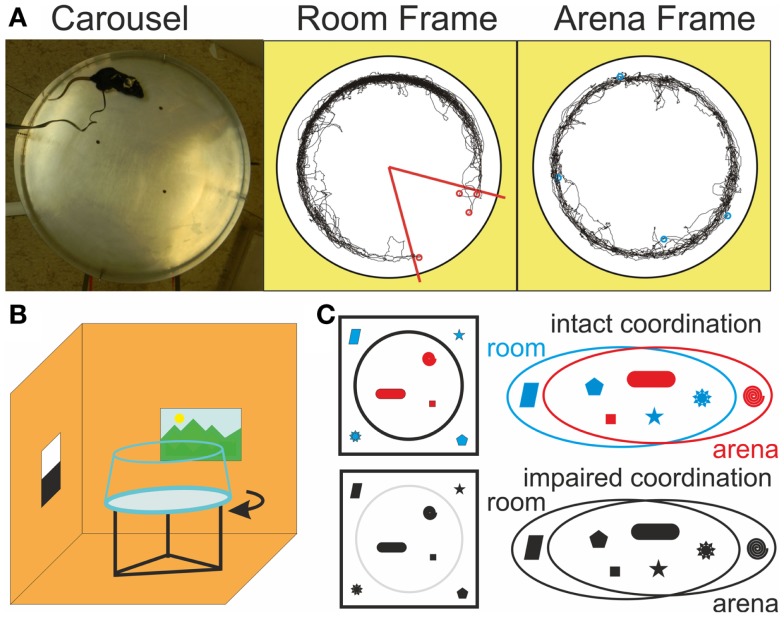
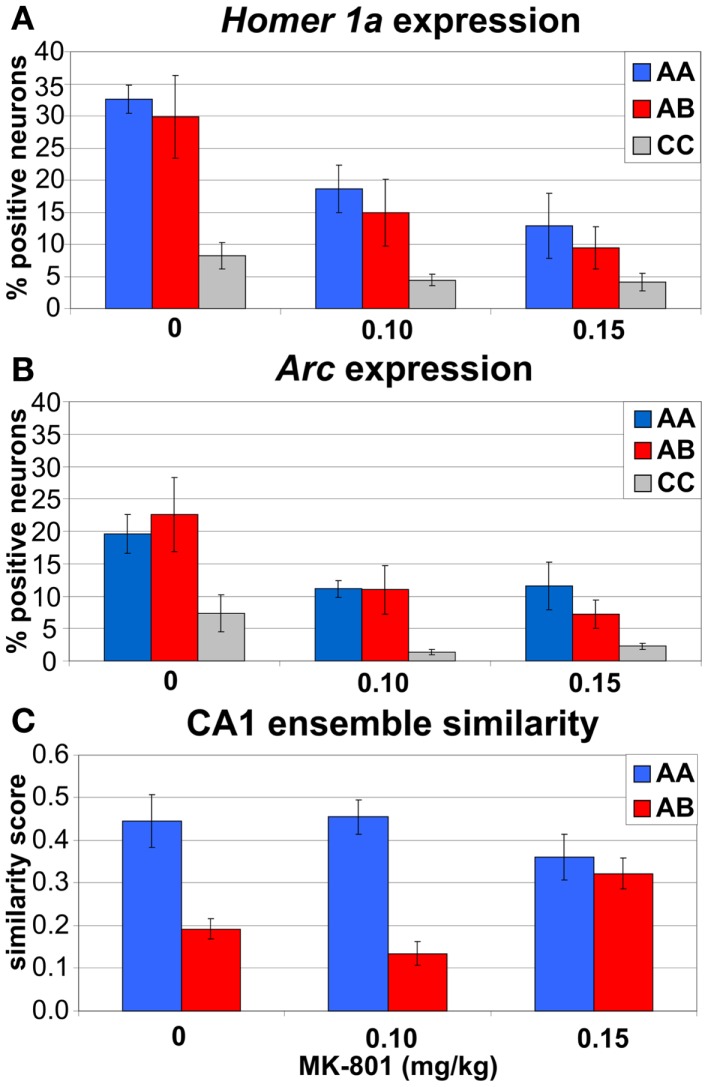
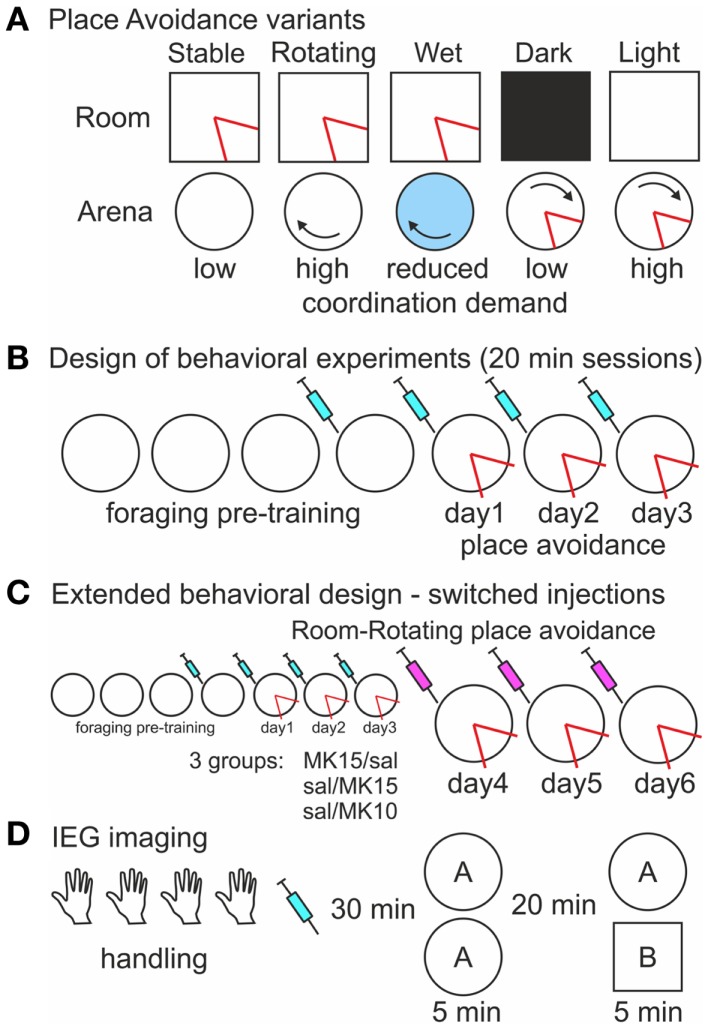
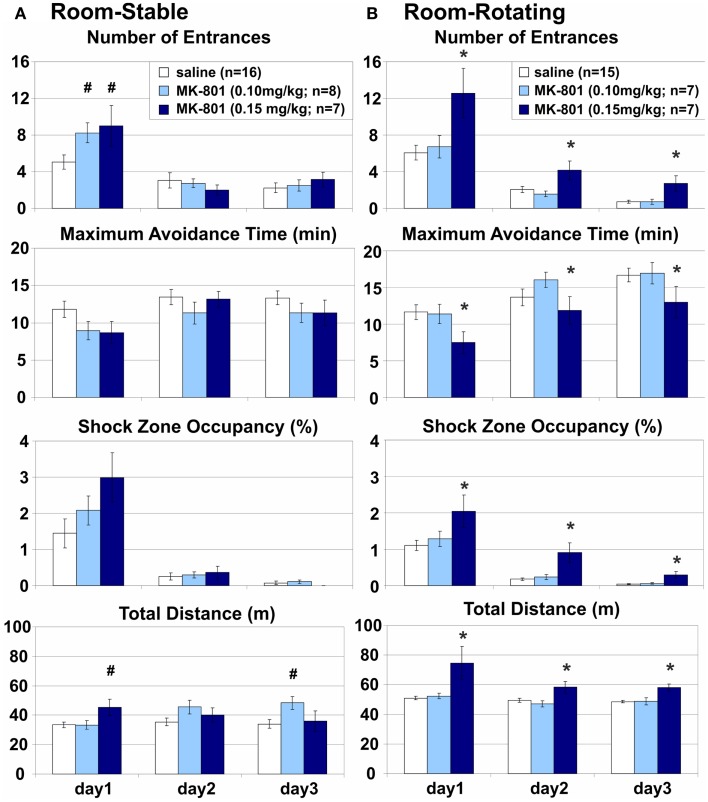
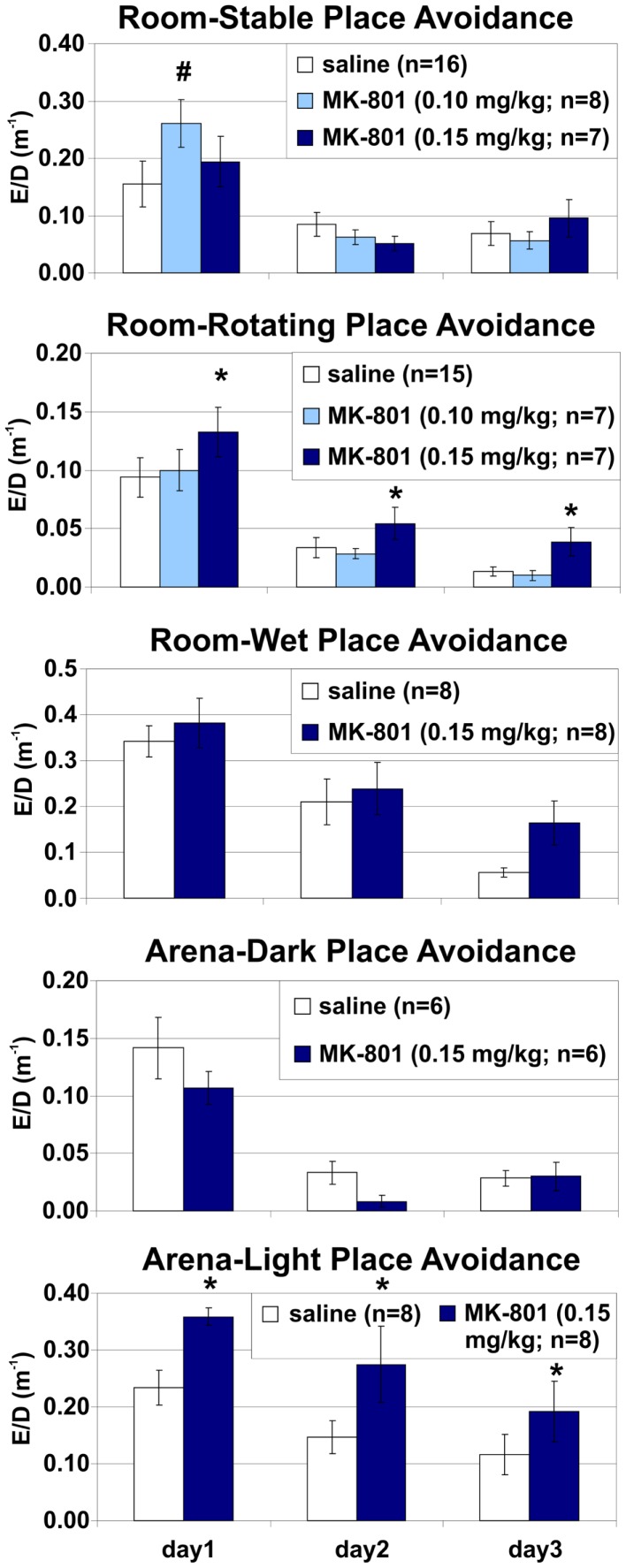
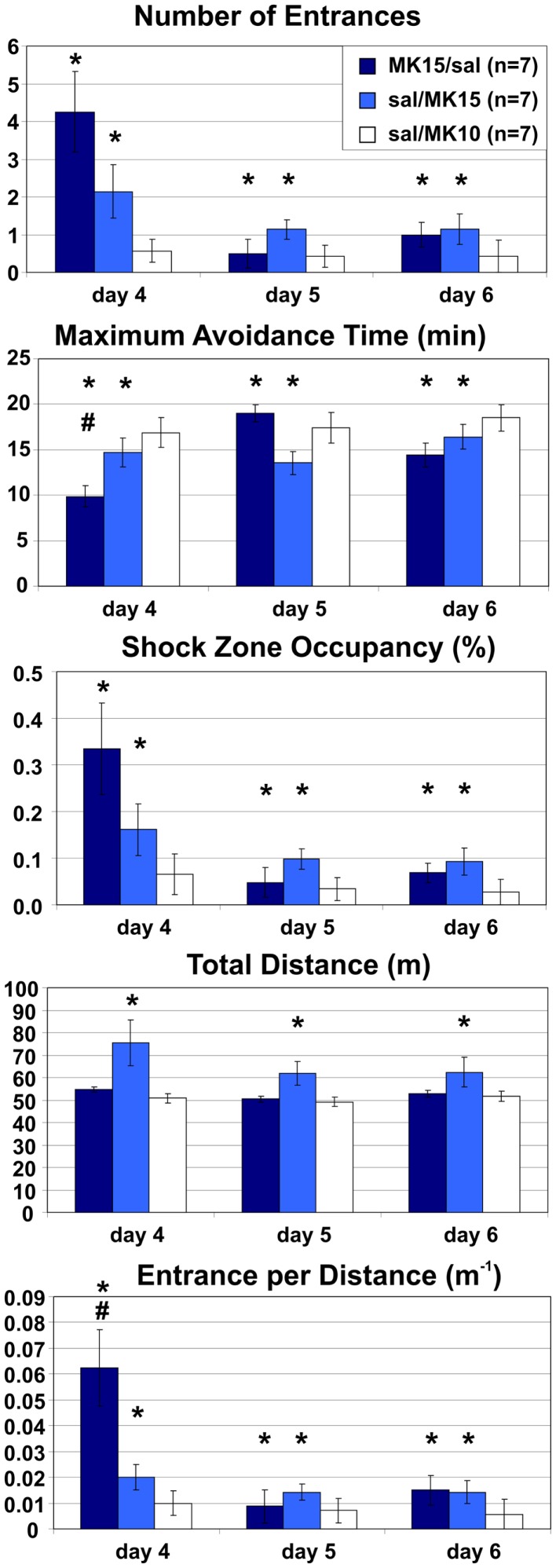
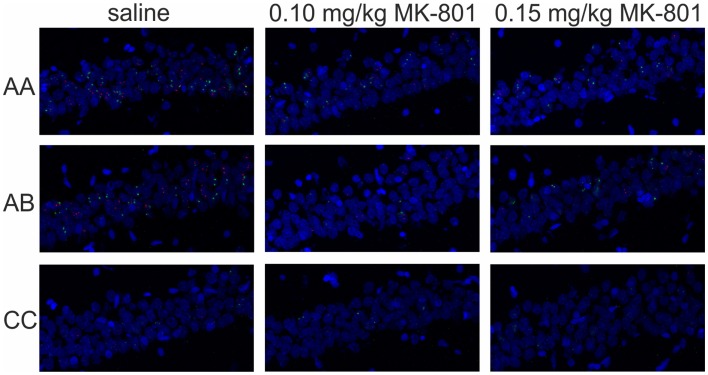
Flexible behavior in dynamic, real-world environments requires more than static spatial learning and memory. Discordant and unstable cues must be organized in coherent subsets to give rise to meaningful spatial representations. We model this form of cognitive coordination on a rotating arena - Carousel where arena- and room-bound spatial cues are dissociated. Hippocampal neuronal ensemble activity can repeatedly switch between multiple representations of such an environment. Injection of tetrodotoxin into one hippocampus prevents cognitive coordination during avoidance of a stationary room-defined place on the Carousel and increases coactivity of previously unrelated neurons in the uninjected hippocampus. Place avoidance on the Carousel is impaired after systemic administration of non-competitive NMDAr blockers (MK-801) used to model schizophrenia in animals and people. We tested if this effect is due to cognitive disorganization or other effect of NMDAr antagonism such as hyperlocomotion, spatial memory impairment, or general learning deficit. We also examined if the same dose of MK-801 alters patterns of immediate-early gene (IEG) expression in the hippocampus. IEG expression is triggered in neuronal nuclei in a context-specific manner after behavioral exploration and it is used to map activity in neuronal populations. IEG expression is critical for maintenance of synaptic plasticity and memory consolidation. We show that the same dose of MK-801 that impairs spatial coordination of rats on the Carousel also eliminates contextual specificity of IEG expression in hippocampal CA1 ensembles. This effect is due to increased similarity between ensembles activated in different environments, consistent with the idea that it is caused by increased coactivity between neurons, which did not previously fire together. Our data support the proposition of the Hypersynchrony theory that cognitive disorganization in psychosis is due to increased coactivity between unrelated neurons.
在动态的现实世界环境中,灵活的行为需要的不仅仅是静态的空间学习和记忆。不一致且不稳定的线索必须被组织成连贯的子集,以产生有意义的空间表征。我们在一个旋转竞技场——转盘上模拟这种认知协调形式,在这个转盘中,与竞技场和房间相关的空间线索是分离的。海马神经元集群活动可以在这样一个环境的多种表征之间反复切换。向一侧海马体注射河豚毒素会在转盘上避开固定的房间定义位置的过程中阻止认知协调,并增加未注射海马体中先前无关神经元的共同活动。在用于模拟动物和人类精神分裂症的非竞争性NMDAr阻滞剂(MK-801)全身给药后,转盘上的位置回避能力受损。我们测试了这种效应是由于认知紊乱还是NMDAr拮抗作用的其他效应,如运动亢进、空间记忆损害或一般学习缺陷。我们还研究了相同剂量的MK-801是否会改变海马体中即刻早期基因(IEG)的表达模式。行为探索后,IEG表达以特定情境的方式在神经元细胞核中被触发,它被用于绘制神经元群体中的活动。IEG表达对于维持突触可塑性和记忆巩固至关重要。我们表明,相同剂量的MK-801损害大鼠在转盘上的空间协调能力的同时,也消除了海马CA1集群中IEG表达的情境特异性。这种效应是由于在不同环境中激活的集群之间的相似性增加,这与它是由以前不一起放电的神经元之间的共同活动增加所导致的观点一致。我们的数据支持超同步理论的观点,即精神病中的认知紊乱是由于无关神经元之间的共同活动增加所致。