Department of Physiology and Pharmacology, State University of New York, Downstate Medical Center, Brooklyn, New York, United States of America.
PLoS Biol. 2013 Jul;11(7):e1001607. doi: 10.1371/journal.pbio.1001607. Epub 2013 Jul 16.
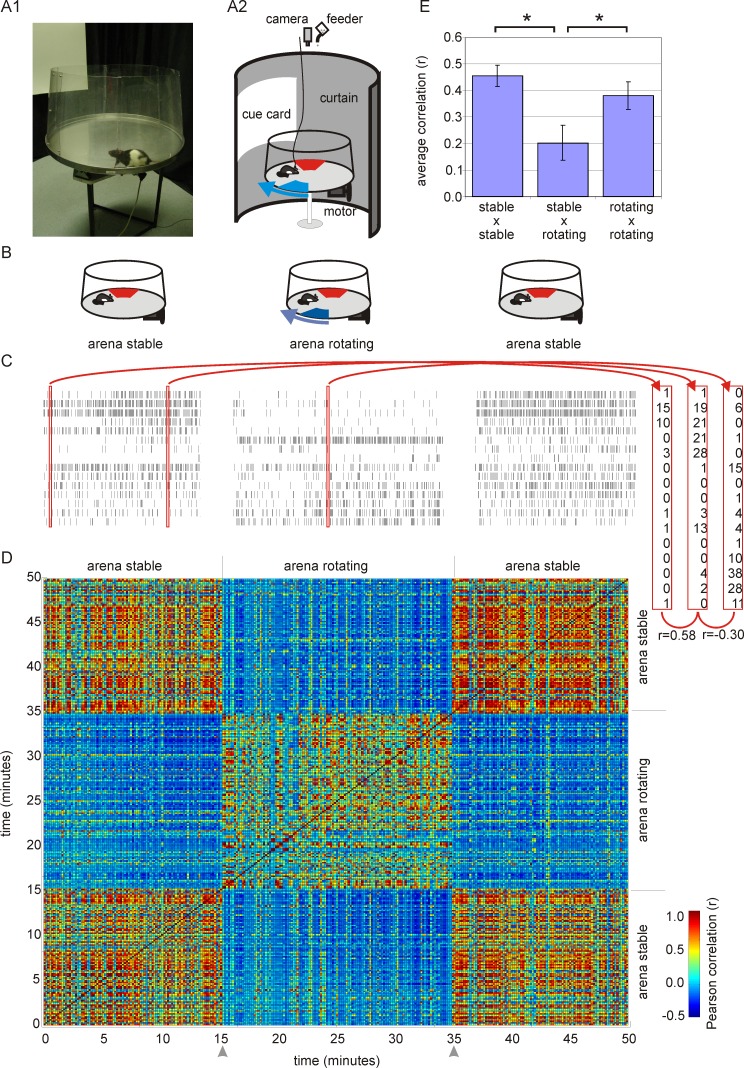
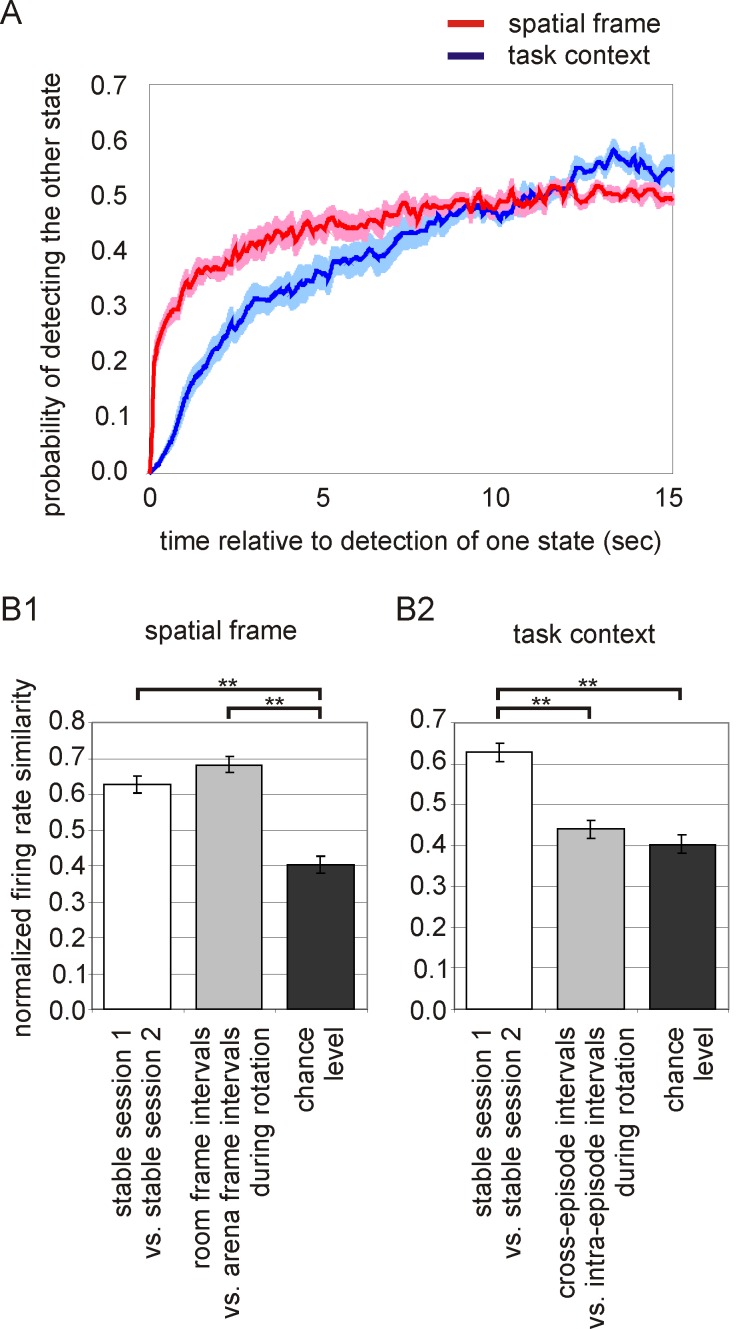
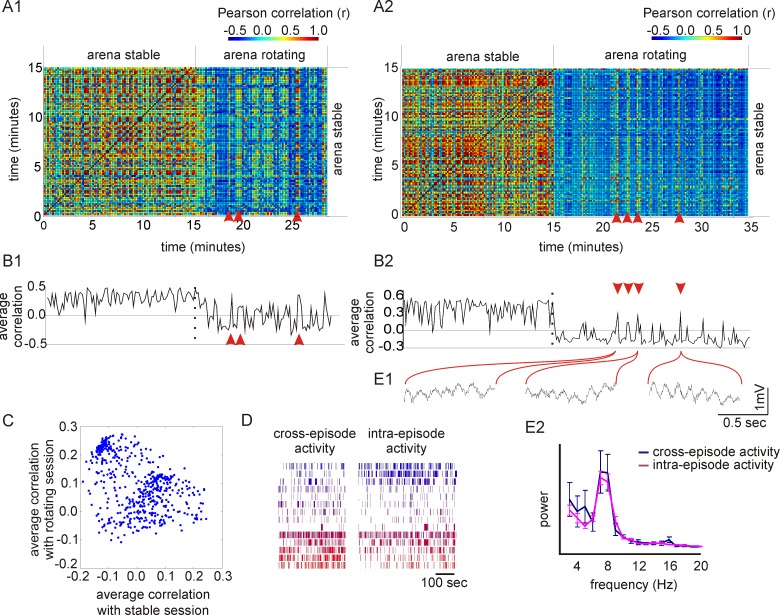
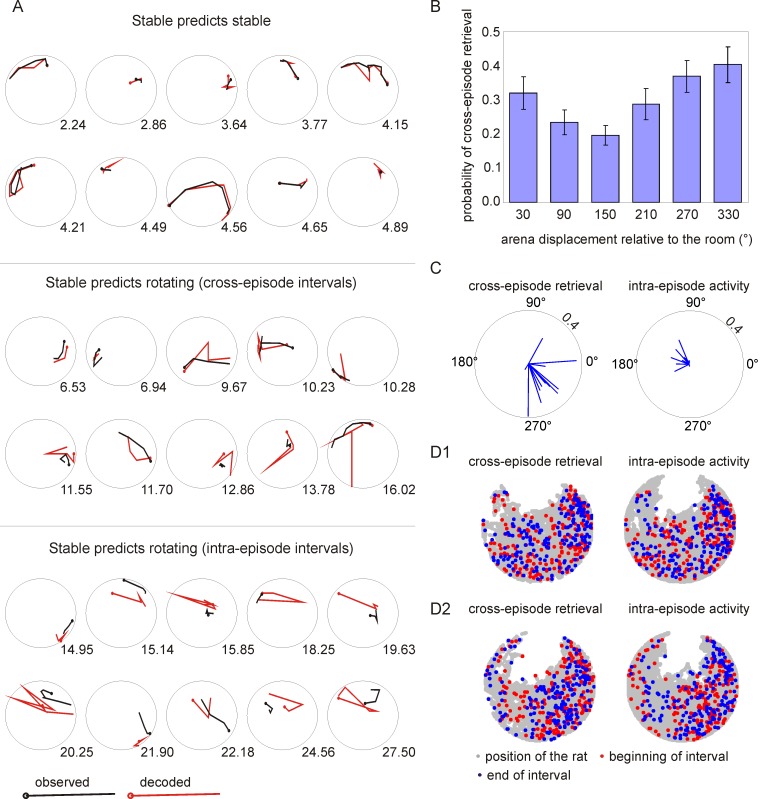
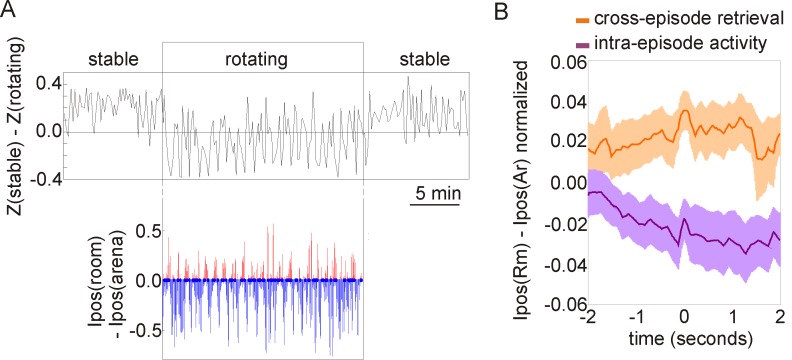
Neurophysiological studies focus on memory retrieval as a reproduction of what was experienced and have established that neural discharge is replayed to express memory. However, cognitive psychology has established that recollection is not a verbatim replay of stored information. Recollection is constructive, the product of memory retrieval cues, the information stored in memory, and the subject's state of mind. We discovered key features of constructive recollection embedded in the rat CA1 ensemble discharge during an active avoidance task. Rats learned two task variants, one with the arena stable, the other with it rotating; each variant defined a distinct behavioral episode. During the rotating episode, the ensemble discharge of CA1 principal neurons was dynamically organized to concurrently represent space in two distinct codes. The code for spatial reference frame switched rapidly between representing the rat's current location in either the stationary spatial frame of the room or the rotating frame of the arena. The code for task variant switched less frequently between a representation of the current rotating episode and the stable episode from the rat's past. The characteristics and interplay of these two hippocampal codes revealed three key properties of constructive recollection. (1) Although the ensemble representations of the stable and rotating episodes were distinct, ensemble discharge during rotation occasionally resembled the stable condition, demonstrating cross-episode retrieval of the representation of the remote, stable episode. (2) This cross-episode retrieval at the level of the code for task variant was more likely when the rotating arena was about to match its orientation in the stable episode. (3) The likelihood of cross-episode retrieval was influenced by preretrieval information that was signaled at the level of the code for spatial reference frame. Thus key features of episodic recollection manifest in rat hippocampal representations of space.
神经生理学研究侧重于将记忆检索视为对所经历内容的再现,并已证实神经放电会被重新激活以表达记忆。然而,认知心理学已经确定,回忆并不是对存储信息的逐字再现。回忆是一种建构过程,是记忆检索线索、存储在记忆中的信息以及主体心理状态的产物。我们在大鼠 CA1 群体放电中发现了主动回避任务中嵌入的建构性回忆的关键特征。大鼠学习了两种任务变体,一种是竞技场稳定的,另一种是旋转的;每个变体都定义了一个独特的行为事件。在旋转事件期间,CA1 主神经元的群体放电被动态组织,以同时用两种不同的代码表示空间。空间参考框架的代码快速切换,以表示大鼠当前位置在房间的静止空间框架或竞技场的旋转框架中。任务变体的代码则在当前旋转事件和大鼠过去的稳定事件之间的表示之间切换频率较低。这两个海马体代码的特征和相互作用揭示了建构性回忆的三个关键特性。(1)尽管稳定和旋转事件的群体表示不同,但旋转过程中的群体放电偶尔会类似于稳定条件,表明可以从遥远的稳定事件中检索到该事件的表示。(2)当旋转竞技场即将与稳定事件中的方向匹配时,任务变体代码水平上的这种跨事件检索更有可能发生。(3)跨事件检索的可能性受在空间参考框架代码水平上发出的预检索信息的影响。因此,情节记忆的关键特征体现在大鼠海马体对空间的表示中。