Wang Jianmin, Su Haoxiang, Zhang Ting, Du Jiang, Cui Sheng, Yang Fan, Jin Qi
MOH Key Laboratory of Systems Biology of Pathogens, Institute of Pathogen Biology, Chinese Academy of Medical Sciences and Peking Union Medical College, Beijing, People's Republic of China.
PLoS One. 2014 Mar 24;9(3):e92565. doi: 10.1371/journal.pone.0092565. eCollection 2014.
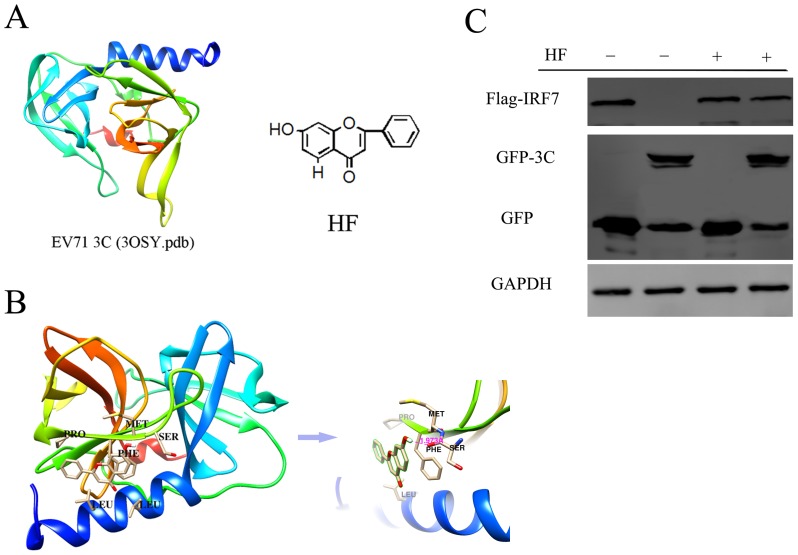
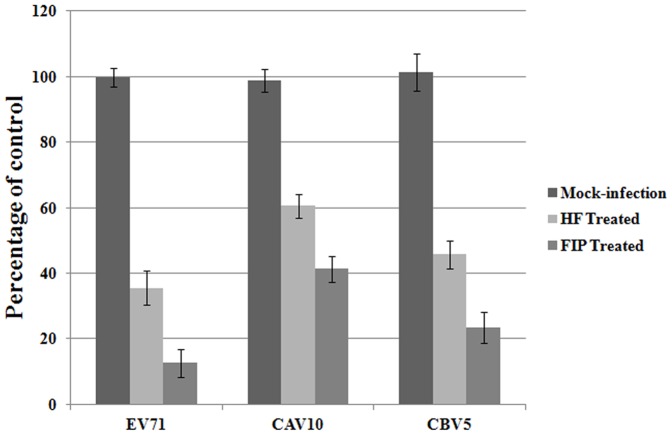
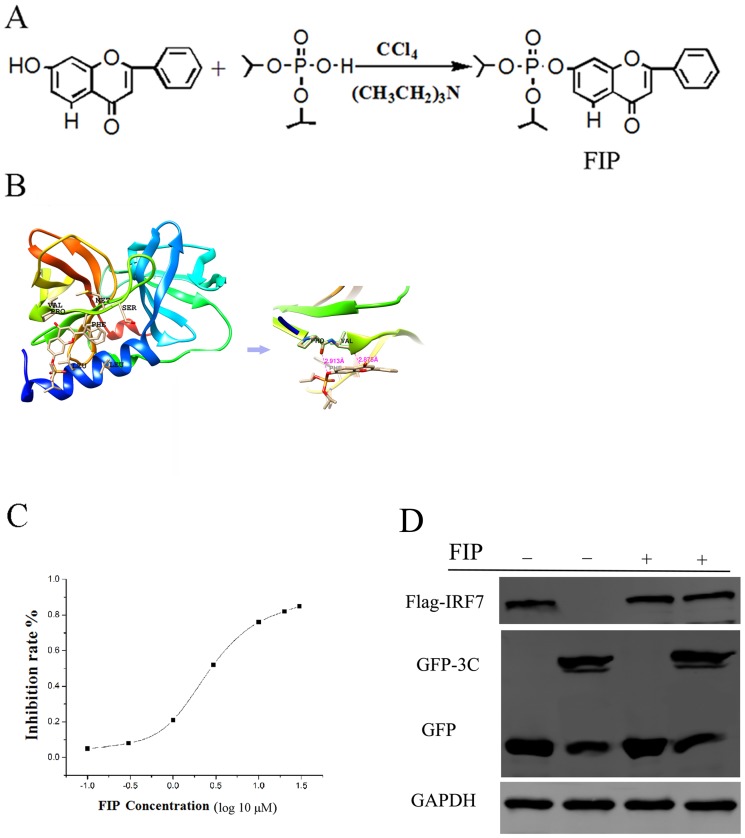
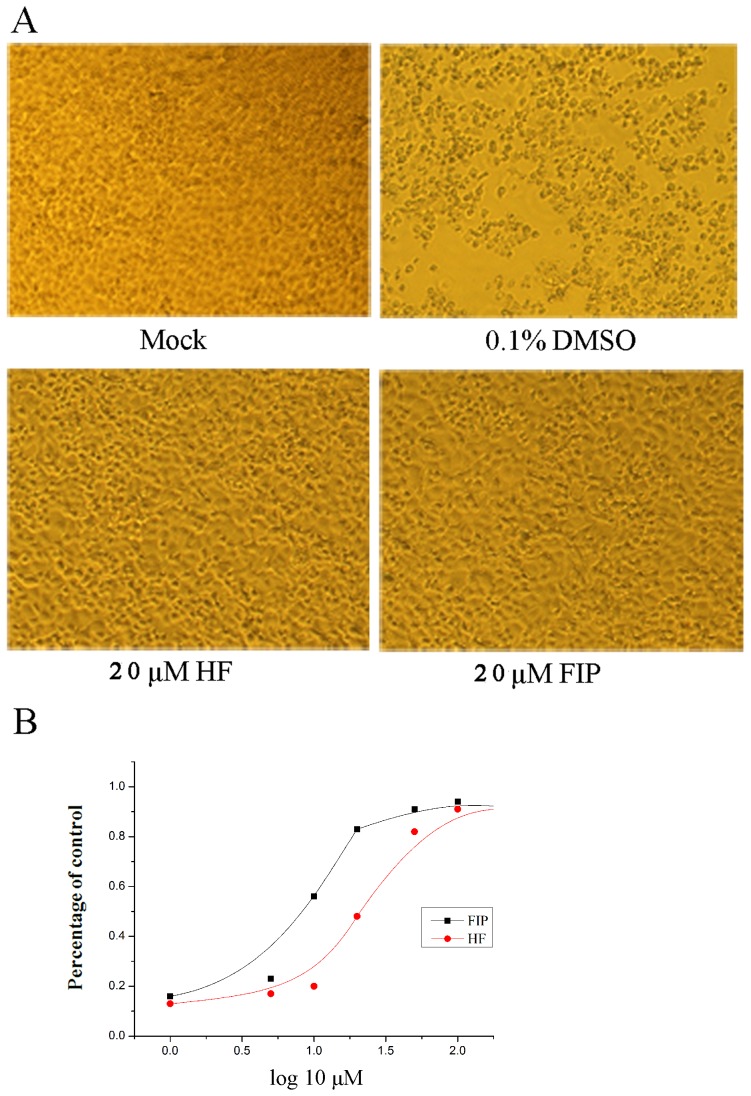
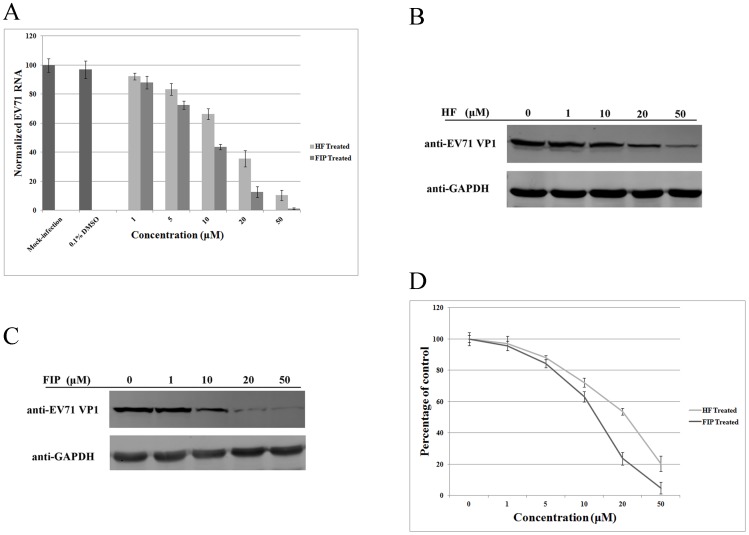
Enterovirus 71 (EV71) is the major causative agent of hand, foot, and mouth disease, which has been continuously prevalent in Asia in recent years. In children, severe cases can lead to death, and no prophylactic or therapeutic measures against EV71 infection are available. The 3C proteases of EV71 play an important role in viral replication and are an ideal drug target. In previous work, we resolved the crystal structure for EV71 3Cpro. In this report, we took advantage of the automated docking program AutoDock 4.0 to simulate EV71 3Cpro-ligand conformation. 7-hydroxyflavone (HF) and its phosphate ester(FIP) were predicted to bind with EV71 3Cpro.In an in vitro protease inhibition assay, FIP inhibited EV71 3Cpro protease activity. Both flavones were highly active against EV71, protecting cells from EV71 infection. Replication of viral RNA and formation of EV71 plaque were all strongly inhibited in cells. These results indicated that HF and FIP may serve as potential protective agents in the treatment of patients with chronic EV71 infection.
肠道病毒71型(EV71)是手足口病的主要病原体,近年来在亚洲持续流行。在儿童中,严重病例可导致死亡,目前尚无针对EV71感染的预防或治疗措施。EV71的3C蛋白酶在病毒复制中起重要作用,是理想的药物靶点。在之前的工作中,我们解析了EV71 3Cpro的晶体结构。在本报告中,我们利用自动对接程序AutoDock 4.0模拟EV71 3Cpro-配体构象。预测7-羟基黄酮(HF)及其磷酸酯(FIP)与EV71 3Cpro结合。在体外蛋白酶抑制试验中,FIP抑制EV71 3Cpro蛋白酶活性。两种黄酮对EV71均具有高活性,可保护细胞免受EV71感染。病毒RNA的复制和EV71空斑的形成在细胞中均受到强烈抑制。这些结果表明,HF和FIP可能作为潜在的保护剂用于治疗慢性EV71感染患者。