Espíndola Cecilia, Correa Alejandro Javier, López-López Manuel, López-Cornejo Pilar, Bernal Eva, Lebrón José Antonio, Ostos Francisco José, Benhnia Mohammed Rafii-El-Idrissi, Moyá María Luisa
Department of Physical Chemistry, University of Seville, C/Profesor García González 1, 41012 Seville, Spain.
Department of Chemical Engineering, Physical Chemistry and Material Sciences, Campus de El Carmen, Avda. de las Fuerzas Armadas s/n, 21071 Huelva, Spain.
Pharmaceutics. 2022 Dec 15;14(12):2806. doi: 10.3390/pharmaceutics14122806.
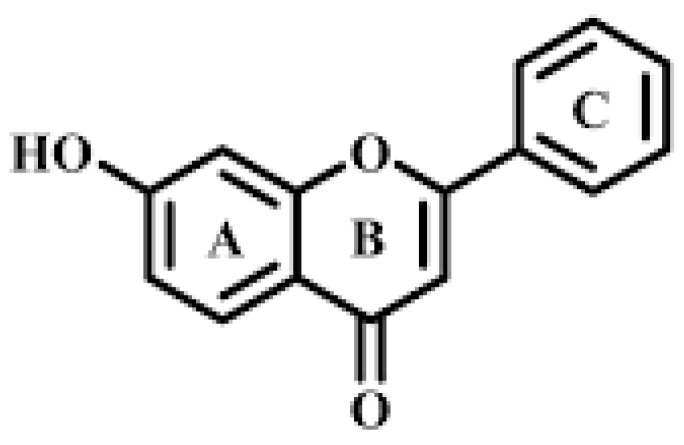
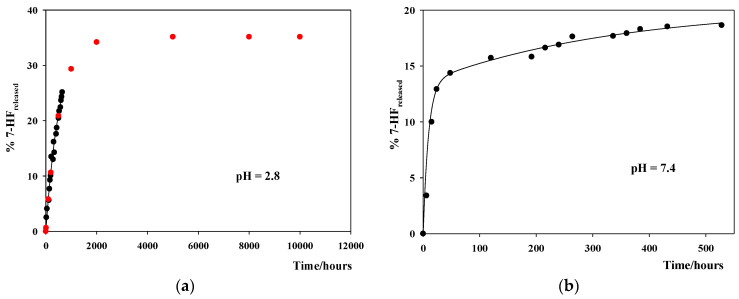
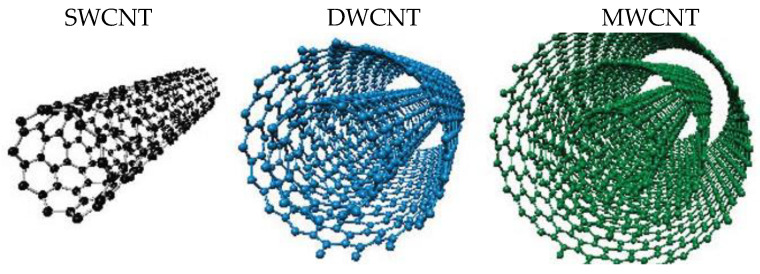
The research on flavonoids has exponentially grown since their first therapeutic evidence, in 1937. They are effective in vitro in a wide range of human diseases, particularly those mediated by free radicals, such as cancer, atherosclerosis, AIDS, or neuronal diseases. However, their applications have been reduced due to their low solubility, poor absorption, and rapid metabolism. Flavonoid encapsulation in nanocarriers significantly improves their oral absorption, protects the drug against degradation, decreases the first-pass hepatic effect, and makes absorption through the lymphatic system easier. In this work, carbon nanotubes were used as nanocarriers of 7-hydroxyflavone, 7-HF. The encapsulation of 7-HF into pristine single- and multi-walled carbon nanotubes, and into -COOH functionalized single-walled carbon nanotubes has been investigated. The equilibrium association constants were estimated. The structural backbone of 7-HF, two benzene rings linked through three carbon atoms that form a pyran heterocyclic ring containing a keto group, seems to play a key role in the 7-HF/CNT interactions, although other types of interactions are also at work. The in vitro release of 7-HF was studied at three pHs, 2.0, 7.4, and 9.2, mimicking the different biological barriers of the human organism.
自1937年首次发现黄酮类化合物的治疗证据以来,对它们的研究呈指数级增长。它们在体外对多种人类疾病有效,特别是那些由自由基介导的疾病,如癌症、动脉粥样硬化、艾滋病或神经疾病。然而,由于其低溶解度、差的吸收性和快速的代谢,它们的应用受到了限制。将黄酮类化合物封装在纳米载体中可显著提高其口服吸收,保护药物不被降解,降低肝脏首过效应,并使通过淋巴系统的吸收更容易。在这项工作中,碳纳米管被用作7-羟基黄酮(7-HF)的纳米载体。研究了将7-HF封装到原始单壁和多壁碳纳米管以及-COOH功能化单壁碳纳米管中的情况。估算了平衡缔合常数。7-HF的结构主链是通过三个碳原子连接的两个苯环,形成一个含有酮基的吡喃杂环,尽管还存在其他类型的相互作用,但它似乎在7-HF/碳纳米管相互作用中起关键作用。在模拟人体不同生物屏障的三个pH值(2.0、7.4和9.2)下研究了7-HF的体外释放。