Brun Emilie, Barreau Frédérick, Veronesi Giulia, Fayard Barbara, Sorieul Stéphanie, Chanéac Corinne, Carapito Christine, Rabilloud Thierry, Mabondzo Aloïse, Herlin-Boime Nathalie, Carrière Marie
Université Grenoble Alpes, INAC, SCIB, F-38000, Grenoble, France 14 CEA, INAC, SCIB, F-38054 Grenoble, France.
Part Fibre Toxicol. 2014 Mar 25;11:13. doi: 10.1186/1743-8977-11-13.
TiO2 particles are commonly used as dietary supplements and may contain up to 36% of nano-sized particles (TiO2-NPs). Still impact and translocation of NPs through the gut epithelium is poorly documented.
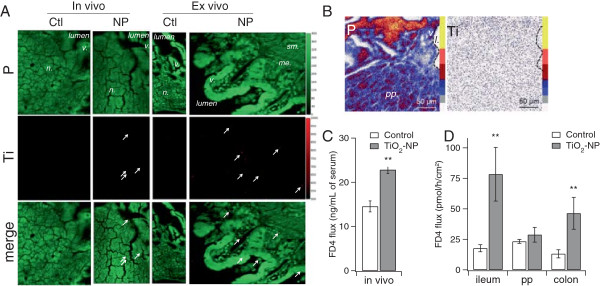
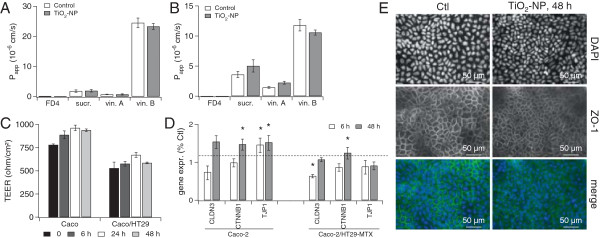
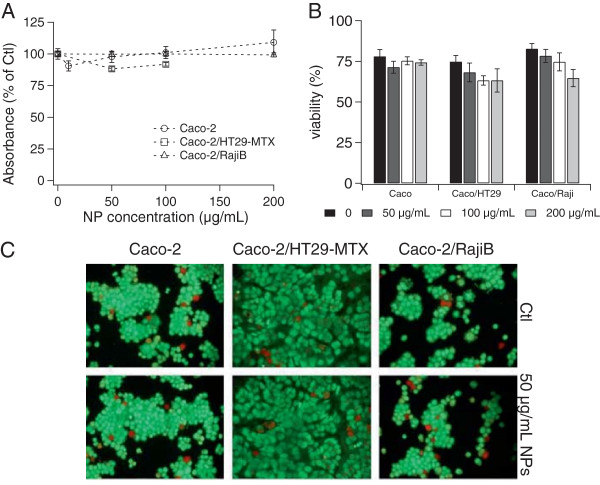
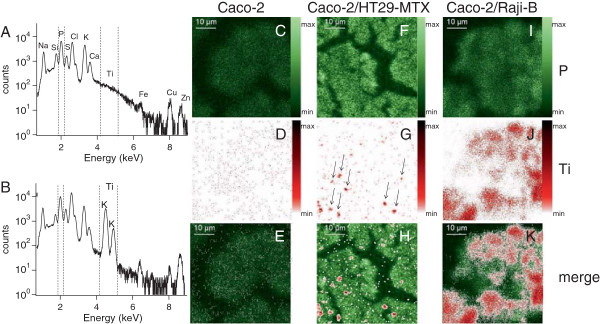
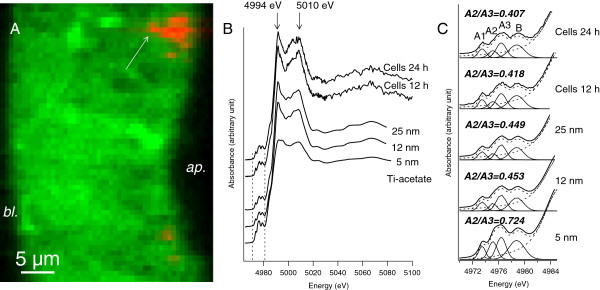
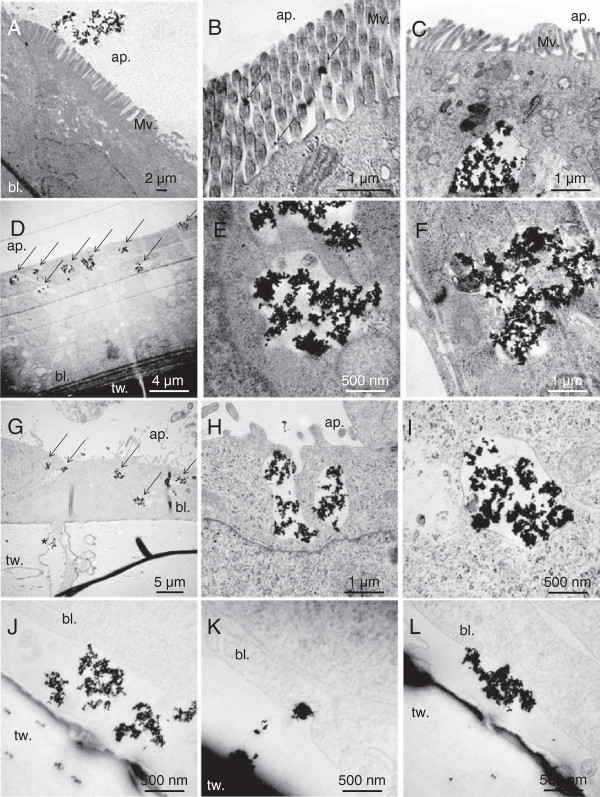
We show that, in vivo and ex vivo, agglomerates of TiO2-NPs cross both the regular ileum epithelium and the follicle-associated epithelium (FAE) and alter the paracellular permeability of the ileum and colon epithelia. In vitro, they accumulate in M-cells and mucus-secreting cells, much less in enterocytes. They do not cause overt cytotoxicity or apoptosis. They translocate through a model of FAE only, but induce tight junctions remodeling in the regular ileum epithelium, which is a sign of integrity alteration and suggests paracellular passage of NPs. Finally we prove that TiO2-NPs do not dissolve when sequestered up to 24 h in gut cells.
Taken together these data prove that TiO2-NPs would possibly translocate through both the regular epithelium lining the ileum and through Peyer's patches, would induce epithelium impairment, and would persist in gut cells where they would possibly induce chronic damage.
二氧化钛颗粒通常用作膳食补充剂,可能含有高达36%的纳米级颗粒(TiO2-NPs)。然而,纳米颗粒通过肠道上皮的影响和转运情况记录甚少。
我们发现,在体内和体外,TiO2-NPs团聚体穿过正常的回肠上皮和滤泡相关上皮(FAE),并改变回肠和结肠上皮的细胞旁通透性。在体外,它们积聚在M细胞和黏液分泌细胞中,在肠细胞中积聚较少。它们不会引起明显的细胞毒性或凋亡。它们仅通过FAE模型进行转运,但会诱导正常回肠上皮中的紧密连接重塑,这是完整性改变的迹象,表明纳米颗粒通过细胞旁途径通过。最后,我们证明TiO2-NPs在肠道细胞中被隔离长达24小时时不会溶解。
综合这些数据证明,TiO2-NPs可能会通过回肠的正常上皮和派尔集合淋巴结进行转运,会导致上皮损伤,并会在肠道细胞中持续存在,在那里它们可能会引起慢性损伤。