Department of Molecular Virology, Immunology, and Medical Genetics, Human Cancer Genetics Program, and the Arthur G. James Comprehensive Cancer Center, The Ohio State University College of Medicine, 460 W. 12th Avenue, Columbus, OH, 43210, USA,
J Cachexia Sarcopenia Muscle. 2014 Dec;5(4):321-8. doi: 10.1007/s13539-014-0141-2. Epub 2014 Mar 26.
Muscle wasting is a profound side effect of advanced cancer. Cancer-induced cachexia decreases patient quality of life and is associated with poor patient survival. Currently, no clinical therapies exist to treat cancer-induced muscle wasting. Although cancers commonly associated with cachexia occur in older individuals, the standard animal models used to elucidate the causes of cachexia rely on juvenile mice.
In an effort to better model human cancer cachexia, we determined whether cachectic features seen in young mice could be achieved in adult, pre-sarcopenic mice following colon 26 (C-26) tumor cell inoculation.
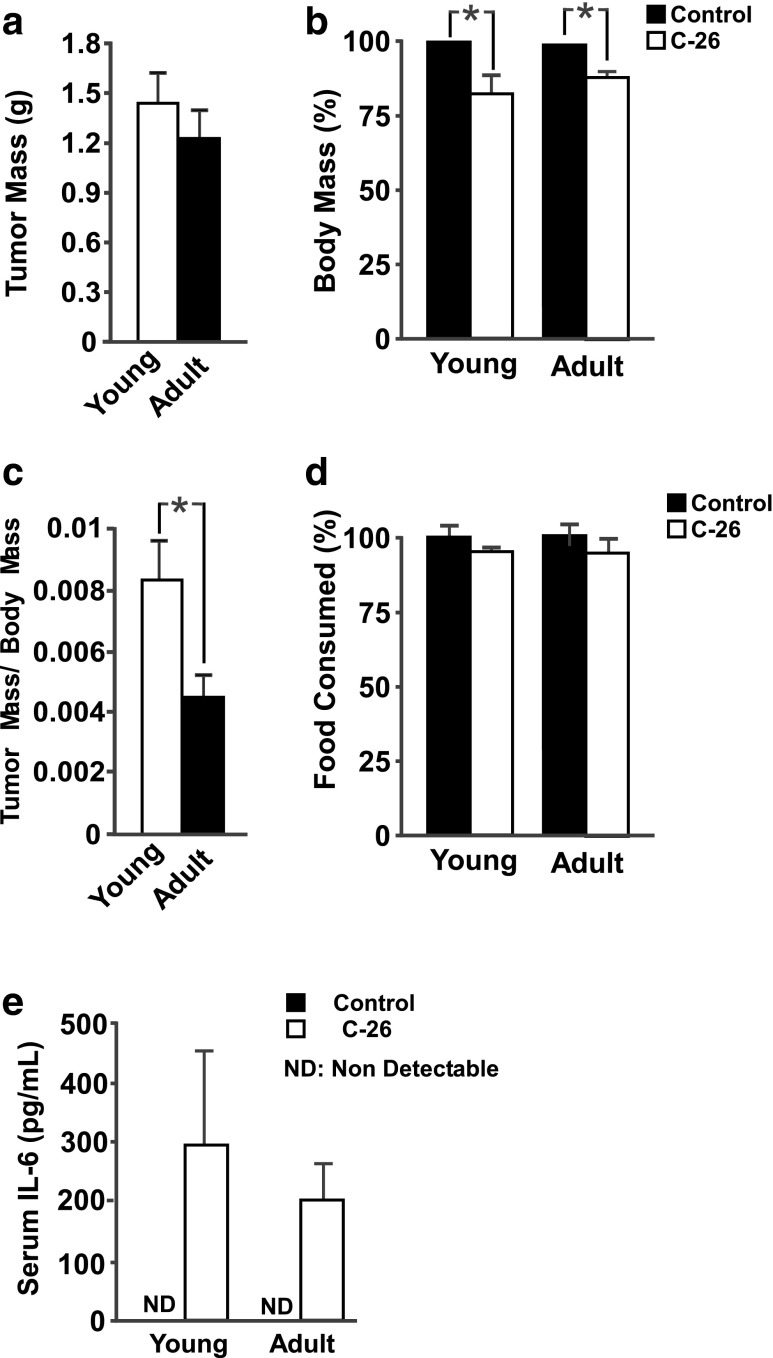
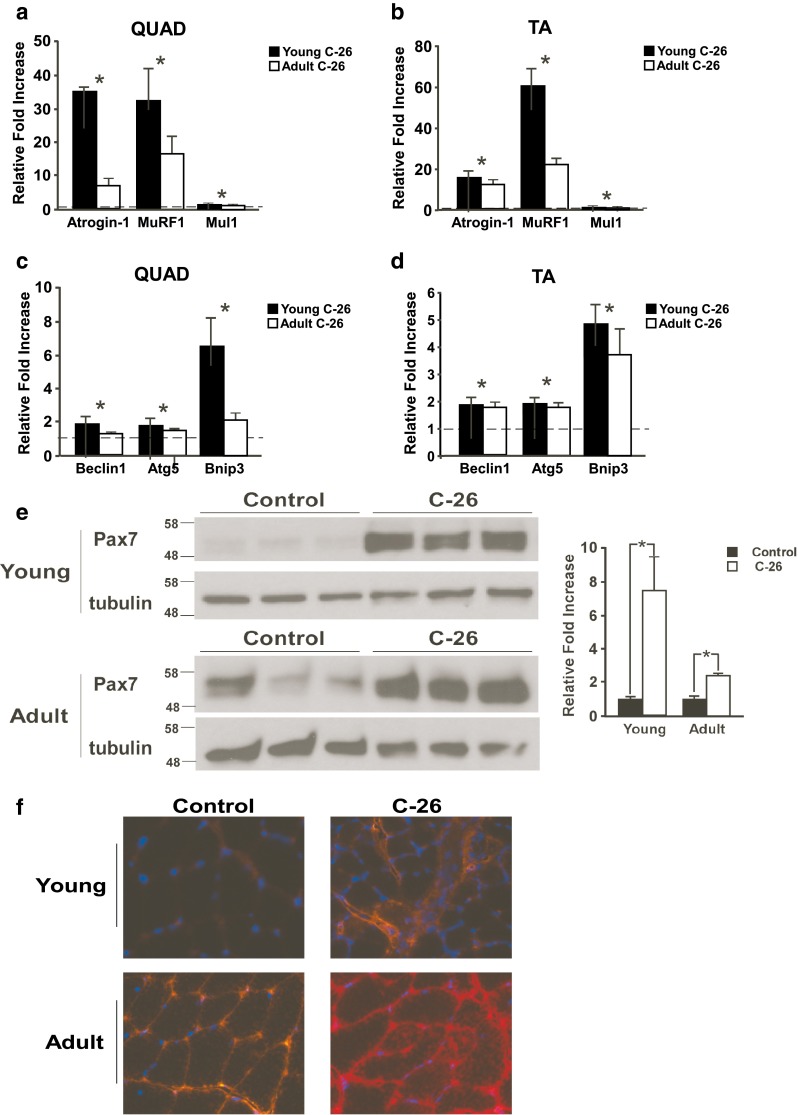
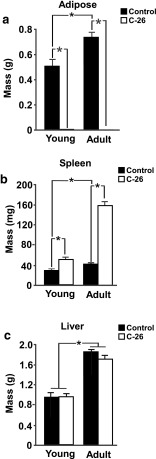
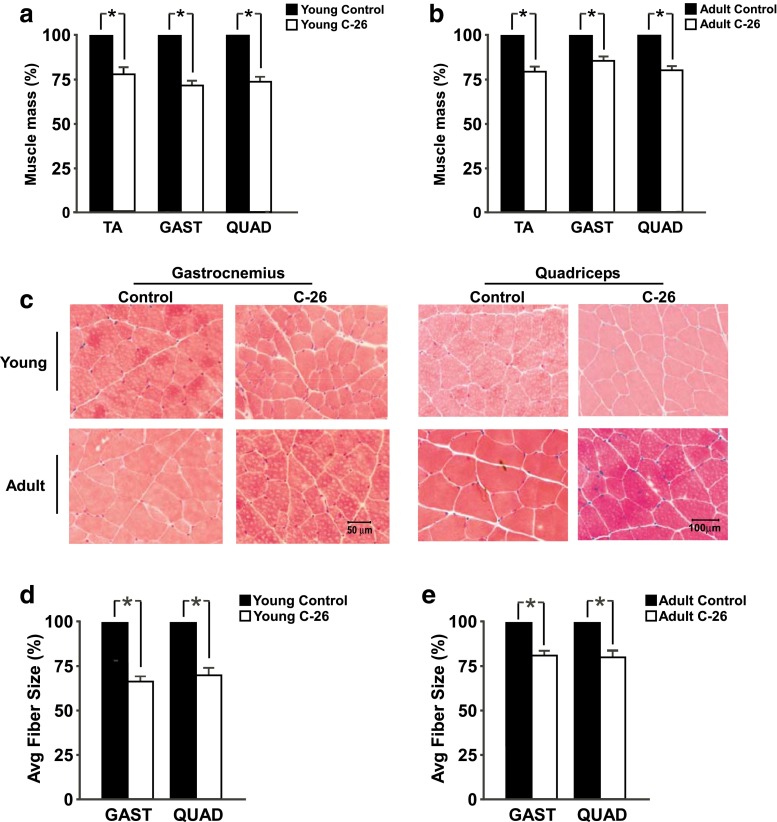
Both young and adult mice developed similar-sized tumors and progressed to cachexia with similar kinetics, as evidenced by losses in body mass, and adipose and skeletal muscle tissues. Proteolytic signaling, including proteasome and autophagy genes, was also increased in muscles from both young and adult tumor-bearing animals. Furthermore, tumor-associated muscle damage and activation of Pax7 progenitor cells was induced in both young and adult mice.
Although cancer cachexia generally occurs in older individuals, these data suggest that the phenotype and underlying mechanisms can be effectively modeled using the currently accepted protocol in juvenile mice.
肌肉减少症是晚期癌症的一种严重副作用。癌症引起的恶病质会降低患者的生活质量,并与患者预后不良相关。目前,尚无临床疗法可治疗癌症引起的肌肉减少症。尽管与恶病质相关的癌症通常发生在老年人中,但用于阐明恶病质原因的标准动物模型依赖于幼年小鼠。
为了更好地模拟人类癌症恶病质,我们确定了在结肠 26(C-26)肿瘤细胞接种后,年轻小鼠是否可以在成年、有肌肉减少症前期的小鼠中出现恶病质特征。
年轻和成年小鼠均形成了相似大小的肿瘤,并以相似的动力学进展为恶病质,表现为体重、脂肪和骨骼肌组织的丧失。来自年轻和成年荷瘤动物的肌肉中的蛋白水解信号,包括蛋白酶体和自噬基因,也增加了。此外,肿瘤相关的肌肉损伤和 Pax7 祖细胞的激活在年轻和成年小鼠中均被诱导。
尽管癌症恶病质通常发生在老年人中,但这些数据表明,使用目前在幼年小鼠中接受的方案,可以有效地模拟表型和潜在机制。