Institut für Informatik, Ludwig-Maximilians-Universität München, 80333 München, Germany;
Max-von-Pettenkofer Institut, Virologie, Ludwig-Maximilians-Universität München, 80336 München, Germany; Division of Pathway Medicine, University of Edinburgh, Edinburgh EH17 8TR, United Kingdom;
Genome Res. 2014 Jun;24(6):906-19. doi: 10.1101/gr.166702.113. Epub 2014 Mar 25.
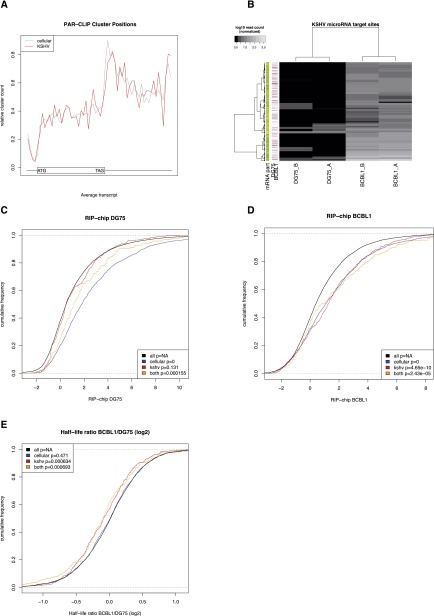
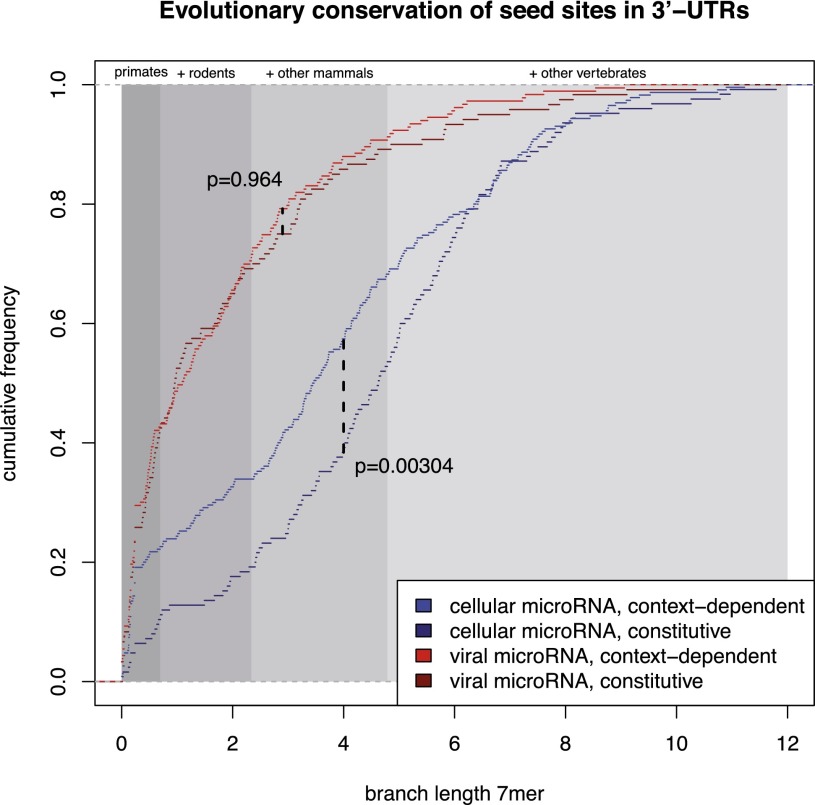
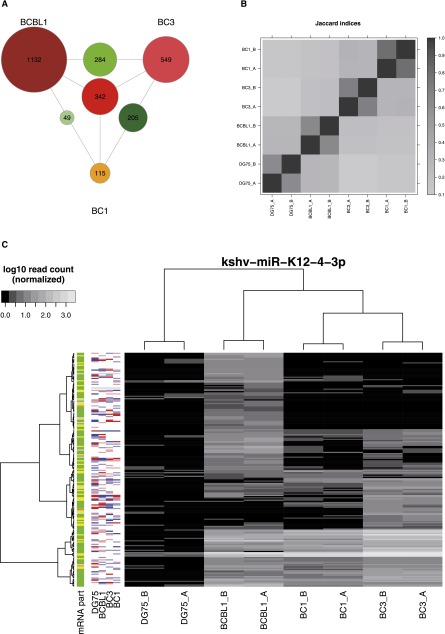
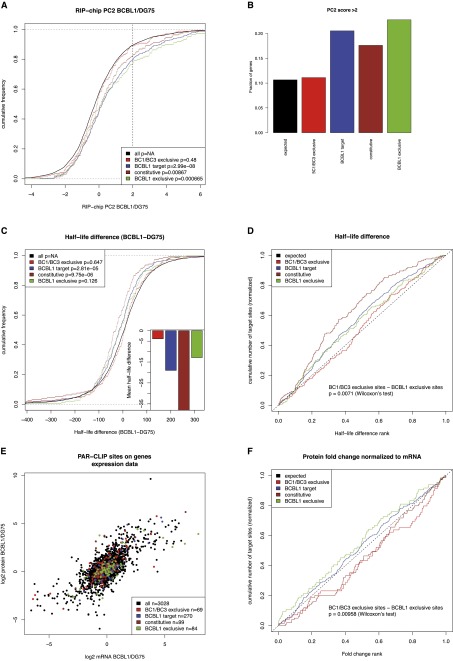
Gene expression is regulated in a context-dependent, cell-type-specific manner. Condition-specific transcription is dependent on the presence of transcription factors (TFs) that can activate or inhibit its target genes (global context). Additional factors, such as chromatin structure, histone, or DNA modifications, also influence the activity of individual target genes (individual context). The role of the global and individual context for post-transcriptional regulation has not systematically been investigated on a large scale and is poorly understood. Here we show that global and individual context dependency is a pervasive feature of microRNA-mediated regulation. Our comprehensive and highly consistent data set from several high-throughput technologies (PAR-CLIP, RIP-chip, 4sU-tagging, and SILAC) provides strong evidence that context-dependent microRNA target sites (CDTS) are as frequent and functionally relevant as constitutive target sites (CTS). Furthermore, we found the global context to be insufficient to explain the CDTS, and that flanking sequence motifs provide individual context that is an equally important factor. Our results demonstrate that, similar to TF-mediated regulation, global and individual context dependency are prevalent in microRNA-mediated gene regulation, implying a much more complex post-transcriptional regulatory network than is currently known. The necessary tools to unravel post-transcriptional regulations and mechanisms need to be much more involved, and much more data will be needed for particular cell types and cellular conditions in order to understand microRNA-mediated regulation and the context-dependent post-transcriptional regulatory network.
基因表达是在依赖于上下文的、细胞类型特异性的方式下进行调控的。条件特异性转录依赖于转录因子(TFs)的存在,这些转录因子可以激活或抑制其靶基因(全局上下文)。其他因素,如染色质结构、组蛋白或 DNA 修饰,也会影响单个靶基因的活性(个体上下文)。关于转录后调控的全局和个体上下文的作用尚未在大规模上系统地进行研究,因此了解甚少。在这里,我们表明全局和个体上下文的依赖性是 microRNA 介导的调控的普遍特征。我们从几种高通量技术(PAR-CLIP、RIP-chip、4sU-tagging 和 SILAC)获得的全面且高度一致的数据集提供了强有力的证据,表明依赖于上下文的 microRNA 靶位点(CDTS)与组成性靶位点(CTS)一样频繁且具有功能相关性。此外,我们发现全局上下文不足以解释 CDTS,侧翼序列基序提供了个体上下文,这是一个同样重要的因素。我们的研究结果表明,与 TF 介导的调控类似,全局和个体上下文的依赖性在 microRNA 介导的基因调控中普遍存在,这意味着存在比目前已知的更复杂的转录后调控网络。为了理解 microRNA 介导的调控和依赖于上下文的转录后调控网络,需要更复杂的工具来揭示转录后调控和机制,并且需要针对特定细胞类型和细胞条件,获取更多的数据。