
发情周期中黄体中期高、低繁殖力小母牛子宫内膜的全局基因表达。
Global gene expression in endometrium of high and low fertility heifers during the mid-luteal phase of the estrous cycle.
机构信息
Teagasc, Animal and Bioscience Research Department, Animal and Grassland Research and Innovation Centre, Grange, Dunsany, County Meath, Ireland.
出版信息
BMC Genomics. 2014 Mar 26;15(1):234. doi: 10.1186/1471-2164-15-234.
BACKGROUND
In both beef and dairy cattle, the majority of early embryo loss occurs within the first 14 days following insemination. During this time-period, embryos are completely dependent on their maternal uterine environment for development, growth and ultimately survival, therefore an optimum uterine environment is critical to their survival. The objective of this study was to investigate whether differences in endometrial gene expression during the mid-luteal phase of the estrous cycle exist between crossbred beef heifers ranked as either high (HF) or low fertility (LF) (following four rounds of artificial insemination (AI)) using the Affymetrix® 23 K Bovine Gene Chip.
RESULTS
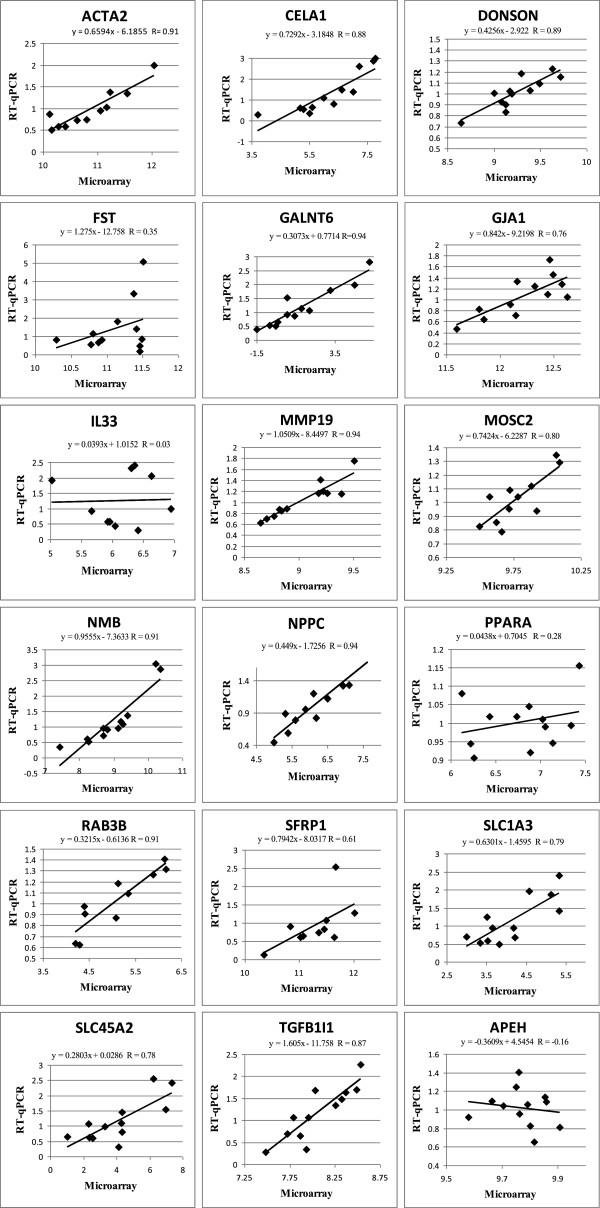
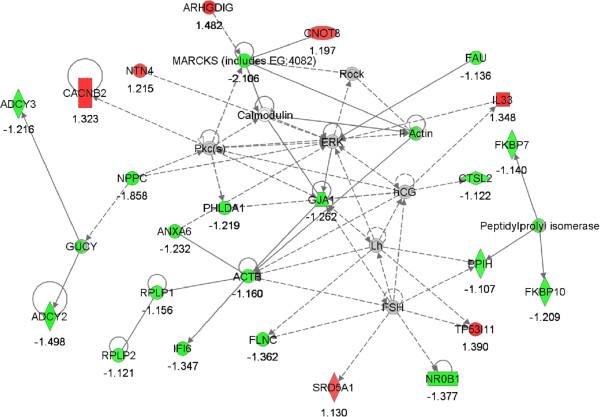
Conception rates for each of the four rounds of AI were within a normal range: 70-73.3%. Microarray analysis of endometrial tissue collected on day 7 of the estrous cycle detected 419 differentially expressed genes (DEG) between HF (n = 6) and LF (n = 6) animals. The main gene pathways affected were, cellular growth and proliferation, angiogenesis, lipid metabolism, cellular and tissue morphology and development, inflammation and metabolic exchange. DEG included, FST, SLC45A2, MMP19, FADS1 and GALNT6.
CONCLUSIONS
This study highlights, some of the molecular mechanisms potentially controlling uterine endometrial function during the mid-luteal phase of the estrous cycle, which may contribute to uterine endometrial mediated impaired fertility in cattle. Differentially expressed genes are potential candidate genes for the identification of genetic variation influencing cow fertility, which may be incorporated into future breeding programmes.
背景
在肉牛和奶牛中,大多数早期胚胎丢失发生在受精后 14 天内。在此期间,胚胎完全依赖于母体子宫环境进行发育、生长,最终存活,因此,最佳的子宫环境对其存活至关重要。本研究的目的是使用 Affymetrix®23 K 牛基因芯片,研究在发情周期中期黄体期,在经过四轮人工授精(AI)后,被评为高(HF)或低(LF)繁殖力的杂交肉牛小母牛之间,子宫内膜基因表达是否存在差异。
结果
每轮 AI 的受孕率均在正常范围内:70-73.3%。发情周期第 7 天采集的子宫内膜组织的微阵列分析检测到 419 个差异表达基因(DEG)在 HF(n = 6)和 LF(n = 6)动物之间。受影响的主要基因途径是细胞生长和增殖、血管生成、脂质代谢、细胞和组织形态和发育、炎症和代谢交换。DEG 包括 FST、SLC45A2、MMP19、FADS1 和 GALNT6。
结论
本研究强调了一些分子机制,这些机制可能在发情周期中期黄体期控制子宫子宫内膜功能,这可能导致牛子宫内膜介导的生育力受损。差异表达基因是鉴定影响牛繁殖力的遗传变异的潜在候选基因,这些基因可能被纳入未来的繁殖计划。



 Zotero 插件