Kennedy Stephen M, Aiken Erik J, Beres Kaytlyn A, Hahn Adam R, Kamin Samantha J, Hagness Susan C, Booske John H, Murphy William L
School of Engineering and Applied Sciences, Harvard University, Cambridge, Massachusetts, United States of America; Department of Electrical and Computer Engineering, University of Wisconsin, Madison, Wisconsin, United States of America.
Department of Electrical and Computer Engineering, University of Wisconsin, Madison, Wisconsin, United States of America.
PLoS One. 2014 Mar 26;9(3):e92528. doi: 10.1371/journal.pone.0092528. eCollection 2014.
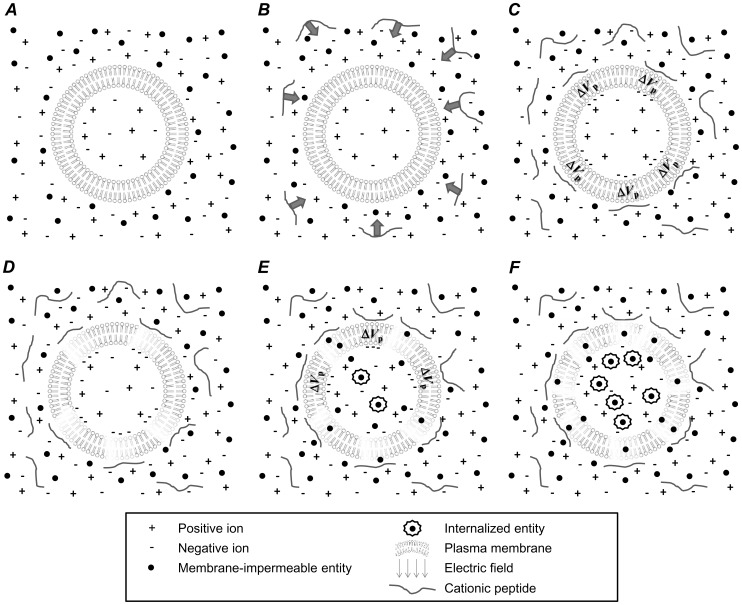
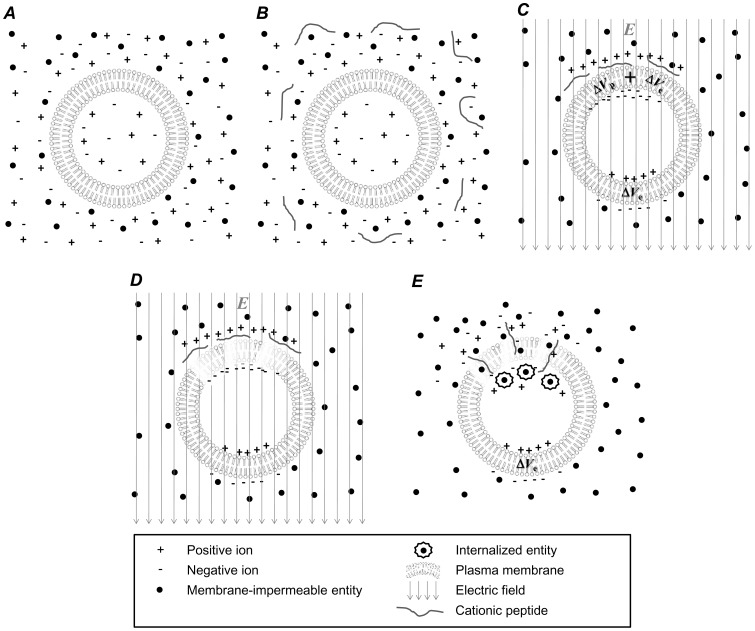
The use of pulsed electric fields (PEFs) to irreversibly electroporate cells is a promising approach for destroying undesirable cells. This approach may gain enhanced applicability if the intensity of the PEF required to electrically disrupt cell membranes can be reduced via exposure to a molecular deliverable. This will be particularly impactful if that reduced PEF minimally influences cells that are not exposed to the deliverable. We hypothesized that the introduction of charged molecules to the cell surfaces would create regions of enhanced transmembrane electric potential in the vicinity of each charged molecule, thereby lowering the PEF intensity required to disrupt the plasma membranes. This study will therefore examine if exposure to cationic peptides can enhance a PEF's ability to disrupt plasma membranes.
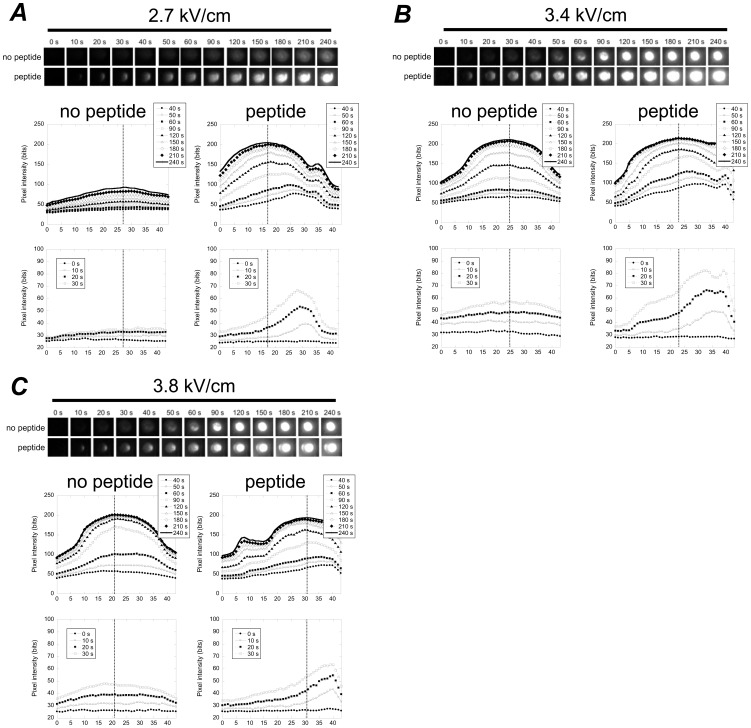
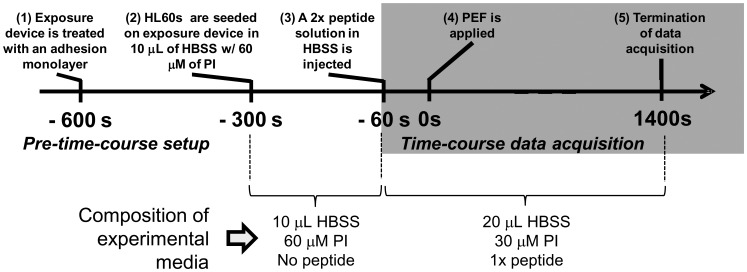
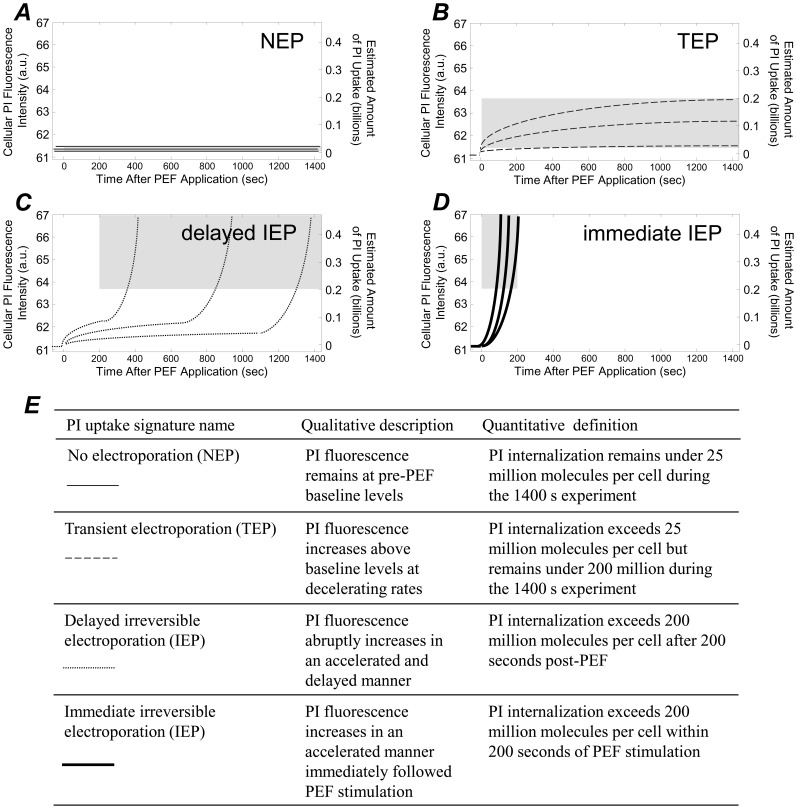
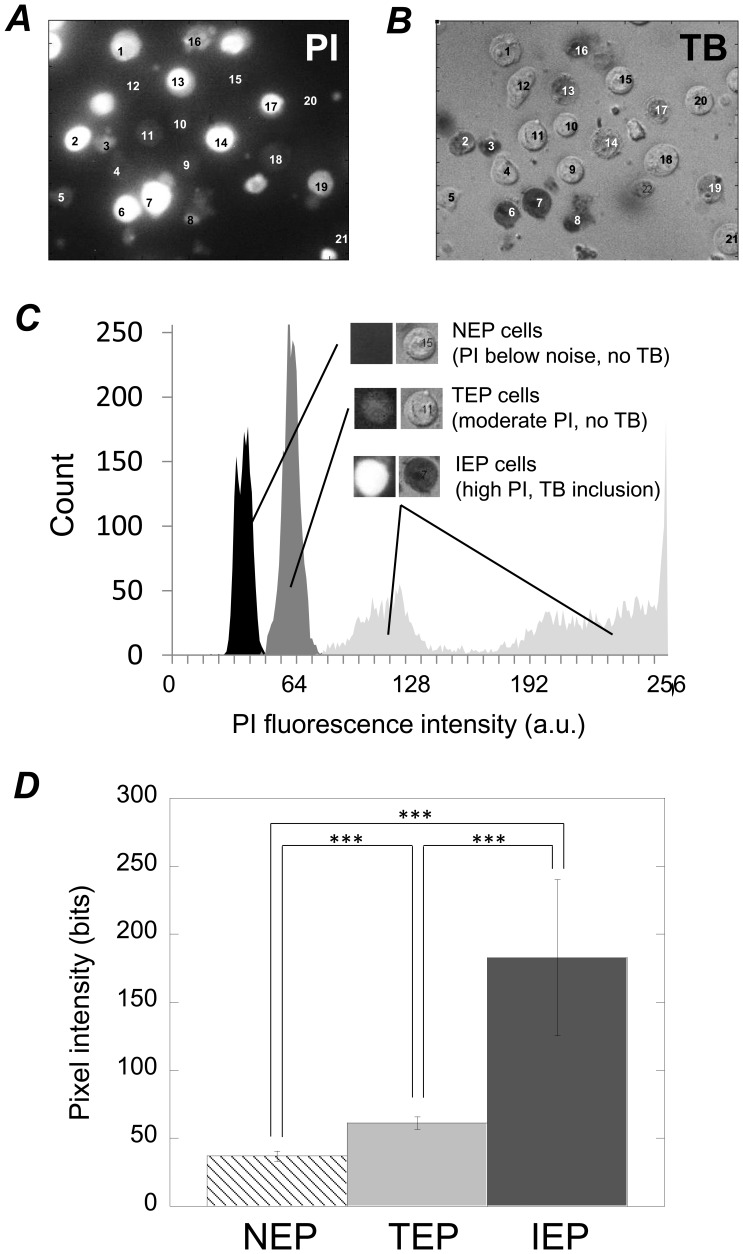
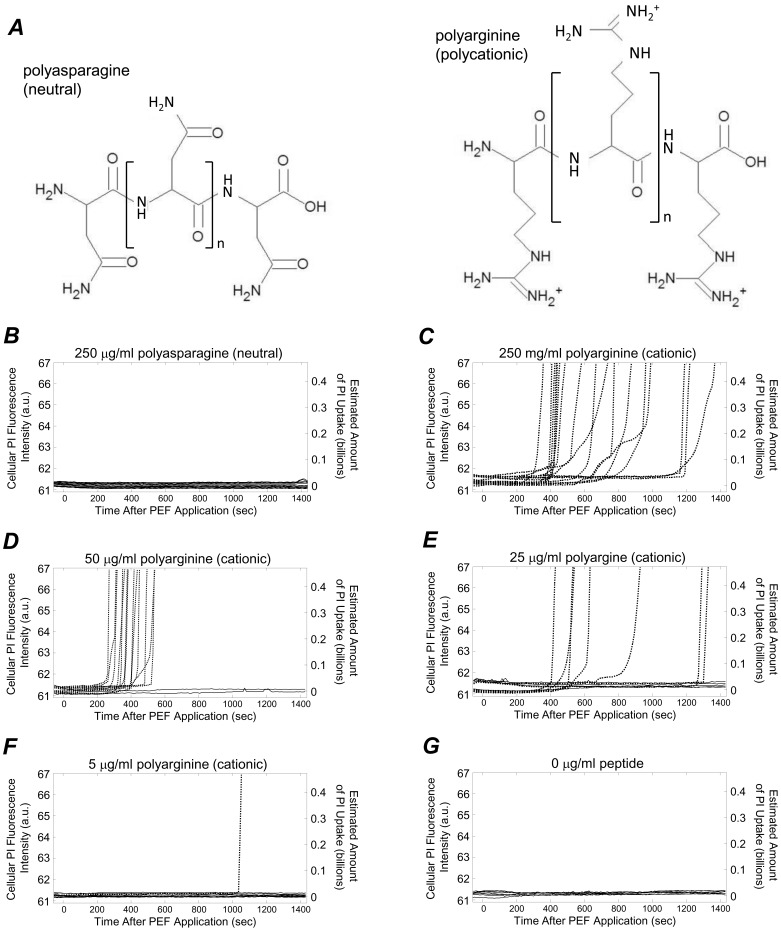
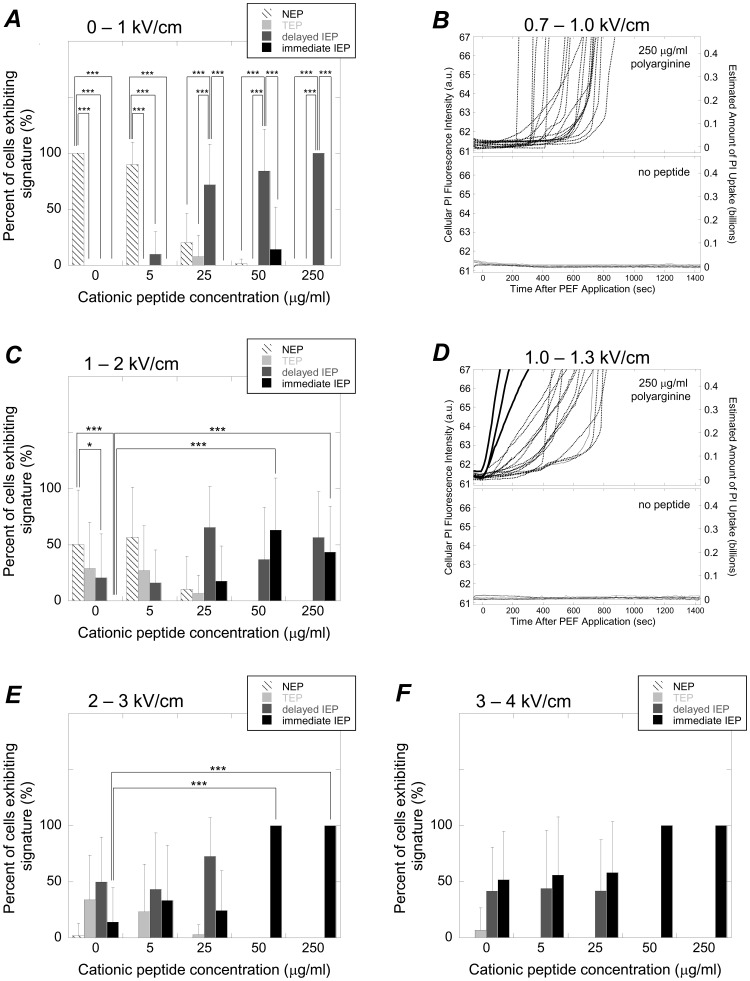
METHODOLOGY/PRINCIPAL FINDINGS: We exposed leukemia cells to 40 μs PEFs in media containing varying concentrations of a cationic peptide, polyarginine. We observed the internalization of a membrane integrity indicator, propidium iodide (PI), in real time. Based on an individual cell's PI fluorescence versus time signature, we were able to determine the relative degree of membrane disruption. When using 1-2 kV/cm, exposure to >50 μg/ml of polyarginine resulted in immediate and high levels of PI uptake, indicating severe membrane disruption, whereas in the absence of peptide, cells predominantly exhibited signatures indicative of no membrane disruption. Additionally, PI entered cells through the anode-facing membrane when exposed to cationic peptide, which was theoretically expected.
CONCLUSIONS/SIGNIFICANCE: Exposure to cationic peptides reduced the PEF intensity required to induce rapid and irreversible membrane disruption. Critically, peptide exposure reduced the PEF intensities required to elicit irreversible membrane disruption at normally sub-electroporation intensities. We believe that these cationic peptides, when coupled with current advancements in cell targeting techniques will be useful tools in applications where targeted destruction of unwanted cell populations is desired.
使用脉冲电场(PEF)使细胞发生不可逆电穿孔是一种有前景的破坏不良细胞的方法。如果通过暴露于可递送分子能够降低电破坏细胞膜所需的PEF强度,那么这种方法的适用性可能会增强。如果降低后的PEF对未暴露于该递送分子的细胞影响最小,这将具有特别重要的意义。我们假设向细胞表面引入带电分子会在每个带电分子附近产生跨膜电位增强的区域,从而降低破坏质膜所需的PEF强度。因此,本研究将考察暴露于阳离子肽是否能增强PEF破坏质膜的能力。
方法/主要发现:我们将白血病细胞暴露于含有不同浓度阳离子肽聚精氨酸的培养基中的40微秒PEF中。我们实时观察了膜完整性指示剂碘化丙啶(PI)的内化情况。基于单个细胞的PI荧光与时间特征,我们能够确定膜破坏的相对程度。当使用1 - 2 kV/cm时,暴露于>50μg/ml的聚精氨酸会导致PI立即大量摄取,表明严重的膜破坏,而在没有肽的情况下,细胞主要表现出无膜破坏的特征。此外,当暴露于阳离子肽时,PI通过面向阳极的膜进入细胞,这在理论上是预期的。
结论/意义:暴露于阳离子肽降低了诱导快速且不可逆膜破坏所需的PEF强度。至关重要的是,肽暴露降低了在正常低于电穿孔强度下引发不可逆膜破坏所需的PEF强度。我们认为,这些阳离子肽与当前细胞靶向技术的进展相结合,将成为在需要靶向破坏不需要的细胞群体的应用中的有用工具。