Department of Psychiatry, University of Medicine Rostock , Rostock , Germany ; Center of Clinical and Experimental Medicine, University of Medicine Craiova , Craiova , Romania.
Center of Clinical and Experimental Medicine, University of Medicine Craiova , Craiova , Romania.
Front Aging Neurosci. 2014 Mar 18;6:44. doi: 10.3389/fnagi.2014.00044. eCollection 2014.
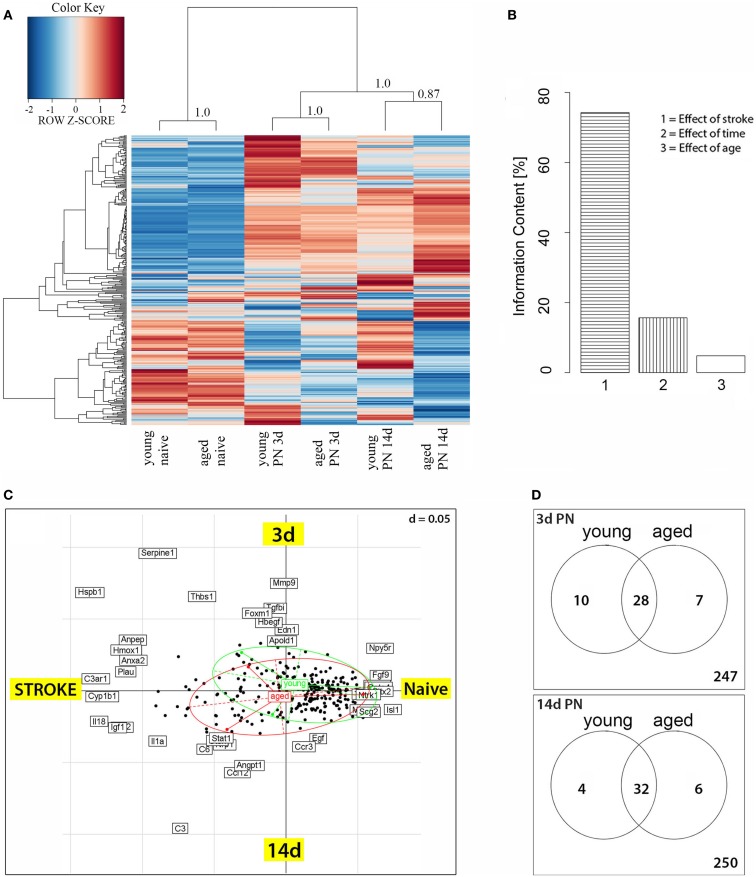
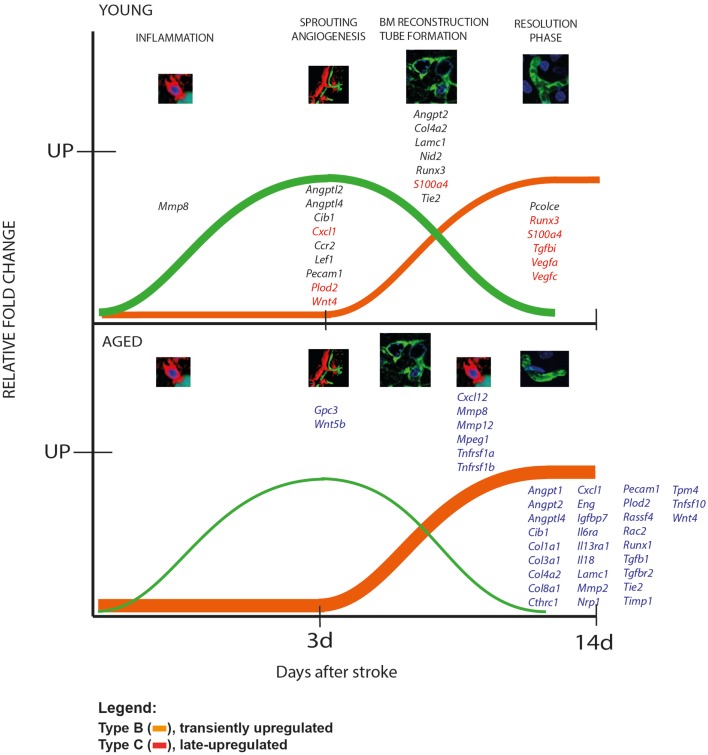
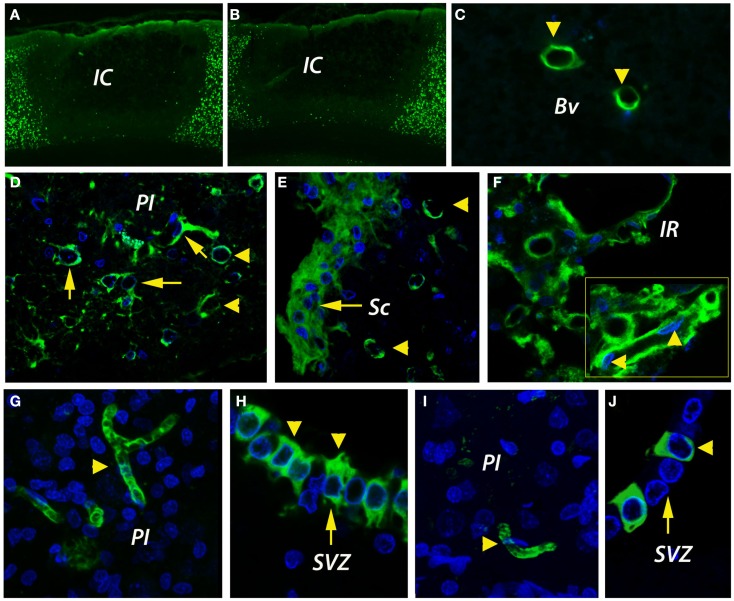
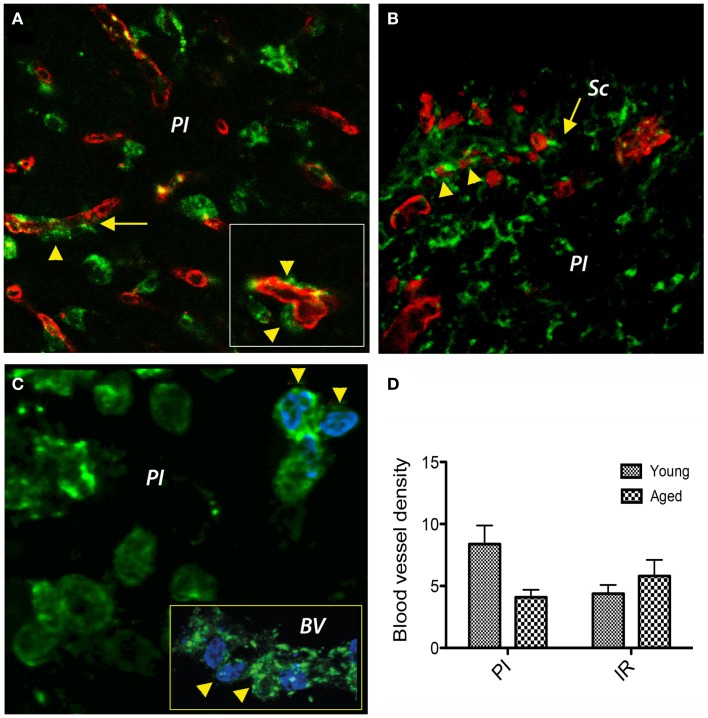
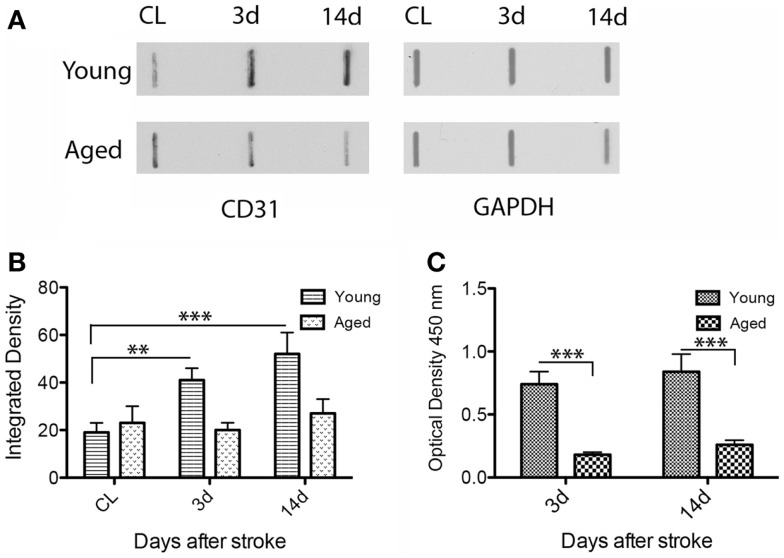
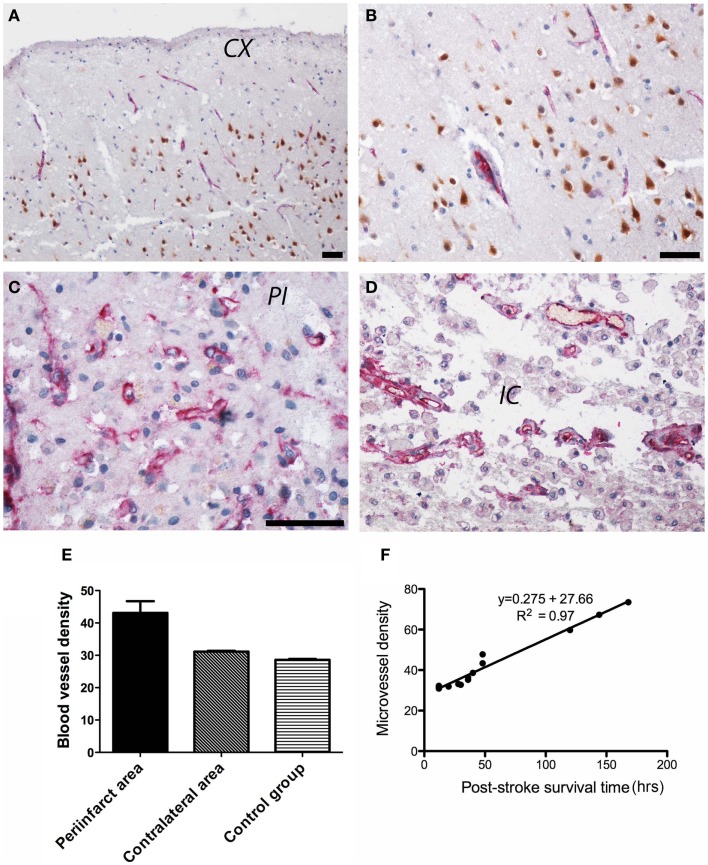
Despite the obvious clinical significance of post-stroke angiogenesis in aged subjects, a detailed transcriptomic analysis of post-stroke angiogenesis has not yet been undertaken in an aged experimental model. In this study, by combining stroke transcriptomics with immunohistochemistry in aged rats and post-stroke patients, we sought to identify an age-specific gene expression pattern that may characterize the angiogenic process after stroke. We found that both young and old infarcted rats initiated vigorous angiogenesis. However, the young rats had a higher vascular density by day 14 post-stroke. "New-for-stroke" genes that were linked to the increased vasculature density in young animals included Angpt2, Angptl2, Angptl4, Cib1, Ccr2, Col4a2, Cxcl1, Lef1, Hhex, Lamc1, Nid2, Pcam1, Plod2, Runx3, Scpep1, S100a4, Tgfbi, and Wnt4, which are required for sprouting angiogenesis, reconstruction of the basal lamina (BL), and the resolution phase. The vast majority of genes involved in sprouting angiogenesis (Angpt2, Angptl4, Cib1, Col8a1, Nrp1, Pcam1, Pttg1ip, Rac2, Runx1, Tnp4, Wnt4); reconstruction of a new BL (Col4a2, Lamc1, Plod2); or tube formation and maturation (Angpt1, Gpc3, Igfbp7, Sparc, Tie2, Tnfsf10), had however, a delayed upregulation in the aged rats. The angiogenic response in aged rats was further diminished by the persistent upregulation of "inflammatory" genes (Cxcl12, Mmp8, Mmp12, Mmp14, Mpeg1, Tnfrsf1a, Tnfrsf1b) and vigorous expression of genes required for the buildup of the fibrotic scar (Cthrc1, Il6ra, Il13ar1, Il18, Mmp2, Rassf4, Tgfb1, Tgfbr2, Timp1). Beyond this barrier, angiogenesis in the aged brains was similar to that in young brains. We also found that the aged human brain is capable of mounting a vigorous angiogenic response after stroke, which most likely reflects the remaining brain plasticity of the aged brain.
尽管在老年患者中风后血管生成具有明显的临床意义,但在老年实验模型中,尚未对中风后血管生成进行详细的转录组分析。在这项研究中,我们通过结合中风转录组学和老年大鼠和中风后患者的免疫组织化学,试图确定一种可能特征化中风后血管生成过程的特定于年龄的基因表达模式。我们发现,年轻和老年梗死大鼠都启动了强烈的血管生成。然而,年轻大鼠在中风后 14 天具有更高的血管密度。与年轻动物增加的血管密度相关的“新形成的中风”基因包括 Angpt2、Angptl2、Angptl4、Cib1、Ccr2、Col4a2、Cxcl1、Lef1、Hhex、Lamc1、Nid2、Pcam1、Plod2、Runx3、Scpep1、S100a4、Tgfbi 和 Wnt4,这些基因是血管生成所需的发芽、基底膜 (BL) 的重建和解决阶段。涉及发芽血管生成的绝大多数基因(Angpt2、Angptl4、Cib1、Col8a1、Nrp1、Pcam1、Pttg1ip、Rac2、Runx1、Tnp4、Wnt4);新 BL 的重建(Col4a2、Lamc1、Plod2);或管形成和成熟(Angpt1、Gpc3、Igfbp7、Sparc、Tie2、Tnfsf10),然而,在老年大鼠中延迟上调。在老年大鼠中,“炎症”基因(Cxcl12、Mmp8、Mmp12、Mmp14、Mpeg1、Tnfrsf1a、Tnfrsf1b)的持续上调和纤维化疤痕形成所需基因的强烈表达(Cthrc1、Il6ra、Il13ar1、Il18、Mmp2、Rassf4、Tgfb1、Tgfbr2、Timp1)进一步削弱了血管生成反应。超越这个障碍,老年大脑中的血管生成与年轻大脑中的血管生成相似。我们还发现,中风后老年人大脑能够产生强烈的血管生成反应,这很可能反映了老年人大脑的剩余脑可塑性。