Besse-Patin Aurèle, Estall Jennifer L
Division of Cardiovascular and Metabolic Diseases, Institut de Recherches Cliniques de Montreal 110, Avenue des Pins Ouest, Montreal, QC, Canada H2W 1R7 ; Molecular Biology Department, University of Montreal, Montreal, QC, Canada H3C 3J7.
Int J Cell Biol. 2014;2014:519153. doi: 10.1155/2014/519153. Epub 2014 Feb 12.
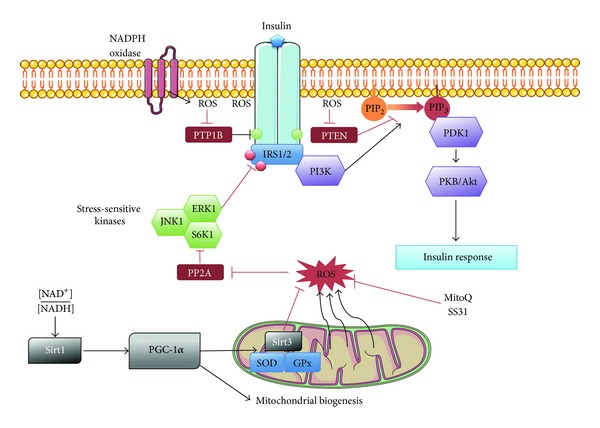
Oxidative stress damages multiple cellular components including DNA, lipids, and proteins and has been linked to pathological alterations in nonalcoholic fatty liver disease (NAFLD). Reactive oxygen species (ROS) emission, resulting from nutrient overload and mitochondrial dysfunction, is thought to be a principal mediator in NAFLD progression, particularly toward the development of hepatic insulin resistance. In the context of insulin signalling, ROS has a dual role, as both a facilitator and inhibitor of the insulin signalling cascade. ROS mediate these effects through redox modifications of cysteine residues affecting phosphatase enzyme activity, stress-sensitive kinases, and metabolic sensors. This review highlights the intricate relationship between redox-sensitive proteins and insulin signalling in the context of fatty liver disease, and to a larger extent, the importance of reactive oxygen species as primary signalling molecules in metabolically active cells.
氧化应激会损害包括DNA、脂质和蛋白质在内的多种细胞成分,并与非酒精性脂肪性肝病(NAFLD)的病理改变有关。营养物质过载和线粒体功能障碍导致的活性氧(ROS)释放被认为是NAFLD进展的主要介质,尤其是在肝胰岛素抵抗的发展过程中。在胰岛素信号传导方面,ROS具有双重作用,既是胰岛素信号级联反应的促进剂,也是抑制剂。ROS通过影响磷酸酶活性、应激敏感激酶和代谢传感器的半胱氨酸残基的氧化还原修饰来介导这些效应。本综述强调了在脂肪性肝病背景下氧化还原敏感蛋白与胰岛素信号传导之间的复杂关系,并且在更大程度上强调了活性氧作为代谢活跃细胞中主要信号分子的重要性。