Department of Nutrition, Gillings School of Global Public Health, University of North Carolina at Chapel Hill, Chapel Hill, North Carolina.
Carolina Population Center, University of North Carolina at Chapel Hill, Chapel Hill, North Carolina.
Ann N Y Acad Sci. 2014 Jan;1308:54-67. doi: 10.1111/nyas.12290. Epub 2013 Oct 31.
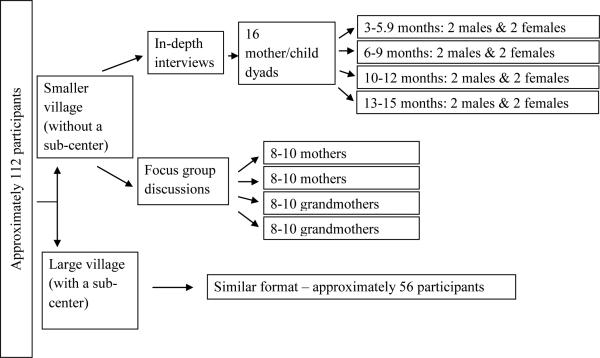
Nutritional and developmental insults in the first few years of life have profound public health implications, including substantial contributions to neonatal, infant, and early childhood morbidity and mortality, as well as longer term effects on cognitive development, school achievement, and worker productivity. Optimal development that can lead to the attainment of an individual's fullest potential, therefore, requires a combination of genetic capacity, adequate nutrition, psychosocial stimulation, and safe, clean physical environments. Researchers and policymakers have called for integrated child nutrition and development interventions for more than 20 years, yet there are only a handful of efficacy trials and even fewer examples of integrated interventions that have been taken to scale. While a critical component in the design of such interventions is formative research, there is a dearth of information in both the literature and policy arenas to guide this phase of the process. To move the field forward, this paper first provides an overview of formative research methods with a focus on qualitative inquiry, a description of the critical domains to be assessed (infant and young child feeding, responsive feeding, and child development), and currently available resources. Application of these methods is provided through a real-world case study--the design of an integrated nutrition and child development efficacy trial in Andhra Pradesh, India. Recommendations for next steps are discussed, the most important of which is the need for a comprehensive set of formative guidelines for designing locally tailored, culturally appropriate, integrated interventions.
生命最初几年的营养和发育不良会对公共卫生产生深远影响,包括对新生儿、婴儿和幼儿发病率和死亡率的重大影响,以及对认知发展、学业成绩和劳动力生产力的长期影响。因此,最佳的发展需要结合遗传能力、充足的营养、心理社会刺激以及安全、清洁的物理环境。研究人员和政策制定者呼吁开展儿童营养和发展综合干预措施已有 20 多年,但仅有少数有效性试验,而且将综合干预措施推广到更大规模的例子更少。虽然此类干预措施的设计的一个关键组成部分是形成性研究,但文献和政策领域都缺乏信息来指导这一过程的阶段。为了推动该领域的发展,本文首先概述了重点关注定性研究的形成性研究方法,描述了需要评估的关键领域(婴儿和幼儿喂养、响应式喂养和儿童发展)以及现有的资源。通过一个真实案例研究——印度安得拉邦综合营养和儿童发展功效试验的设计,应用了这些方法。讨论了下一步的建议,其中最重要的是需要一套全面的形成性指南,用于设计适合当地情况、文化适宜的综合干预措施。