Ohmi Yuhsuke, Ohkawa Yuki, Tajima Orie, Sugiura Yasuo, Furukawa Keiko, Furukawa Koichi
Department of Biochemistry II, Nagoya University Graduate School of Medicine, 65 Tsurumai, Showa-ku, Nagoya 466-0065, Japan.
J Neuroinflammation. 2014 Mar 28;11:61. doi: 10.1186/1742-2094-11-61.
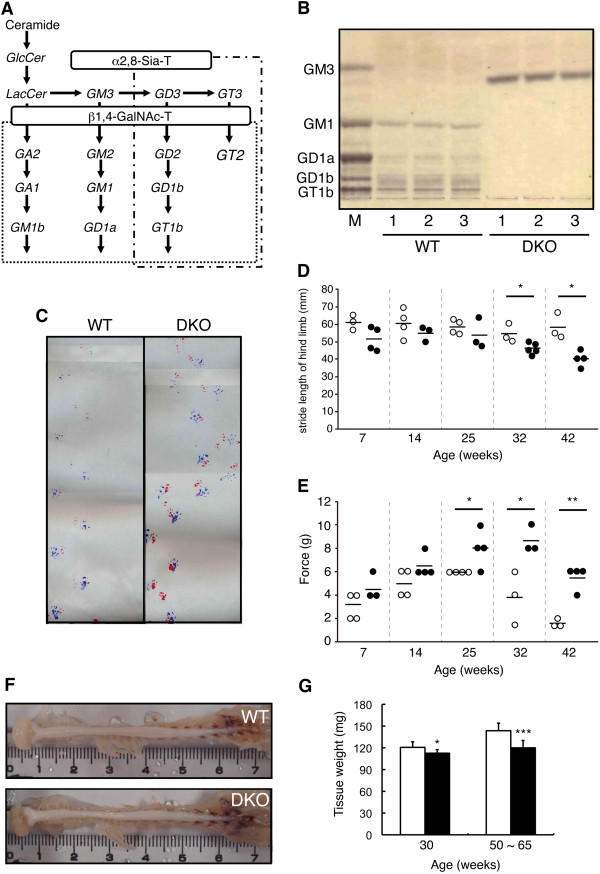
Gangliosides, sialic acid-containing glycosphingolipids, are highly expressed in nervous systems of vertebrates and have been considered to be involved in the development, differentiation, and function of nervous tissues. Recent studies with gene-engineered animals have revealed that they play roles in the maintenance and repair of nervous tissues. In particular, knockout (KO) mice of various ganglioside synthase genes have exhibited progressive neurodegeneration with aging. However, neurological disorders and pathological changes in the spinal cord of these KO mice have not been reported to date. Therefore, we examined neurodegeneration in double knockout (DKO) mice of ganglioside GM2/GD2 synthase (B4GANLT1) and GD3 synthase (ST8SIA1) genes to clarify roles of gangliosides in the spinal cord.
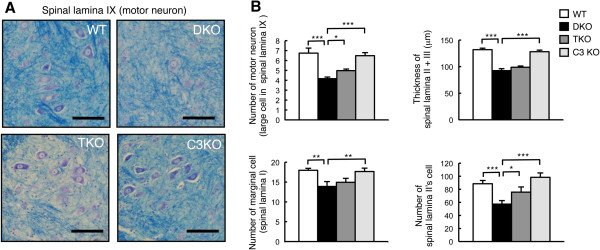
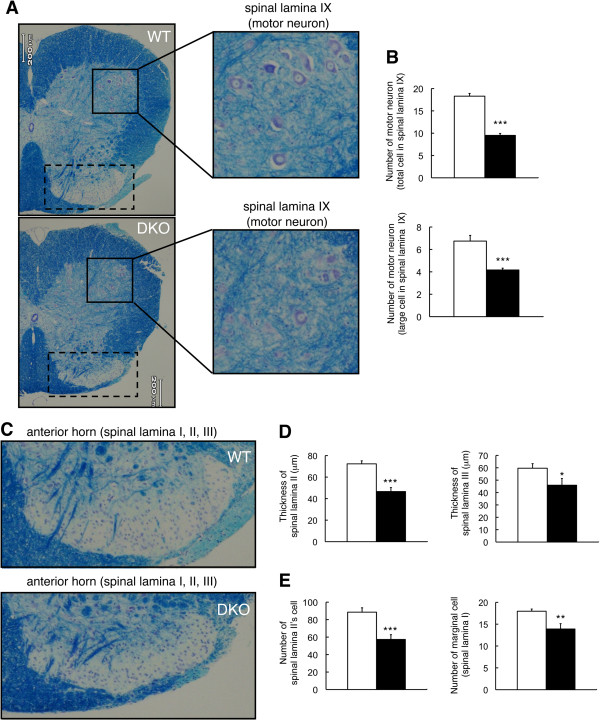
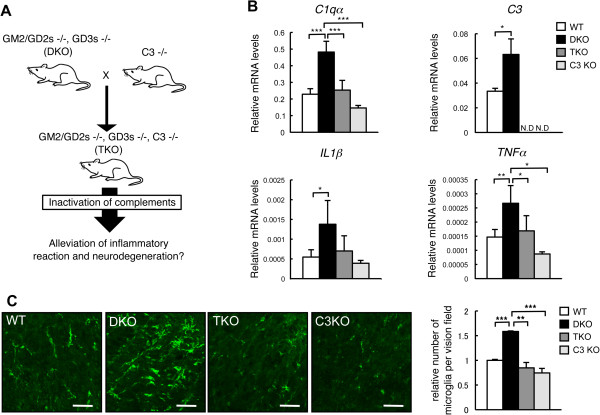
Motor neuron function was examined by gait analysis, and sensory function was analyzed by von Frey test. Pathological changes were analyzed by staining tissue sections with Klüver-Barrera staining and by immunohistochemistry with F4/80 and glial fibrillary acidic protein (GFAP). Gene expression profiles were examined by using DNA micro-array of RNAs from the spinal cord of mice. Triple knockout mice were generated by mating DKO and complement component 3 (C3)-KO mice. Gene expression of the complement system and cytokines was examined by reverse transcription-polymerase chain reaction (RT-PCR) as a function of age.
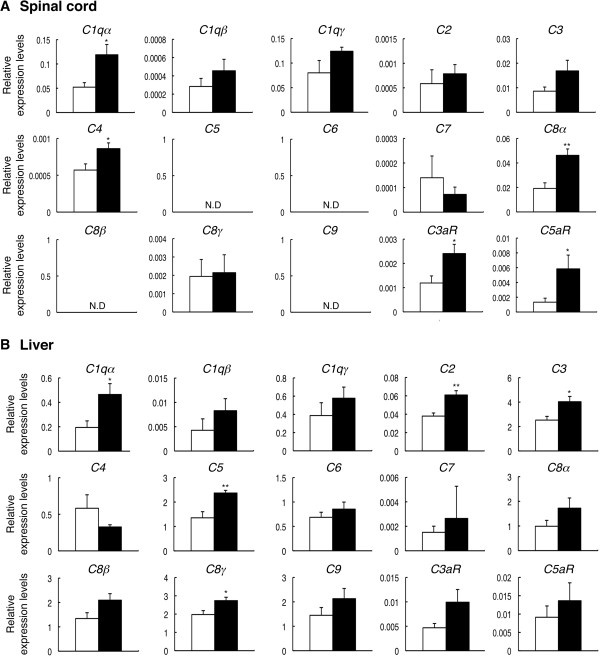
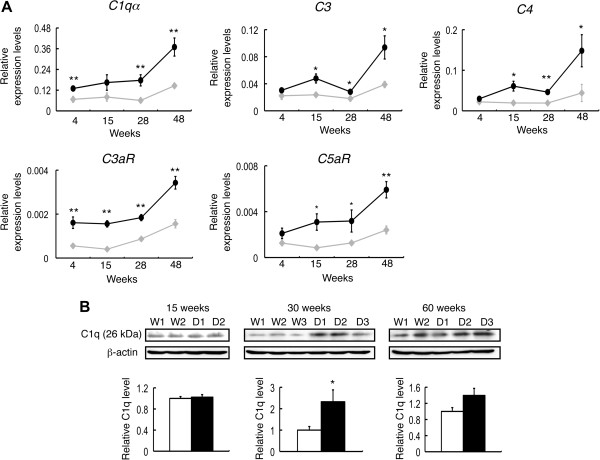
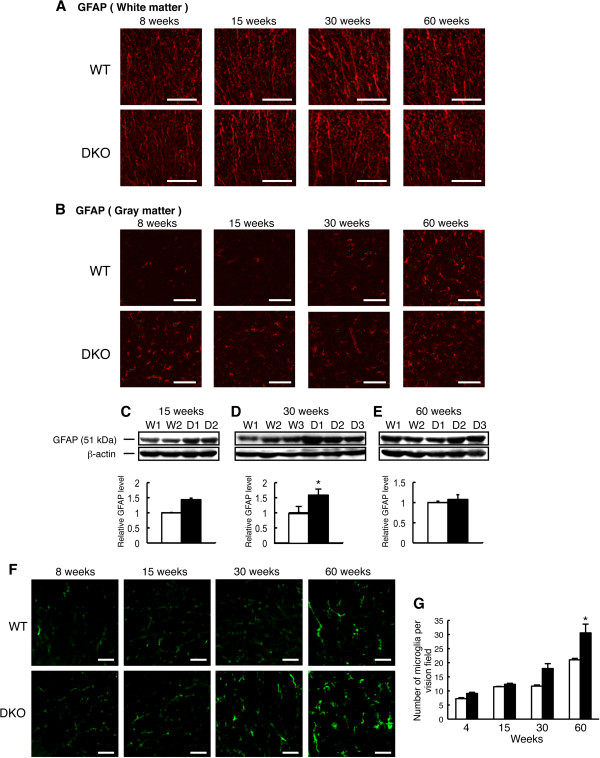
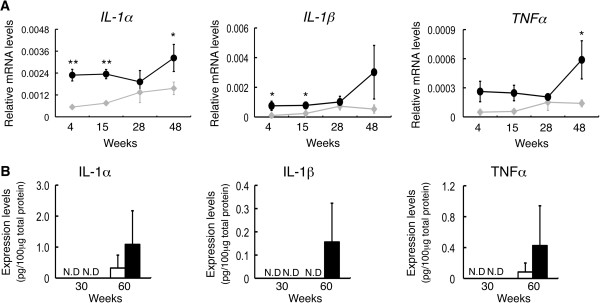
DKO mice showed progressive deterioration with aging. Correspondingly, they exhibited shrunk spinal cord, reduced thickness of spinal lamina II and III, and reduced neuronal numbers in spinal lamina IX, spinal lamina II, and spinal lamina I. Complement-related genes were upregulated in DKO spinal cord. Moreover, complement activation and inflammatory reactions were detected by GFAP-active astrocyte, microglial accumulation, and increased inflammatory cytokines such as tumor necrosis factor-alpha (TNFα) and interleukin-1-beta (IL-1β). Triple knockout mice showed restoration of reduced neuron numbers in the spinal cord of DKO mice, getting close to levels of wild-type mice.
Disruption in the architecture of lipid rafts in the spinal cord was not so prominent, suggesting that mechanisms distinct from those reported might be involved in the complement activation in the spinal cord of DKO mice. Gene profiling revealed that inflammation and neurodegeneration in the spinal cord of DKO mice are, at least partly, dependent on complement activation.
神经节苷脂是含唾液酸的糖鞘脂,在脊椎动物的神经系统中高度表达,被认为参与神经组织的发育、分化和功能。最近对基因工程动物的研究表明,它们在神经组织的维持和修复中发挥作用。特别是,各种神经节苷脂合酶基因的敲除(KO)小鼠随着年龄增长出现进行性神经退行性变。然而,迄今为止尚未报道这些KO小鼠脊髓中的神经功能障碍和病理变化。因此,我们检测了神经节苷脂GM2/GD2合酶(B4GANLT1)和GD3合酶(ST8SIA1)基因双敲除(DKO)小鼠的神经退行性变,以阐明神经节苷脂在脊髓中的作用。
通过步态分析检测运动神经元功能,通过von Frey试验分析感觉功能。通过用Klüver-Barrera染色法对组织切片进行染色以及用F4/80和胶质纤维酸性蛋白(GFAP)进行免疫组织化学分析病理变化。通过使用来自小鼠脊髓的RNA的DNA微阵列检测基因表达谱。通过将DKO小鼠与补体成分3(C3)-KO小鼠交配产生三敲除小鼠。通过逆转录-聚合酶链反应(RT-PCR)检测补体系统和细胞因子的基因表达随年龄的变化。
DKO小鼠随着年龄增长出现进行性恶化。相应地,它们表现出脊髓萎缩、脊髓板层II和III厚度减小以及脊髓板层IX、脊髓板层II和脊髓板层I中的神经元数量减少。补体相关基因在DKO脊髓中上调。此外,通过GFAP活性星形胶质细胞、小胶质细胞积聚以及肿瘤坏死因子-α(TNFα)和白细胞介素-1-β(IL-1β)等炎症细胞因子增加检测到补体激活和炎症反应。三敲除小鼠显示DKO小鼠脊髓中减少的神经元数量恢复,接近野生型小鼠水平。
脊髓中脂筏结构的破坏并不那么明显,这表明与报道的机制不同的机制可能参与DKO小鼠脊髓中的补体激活。基因谱分析表明,DKO小鼠脊髓中的炎症和神经退行性变至少部分依赖于补体激活。