Department of Biomedical Sciences, Chubu University College of Life and Health Sciences, 1200 Matsumoto, Kasugai, Aichi 487-8501, Japan.
Department of Biochemistry II, Nagoya University Graduate School of Medicine, 65 Tsurumai, Showa-ku, Nagoya 466-0065, Japan.
Int J Mol Sci. 2020 Mar 11;21(6):1906. doi: 10.3390/ijms21061906.
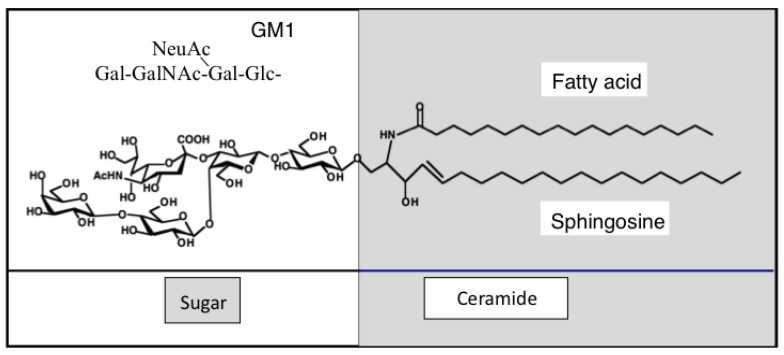
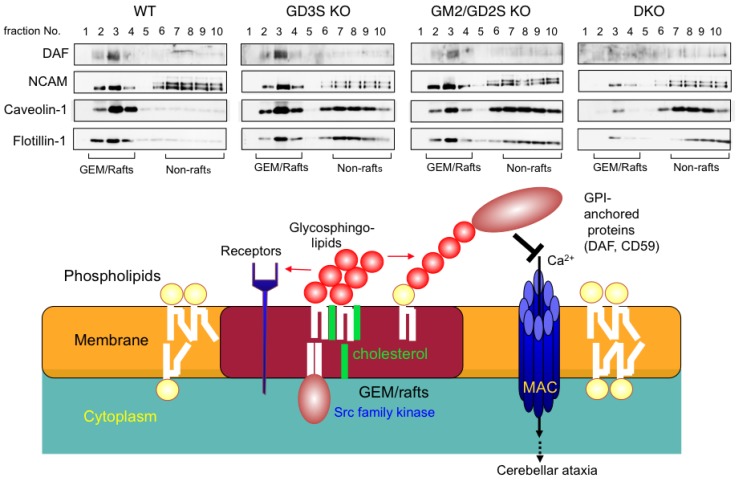
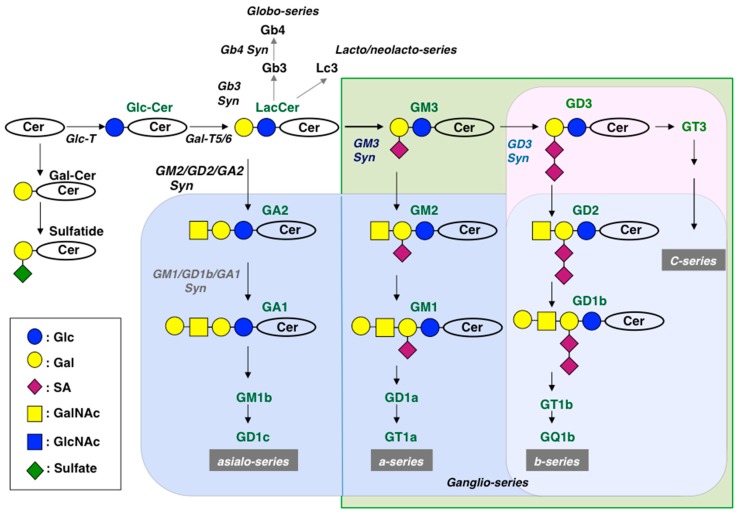
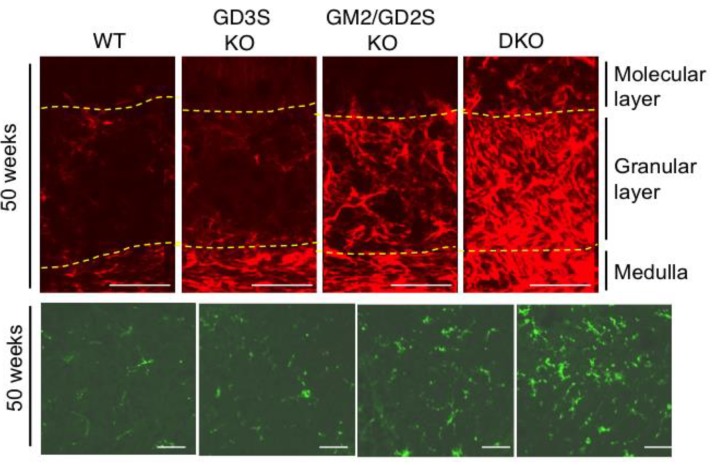
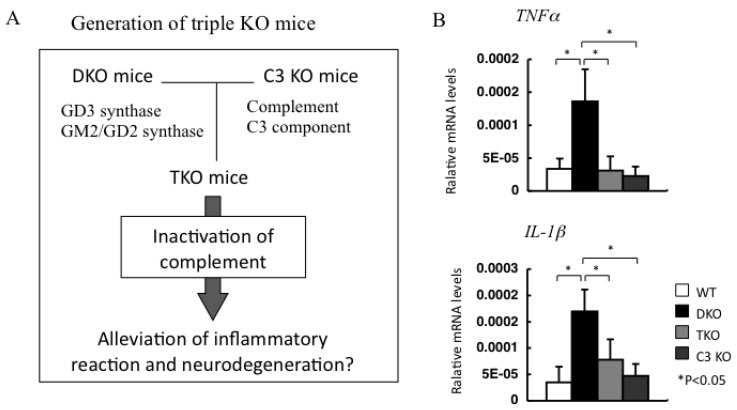
Acidic glycosphingolipids, i.e., gangliosides, are predominantly and consistently expressed in nervous tissues of vertebrates at high levels. Therefore, they are considered to be involved in the development and function of nervous systems. Recent studies involving genetic engineering of glycosyltransferase genes have revealed novel aspects of the roles of gangliosides in the regulation of nervous tissues. In this review, novel findings regarding ganglioside functions and their modes of action elucidated mainly by studies of gene knockout mice are summarized. In particular, the roles of gangliosides in the regulation of lipid rafts to maintain the integrity of nervous systems are reported with a focus on the roles in the regulation of neuro-inflammation and neurodegeneration via complement systems. In addition, recent advances in studies of congenital neurological disorders due to genetic mutations of ganglioside synthase genes and also in the techniques for the analysis of ganglioside functions are introduced.
酸性糖脂,即神经节苷脂,在脊椎动物的神经组织中高水平且普遍表达。因此,它们被认为参与了神经系统的发育和功能。最近涉及糖基转移酶基因遗传工程的研究揭示了神经节苷脂在神经组织调节中的新作用。在这篇综述中,主要通过基因敲除小鼠的研究总结了有关神经节苷脂功能及其作用模式的新发现。特别地,报告了神经节苷脂在调节脂筏以维持神经系统完整性中的作用,重点是通过补体系统调节神经炎症和神经退行性变的作用。此外,还介绍了由于神经节苷脂合酶基因突变引起的先天性神经发育障碍的研究进展,以及神经节苷脂功能分析技术的最新进展。