Cockrell Chase, Christley Scott, An Gary
Department of Surgery, University of Chicago, Chicago, Illinois, United States of America.
PLoS Comput Biol. 2014 Mar 27;10(3):e1003507. doi: 10.1371/journal.pcbi.1003507. eCollection 2014 Mar.
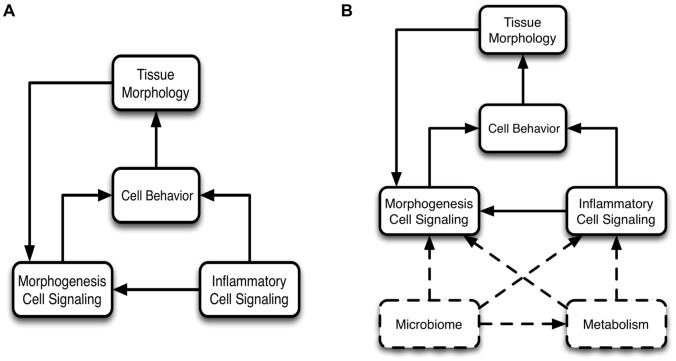
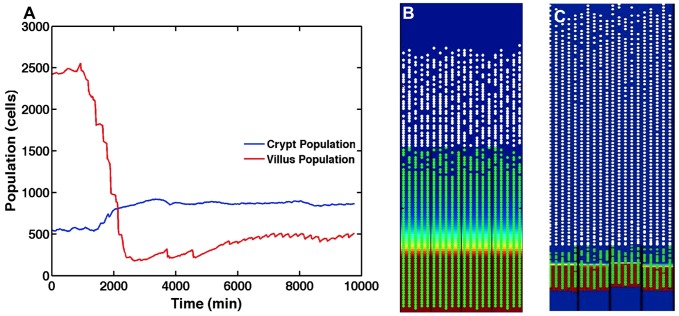
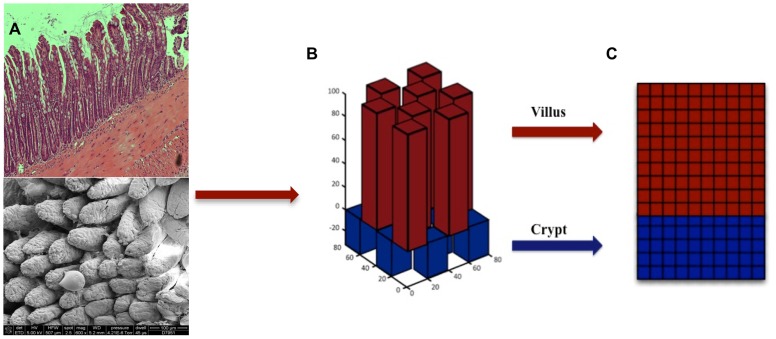
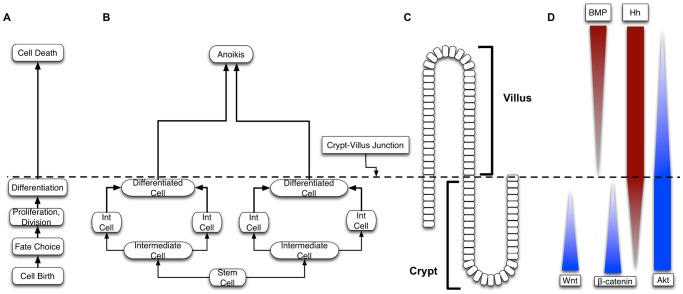
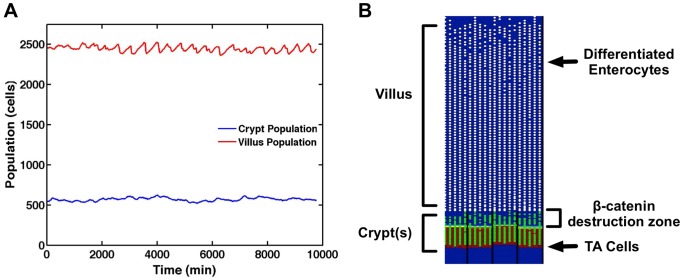
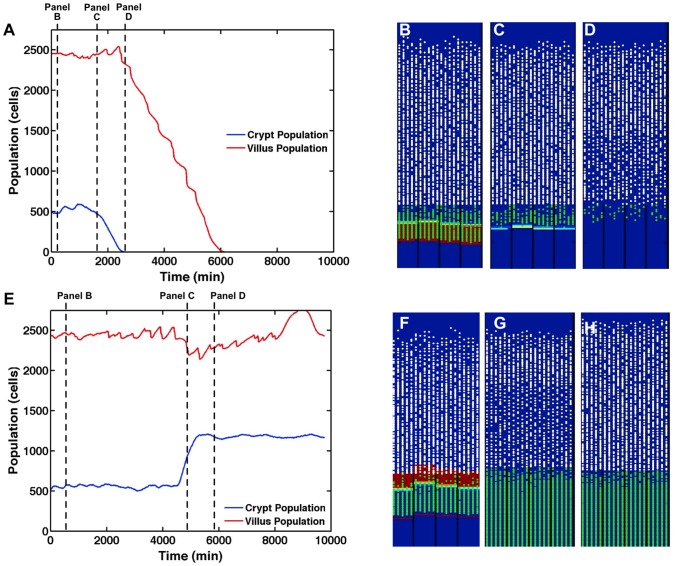
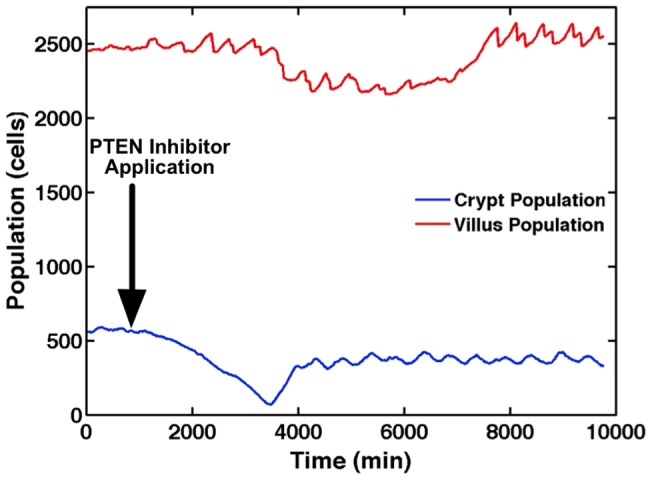
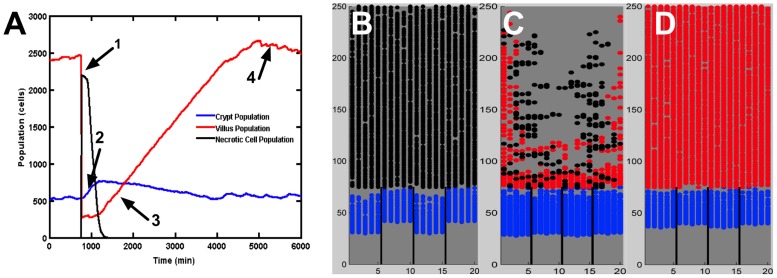
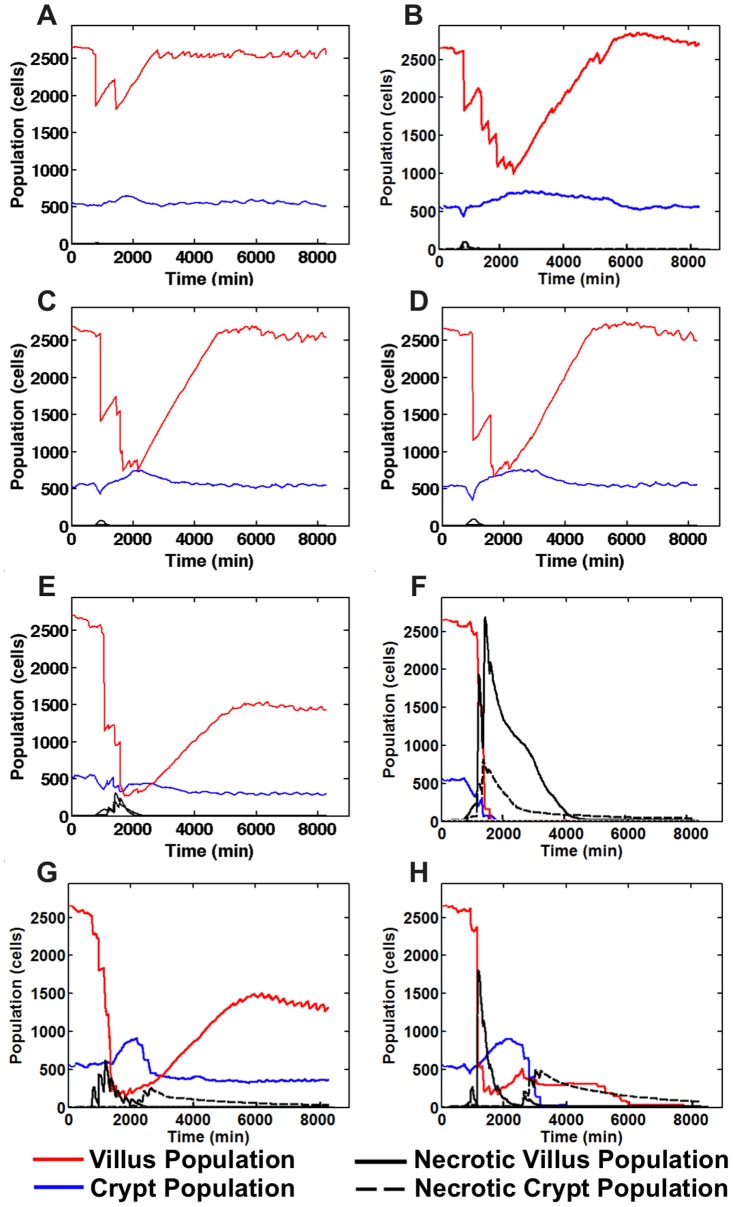
The mucosa of the intestinal tract represents a finely tuned system where tissue structure strongly influences, and is turn influenced by, its function as both an absorptive surface and a defensive barrier. Mucosal architecture and histology plays a key role in the diagnosis, characterization and pathophysiology of a host of gastrointestinal diseases. Inflammation is a significant factor in the pathogenesis in many gastrointestinal diseases, and is perhaps the most clinically significant control factor governing the maintenance of the mucosal architecture by morphogenic pathways. We propose that appropriate characterization of the role of inflammation as a controller of enteric mucosal tissue patterning requires understanding the underlying cellular and molecular dynamics that determine the epithelial crypt-villus architecture across a range of conditions from health to disease. Towards this end we have developed the Spatially Explicit General-purpose Model of Enteric Tissue (SEGMEnT) to dynamically represent existing knowledge of the behavior of enteric epithelial tissue as influenced by inflammation with the ability to generate a variety of pathophysiological processes within a common platform and from a common knowledge base. In addition to reproducing healthy ileal mucosal dynamics as well as a series of morphogen knock-out/inhibition experiments, SEGMEnT provides insight into a range of clinically relevant cellular-molecular mechanisms, such as a putative role for Phosphotase and tensin homolog/phosphoinositide 3-kinase (PTEN/PI3K) as a key point of crosstalk between inflammation and morphogenesis, the protective role of enterocyte sloughing in enteric ischemia-reperfusion and chronic low level inflammation as a driver for colonic metaplasia. These results suggest that SEGMEnT can serve as an integrating platform for the study of inflammation in gastrointestinal disease.
肠道黏膜代表了一个高度协调的系统,其中组织结构强烈影响其作为吸收表面和防御屏障的功能,反过来,该功能也会影响组织结构。黏膜结构和组织学在众多胃肠道疾病的诊断、特征描述及病理生理学中起着关键作用。炎症是许多胃肠道疾病发病机制中的一个重要因素,可能是通过形态发生途径控制黏膜结构维持的最具临床意义的调控因子。我们认为,要恰当地描述炎症作为肠道黏膜组织模式控制器的作用,需要了解从健康到疾病的一系列条件下决定上皮隐窝 - 绒毛结构的潜在细胞和分子动力学。为此,我们开发了肠道组织空间明确通用模型(SEGMEnT),以动态呈现肠道上皮组织受炎症影响的现有行为知识,并能够在一个通用平台上且基于一个通用知识库生成各种病理生理过程。除了再现健康回肠黏膜动力学以及一系列形态发生素敲除/抑制实验外,SEGMEnT还深入揭示了一系列临床相关的细胞 - 分子机制,例如磷酸酶和张力蛋白同源物/磷脂酰肌醇3激酶(PTEN/PI3K)作为炎症与形态发生之间关键交叉点的假定作用、肠上皮细胞脱落在肠道缺血再灌注中的保护作用以及慢性低水平炎症作为结肠化生驱动因素的作用。这些结果表明,SEGMEnT可作为研究胃肠道疾病中炎症的整合平台。