Diallo Amadou Oury, Agharbaoui Zahra, Badawi Mohamed A, Ali-Benali Mohamed Ali, Moheb Amira, Houde Mario, Sarhan Fathey
Département des Sciences biologiques Université du Québec à Montréal, CP 8888, Succursale Centre-Ville Montréal, Québec H3C 3P8 Canada.
Département des Sciences biologiques Université du Québec à Montréal, CP 8888, Succursale Centre-Ville Montréal, Québec H3C 3P8 Canada
J Exp Bot. 2014 Jun;65(9):2271-86. doi: 10.1093/jxb/eru102. Epub 2014 Mar 28.
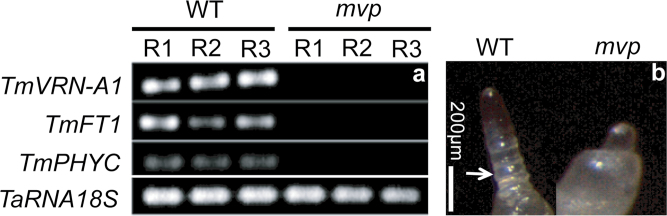
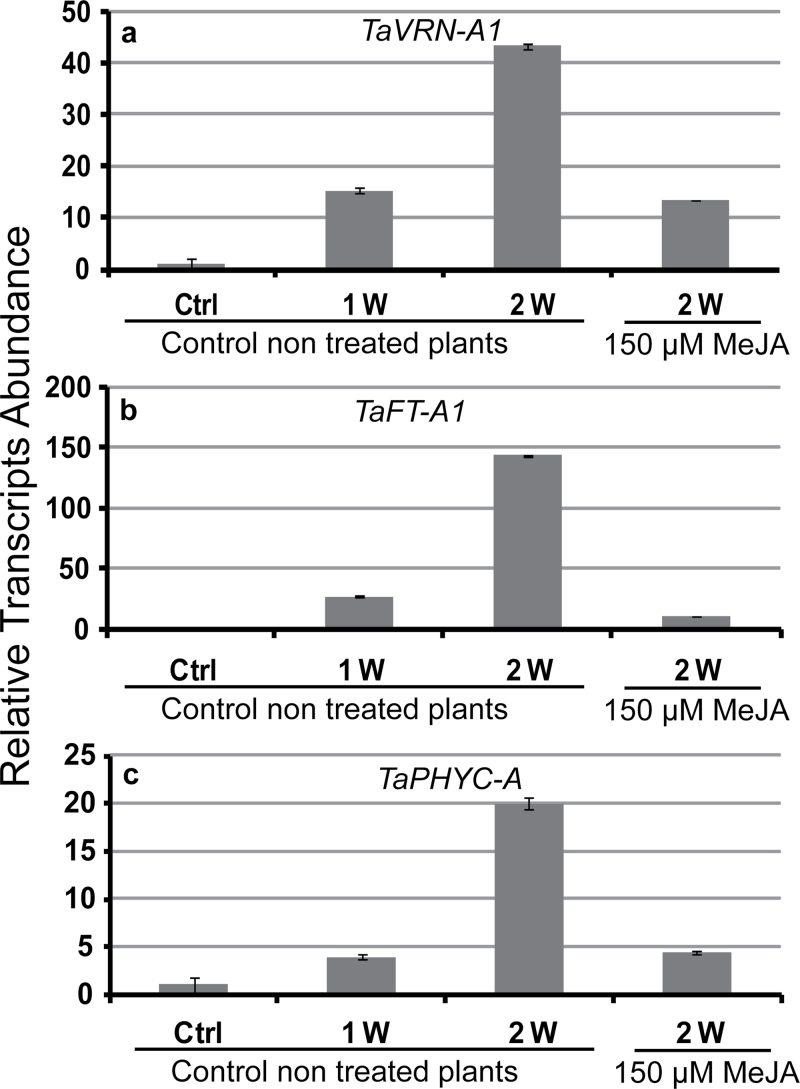
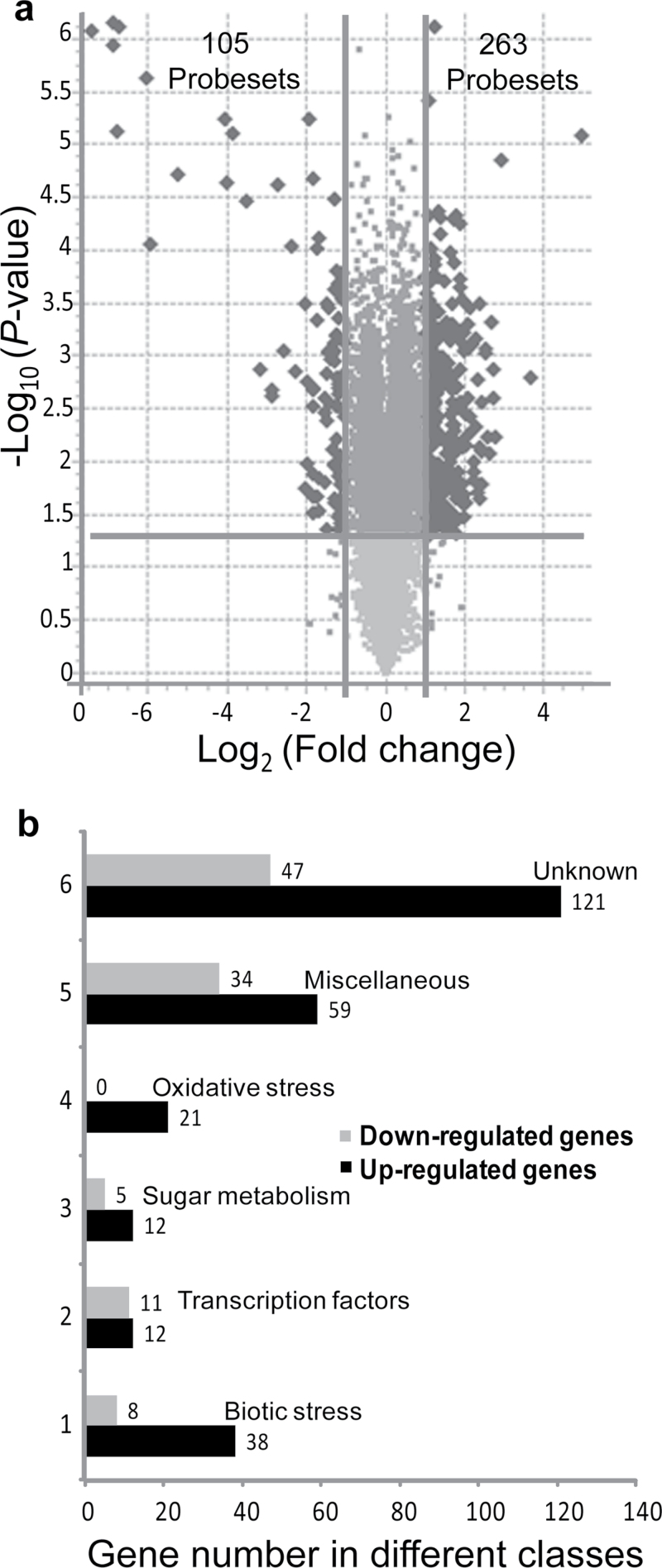
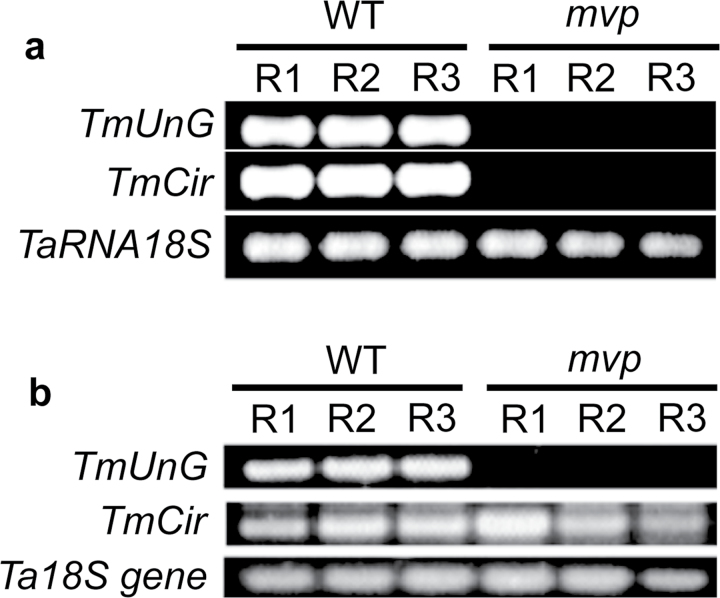
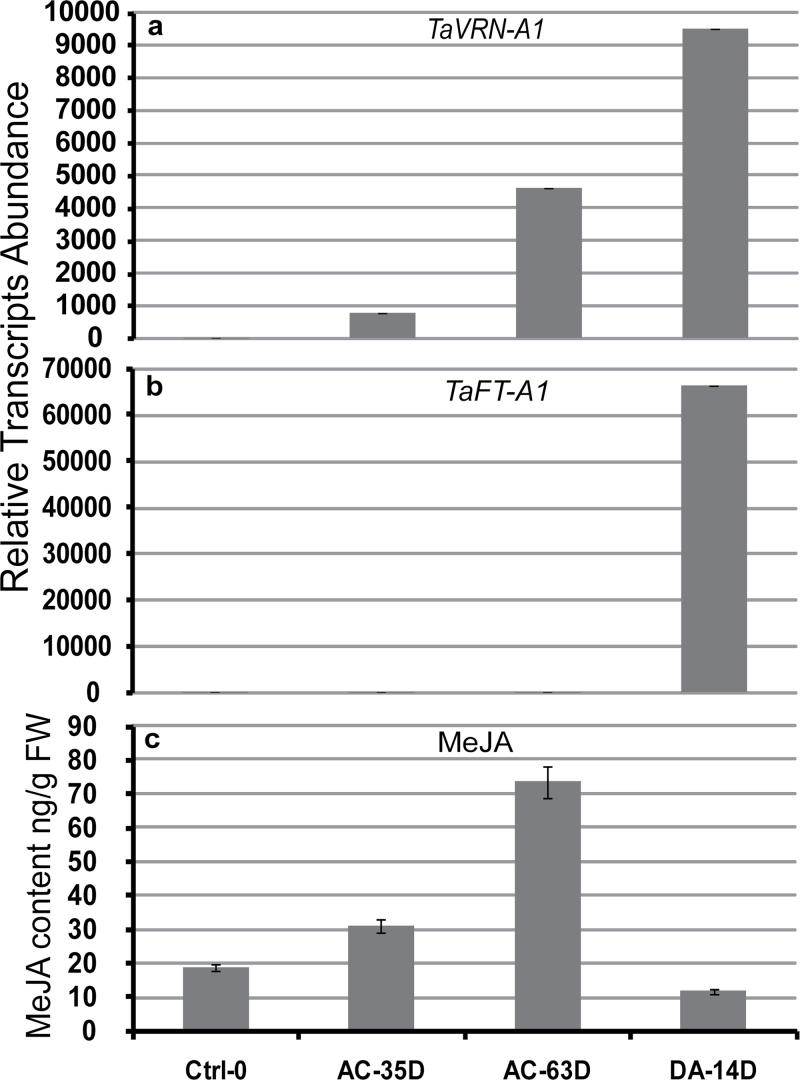
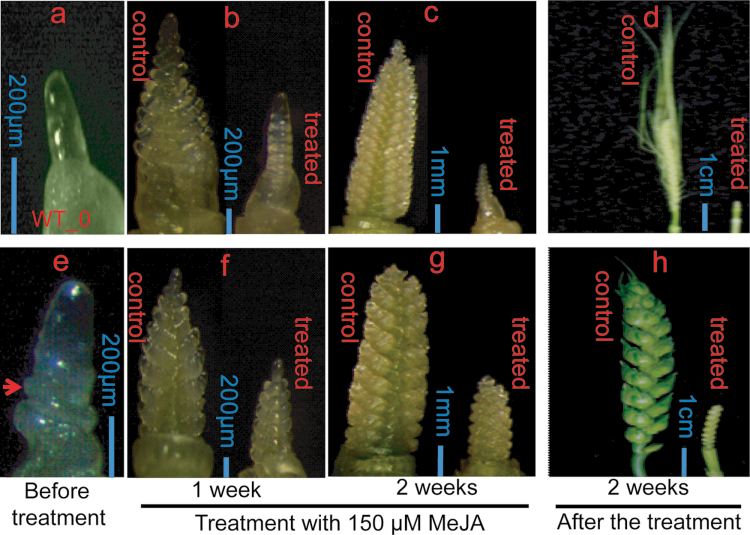
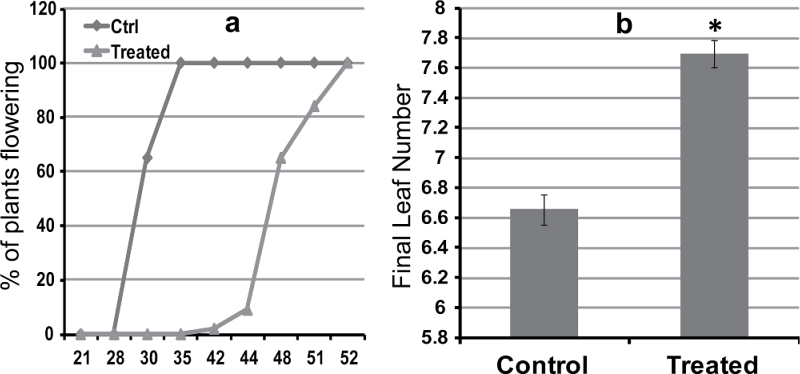
The einkorn wheat mutant mvp-1 (maintained vegetative phase 1) has a non-flowering phenotype caused by deletions including, but not limited to, the genes CYS, PHYC, and VRN1. However, the impact of these deletions on global gene expression is still unknown. Transcriptome analysis showed that these deletions caused the upregulation of several pathogenesis-related (PR) and jasmonate-responsive genes. These results suggest that jasmonates may be involved in flowering and vernalization in wheat. To test this hypothesis, jasmonic acid (JA) and methyl jasmonate (MeJA) content in mvp and wild-type plants was measured. The content of JA was comparable in all plants, whereas the content of MeJA was higher by more than 6-fold in mvp plants. The accumulation of MeJA was also observed in vernalization-sensitive hexaploid winter wheat during cold exposure. This accumulation declined rapidly once plants were deacclimated under floral-inductive growth conditions. This suggests that MeJA may have a role in floral transition. To confirm this result, we treated vernalization-insensitive spring wheat with MeJA. The treatment delayed flowering with significant downregulation of both TaVRN1 and TaFT1 genes. These data suggest a role for MeJA in modulating vernalization and flowering time in wheat.
一粒小麦突变体mvp-1(保持营养生长阶段1)具有由缺失引起的不开花表型,这些缺失包括但不限于CYS、PHYC和VRN1基因。然而,这些缺失对全局基因表达的影响仍然未知。转录组分析表明,这些缺失导致了几个病程相关(PR)和茉莉酸响应基因的上调。这些结果表明,茉莉酸可能参与小麦的开花和春化作用。为了验证这一假设,测定了mvp和野生型植株中茉莉酸(JA)和茉莉酸甲酯(MeJA)的含量。所有植株中JA的含量相当,而mvp植株中MeJA的含量高出6倍多。在春化敏感的六倍体冬小麦冷处理期间也观察到MeJA的积累。一旦植株在诱导开花的生长条件下解除低温驯化,这种积累迅速下降。这表明MeJA可能在花转变中起作用。为了证实这一结果,我们用MeJA处理了春化不敏感的春小麦。该处理延迟了开花,TaVRN1和TaFT1基因均显著下调。这些数据表明MeJA在调节小麦的春化作用和开花时间方面发挥作用。