Tang Caiguo, Zhang Huilan, Zhang Pingping, Ma Yuhan, Cao Minghui, Hu Hao, Shah Faheem Afzal, Zhao Weiwei, Li Minghao, Wu Lifang
Key laboratory of High Magnetic Field and Ion beam physical biology, Hefei Institutes of Physical Science, Chinese Academy of Sciences, Hefei, Anhui, China.
School of Life Sciences, University of Science and Technology of China, Hefei, Anhui, China.
PeerJ. 2019 Jun 17;7:e7104. doi: 10.7717/peerj.7104. eCollection 2019.
Wheat is one of the most important staple crops worldwide. head blight (FHB) severely affects wheat yield and quality. A novel bread wheat mutant, , characterized as cleistogamic was isolated from a non-cleistogamous variety Yumai 18 (YM18) through static magnetic field mutagenesis. Cleistogamy is a promising strategy for controlling FHB. However, little is known about the mechanism of cleistogamy in wheat.
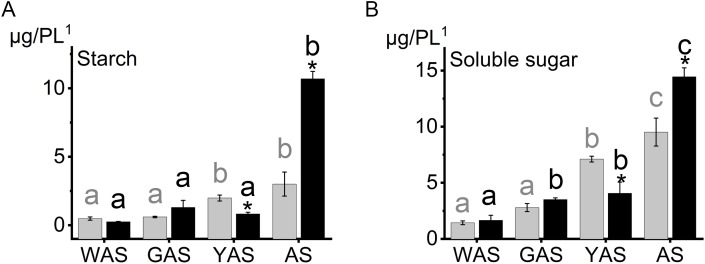
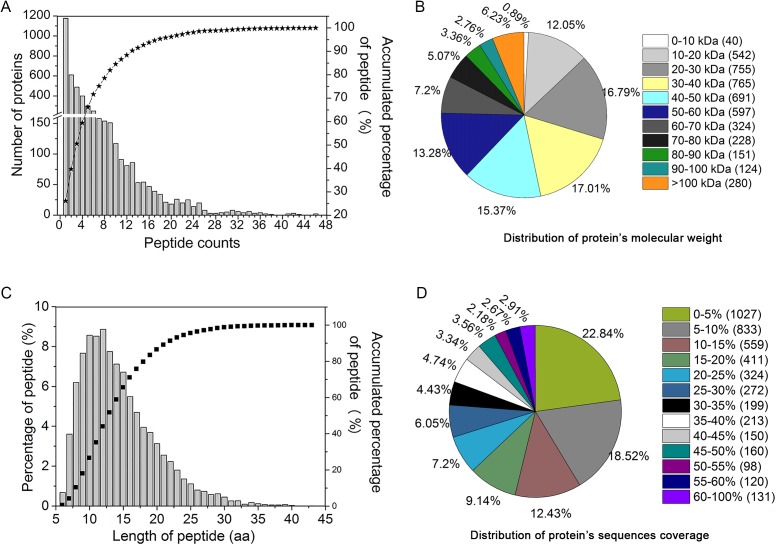
We performed a FHB resistance test to identify the FHB infection rate of . We also measured the agronomic traits of and the starch and total soluble sugar contents of lodicules in YM18 and . Finally, we performed comparative studies at the proteome level between YM18 and based on the proteomic technique of isobaric tags for relative and absolute quantification.
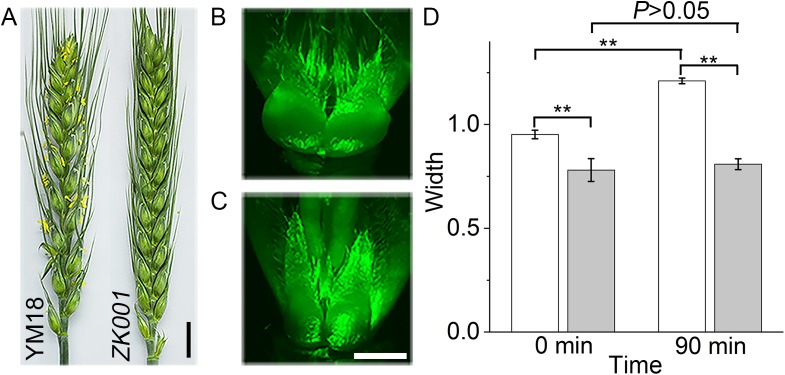
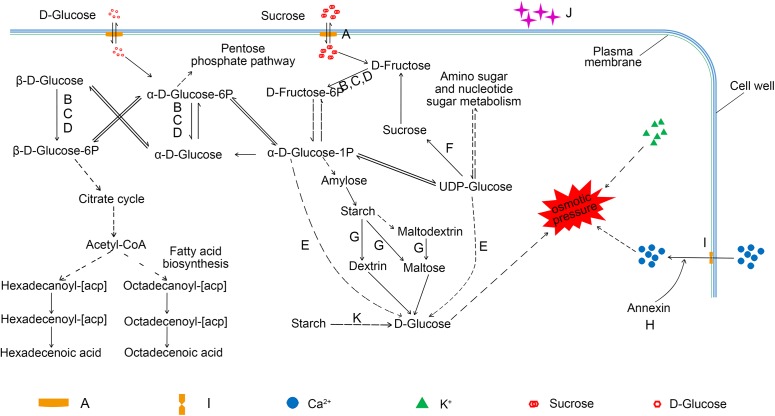
The infection rate of was lower than that of its wild-type and Aikang 58. The abnormal lodicules of lost the ability to push the lemma and palea apart during the flowering stage. Proteome analysis showed that the main differentially abundant proteins (DAPs) were related to carbohydrate metabolism, protein transport, and calcium ion binding. These DAPs may work together to regulate cellular homeostasis, osmotic pressure and the development of lodicules. This hypothesis is supported by the analysis of starch, soluble sugar content in the lodicules as well as the results of Quantitative reverse transcription polymerase chain reaction.
Proteomic analysis has provided comprehensive information that should be useful for further research on the lodicule development mechanism in wheat. The mutant is optimal for studying flower development in wheat and could be very important for FHB resistant projects via conventional crossing.
小麦是全球最重要的主食作物之一。赤霉病严重影响小麦产量和品质。通过静磁场诱变,从非闭颖授粉品种豫麦18(YM18)中分离出一个新型的闭颖授粉面包小麦突变体。闭颖授粉是控制赤霉病的一种有前景的策略。然而,关于小麦闭颖授粉的机制知之甚少。
我们进行了赤霉病抗性测试,以确定该突变体的赤霉病感染率。我们还测量了该突变体的农艺性状以及YM18和该突变体颖花中淀粉和总可溶性糖的含量。最后,基于相对和绝对定量的等压标签蛋白质组技术,我们在蛋白质组水平上对YM18和该突变体进行了比较研究。
该突变体的感染率低于其野生型和矮抗58。该突变体的异常颖花在开花期失去了推开内外稃的能力。蛋白质组分析表明,主要的差异丰富蛋白(DAPs)与碳水化合物代谢、蛋白质转运和钙离子结合有关。这些DAPs可能共同作用以调节细胞内稳态、渗透压和颖花发育。颖花中淀粉、可溶性糖含量的分析以及定量逆转录聚合酶链反应的结果支持了这一假设。
蛋白质组分析提供了全面的信息,有助于进一步研究小麦颖花发育机制。该突变体是研究小麦花发育的理想材料,对于通过常规杂交进行的抗赤霉病项目可能非常重要。