Waszczykowska Arleta, Goś Roman, Waszczykowska Elżbieta, Dziankowska-Bartkowiak Bożena, Jurowski Piotr
2 Department of Eye Diseases, Institute of Eye Disease Diagnostics, Medical University of Lodz, Poland. Head of Department: Piotr Jurowski MD, PhD, Prof. MU.
2 Department of Eye Diseases, Institute of Ophthalmology and Vision Rehabilitation, Medical University of Lodz, Poland. Head of Department: Prof. Roman Goś MD, PhD.
Postepy Dermatol Alergol. 2014 Feb;31(1):6-11. doi: 10.5114/pdia.2014.40653. Epub 2014 Feb 25.
First lesions to occur in the course of systemic sclerosis (SSc) involve microcirculation.
The study involved assessment of the suitability of laser Doppler flowmetry (LDF) in examination of the performance of skin microcirculation in the distal portion of the upper extremity in SSc patients.
Overall the study involved 27 patients with systemic sclerosis. The control group comprised age - and gender-matched 27 healthy individuals. All the study subjects underwent microcirculation perfusion measurement at rest (rest flow - RF) as well as microcirculatory flow challenge tests - reactive hyperaemia test (RHT) and thermal stimulation test (TST).
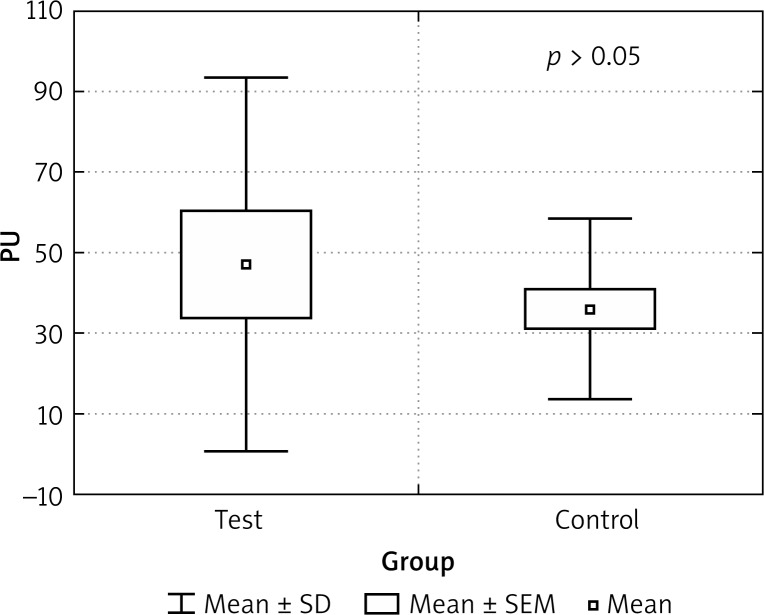
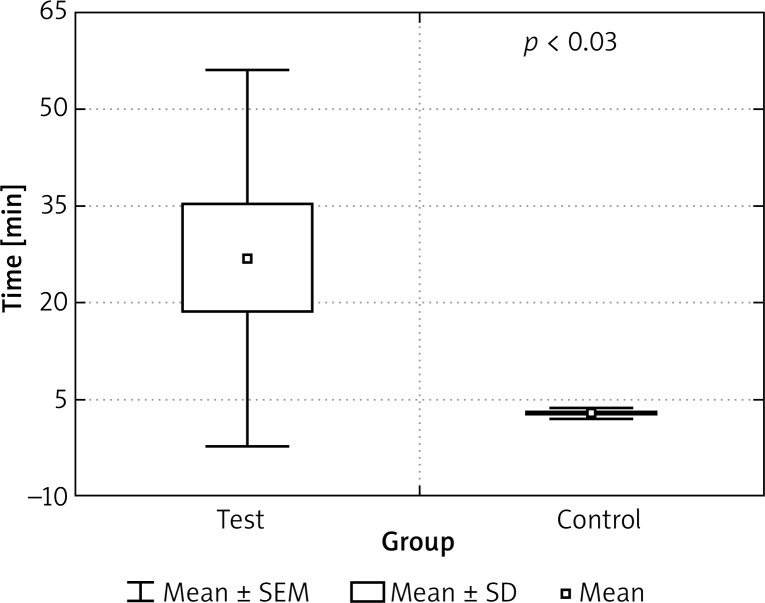
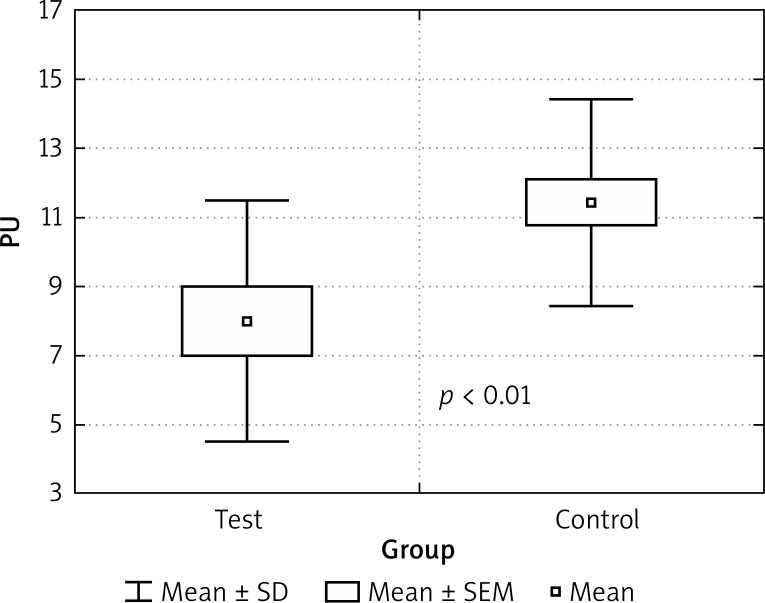
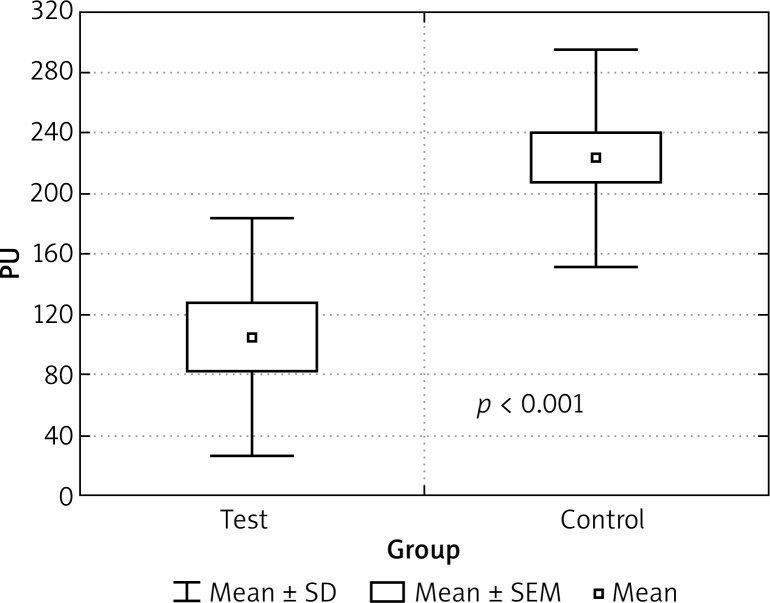
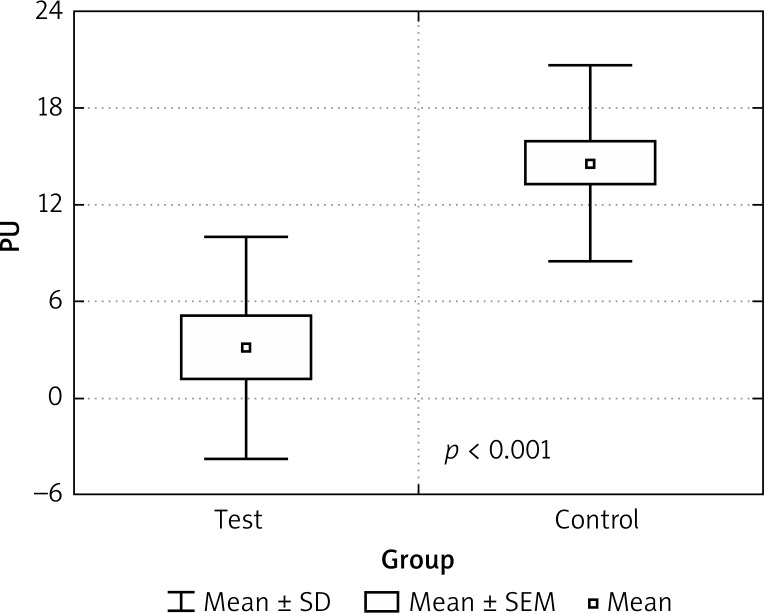
The study did not show any differences in the skin microcirculation perfusion at rest between the test group and the control, while reactive hyperaemia test results revealed significantly lower skin microcirculation perfusion values during the cuff inflation in SSc patients, as compared to the controls. In the test group, a lower perfusion value was observed during secondary hyperaemia following cuff release. Comparative analysis of skin microcirculation perfusion changes during the thermal stimulation test revealed a significantly lower change of the perfusion value and longer time of return to the baseline in the test group as compared to the control group.
The study performed has shown the suitability of LDF in the assessment of the microangiopathy degree in systemic sclerosis patients. The skin perfusion value in SSc patients should be assessed on the basis of parameters obtained in microcirculation challenge tests.
系统性硬化症(SSc)病程中出现的首批病变累及微循环。
本研究旨在评估激光多普勒血流仪(LDF)用于检查SSc患者上肢远端皮肤微循环功能的适用性。
本研究共纳入27例系统性硬化症患者。对照组由27名年龄和性别匹配的健康个体组成。所有研究对象均接受静息状态下的微循环灌注测量(静息血流 - RF)以及微循环血流激发试验——反应性充血试验(RHT)和热刺激试验(TST)。
研究未显示试验组与对照组在静息状态下皮肤微循环灌注存在差异,而反应性充血试验结果显示,与对照组相比,SSc患者在袖带充气期间皮肤微循环灌注值显著降低。在试验组中,袖带松开后二次充血期间观察到较低的灌注值。热刺激试验期间皮肤微循环灌注变化的比较分析显示,与对照组相比,试验组灌注值变化显著更低,且恢复至基线的时间更长。
本研究表明LDF适用于评估系统性硬化症患者的微血管病变程度。应根据微循环激发试验获得的参数评估SSc患者的皮肤灌注值。