Evidence-Based Medicine Center, School of Basic Medical Sciences, Institute of Integrated Traditional Chinese and Western Medicine, Lanzhou University, Donggang West Road, Chengguan, Lanzhou, Gansu 730000, China ; New Product Development of Chinese Medicine Engineering Lab, Gansu University of Traditional Chinese Medicine, Dingxi East Road, Chengguan, Lanzhou, Gansu 730000, China.
Evidence-Based Medicine Center, School of Basic Medical Sciences, Institute of Integrated Traditional Chinese and Western Medicine, Lanzhou University, Donggang West Road, Chengguan, Lanzhou, Gansu 730000, China.
Evid Based Complement Alternat Med. 2014;2014:614850. doi: 10.1155/2014/614850. Epub 2014 Feb 12.
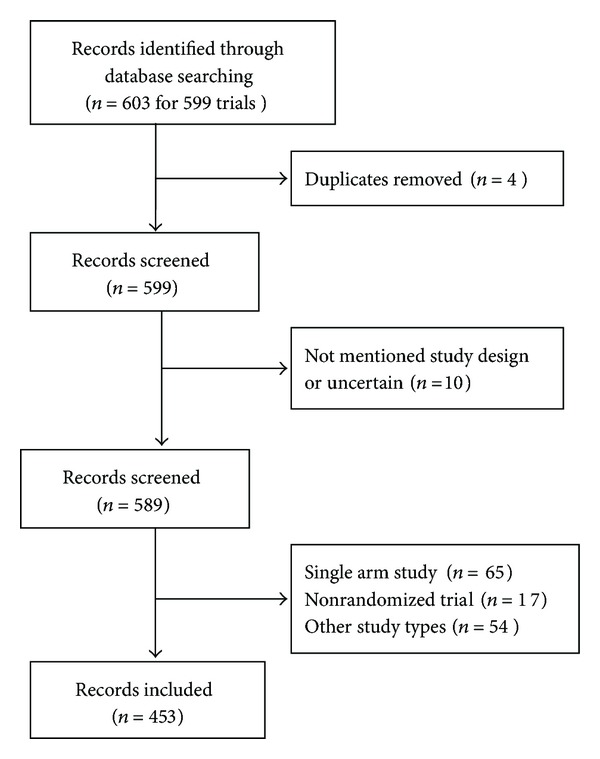
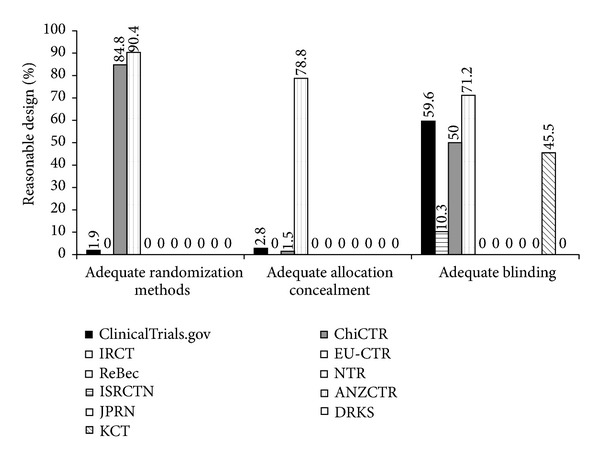
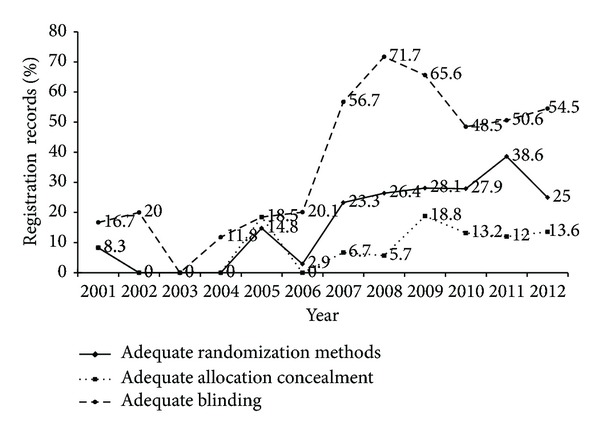
Background. This review provides the first methodological information assessment of protocol of acupuncture RCTs registered in WHO International Clinical Trials Registry Platform (ICTRP). Methods. All records of acupuncture RCTs registered in the ICTRP have been collected. The methodological design assessment involved whether the randomization methods, allocation concealment, and blinding were adequate or not based on the information of registration records (protocols of acupuncture RCTs). Results. A total of 453 records, found in 11 registries, were examined. Methodological details were insufficient in registration records; there were 76.4%, 89.0%, and 21.4% records that did not provide information on randomization methods, allocation concealment, and blinding respectively. The proportions of adequate randomization methods, allocation concealment, and blinding were only 107 (23.6%), 48 (10.6%), and 210 (46.4%), respectively. The methodological design improved year by year, especially after 2007. Additionally, methodology of RCTs with ethics approval was clearly superior to those without ethics approval and different among registries. Conclusions. The overall methodological design based on registration records of acupuncture RCTs is not very well but improved year by year. The insufficient information on randomization methods, allocation concealment, and blinding maybe due to the relevant description is not taken seriously in acupuncture RCTs' registration.
背景。本综述提供了对世界卫生组织国际临床试验注册平台(ICTRP)中登记的针刺 RCT 方案的首次方法学信息评估。
方法。收集了在 ICTRP 中登记的所有针刺 RCT 记录。根据注册记录(针刺 RCT 方案)中的信息,评估方法学设计是否充分,包括随机方法、分配隐藏和盲法。
结果。共检查了 11 个注册机构中的 453 个记录。注册记录中方法学细节不足;分别有 76.4%、89.0%和 21.4%的记录未提供随机方法、分配隐藏和盲法的信息。充分随机方法、分配隐藏和盲法的比例分别仅为 107(23.6%)、48(10.6%)和 210(46.4%)。方法学设计逐年改进,特别是 2007 年以后。此外,有伦理审批的 RCT 的方法学明显优于没有伦理审批的 RCT,并且各注册机构之间也存在差异。
结论。基于针刺 RCT 注册记录的整体方法学设计不是很好,但逐年有所提高。随机方法、分配隐藏和盲法信息不足可能是由于在针刺 RCT 注册中没有认真对待相关描述。