Plard Floriane, Gaillard Jean-Michel, Coulson Tim, Hewison A J Mark, Delorme Daniel, Warnant Claude, Bonenfant Christophe
Laboratoire "Biométrie et Biologie Évolutive," Unité Mixte de Recherche 5558, Université Claude Bernard Lyon 1, Lyon, France.
Department of Zoology, The Tinbergen Building, University of Oxford, Oxford, United Kingdom.
PLoS Biol. 2014 Apr 1;12(4):e1001828. doi: 10.1371/journal.pbio.1001828. eCollection 2014 Apr.
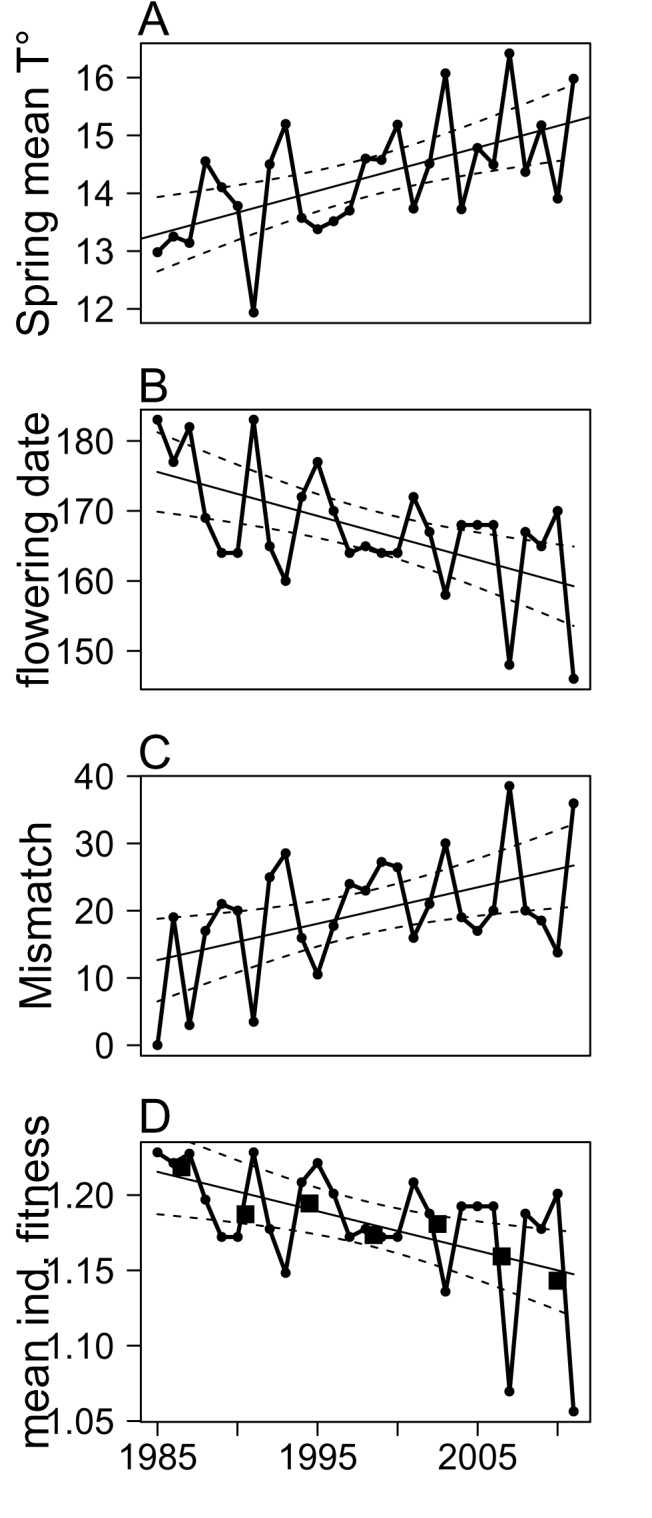
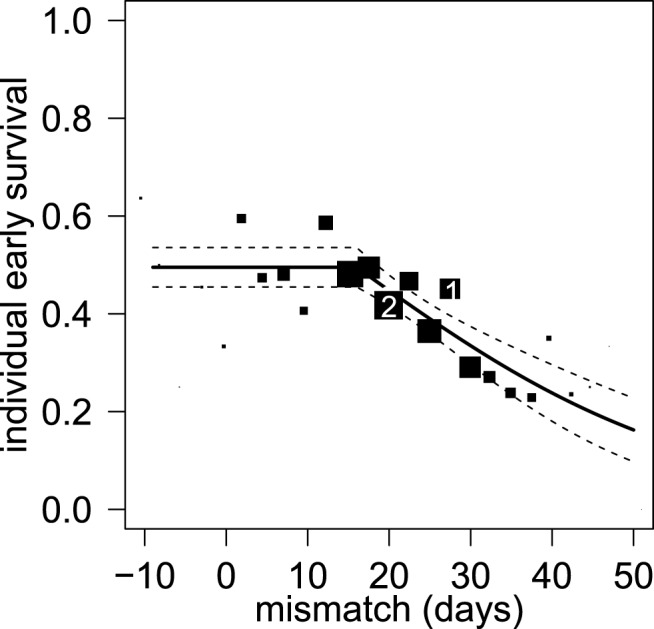
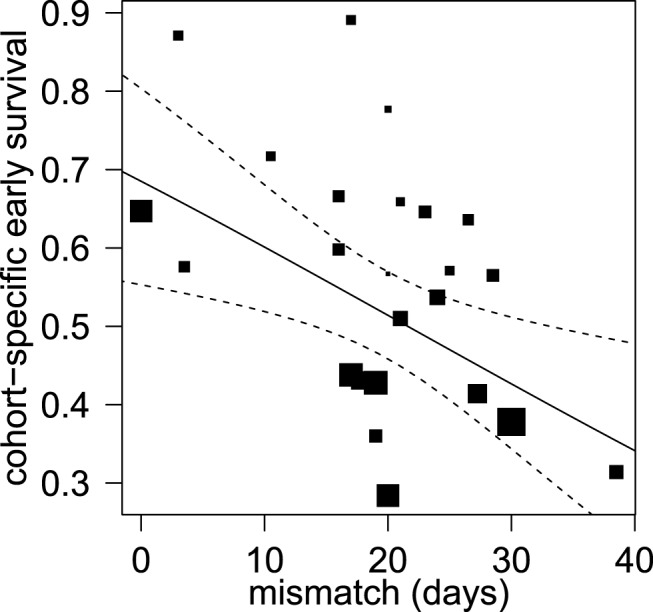
Marked impacts of climate change on biodiversity have frequently been demonstrated, including temperature-related shifts in phenology and life-history traits. One potential major impact of climate change is the modification of synchronization between the phenology of different trophic levels. High phenotypic plasticity in laying date has allowed many bird species to track the increasingly early springs resulting from recent environmental change, but although changes in the timing of reproduction have been well studied in birds, these questions have only recently been addressed in mammals. To track peak resource availability, large herbivores like roe deer, with a widespread distribution across Europe, should also modify their life-history schedule in response to changes in vegetation phenology over time. In this study, we analysed the influence of climate change on the timing of roe deer births and the consequences for population demography and individual fitness. Our study provides a rare quantification of the demographic costs associated with the failure of a species to modify its phenology in response to a changing world. Given these fitness costs, the lack of response of roe deer birth dates to match the increasingly earlier onset of spring is in stark contrast with the marked phenotypic responses to climate change reported in many other mammals. We suggest that the lack of phenotypic plasticity in birth timing in roe deer is linked to its inability to track environmental cues of variation in resource availability for the timing of parturition.
气候变化对生物多样性的显著影响已屡见不鲜,包括物候和生活史特征方面与温度相关的变化。气候变化的一个潜在重大影响是不同营养级物候之间同步性的改变。产卵日期的高表型可塑性使许多鸟类能够追踪近期环境变化导致的春季日益提前的情况,然而,尽管鸟类繁殖时间的变化已得到充分研究,但这些问题直到最近才在哺乳动物中得到探讨。为了追踪资源可利用高峰期,像狍这种在欧洲广泛分布的大型食草动物,也应随着时间推移植被物候的变化调整其生活史时间表。在本研究中,我们分析了气候变化对狍产仔时间的影响以及对种群统计学和个体适合度的后果。我们的研究罕见地量化了物种未能随变化的世界调整其物候所带来的人口统计学代价。鉴于这些适合度代价,狍产仔日期未能与日益提前的春季开始时间相匹配,这与许多其他哺乳动物报道的对气候变化的显著表型反应形成鲜明对比。我们认为,狍出生时间缺乏表型可塑性与其无法追踪分娩时间资源可利用变化的环境线索有关。