Khoshmanesh Aazam, Dixon Matthew W A, Kenny Shannon, Tilley Leann, McNaughton Don, Wood Bayden R
Centre for Biospectroscopy and School of Chemistry, Monash University , Clayton, Victoria 3800, Australia.
Anal Chem. 2014 May 6;86(9):4379-86. doi: 10.1021/ac500199x. Epub 2014 Apr 17.
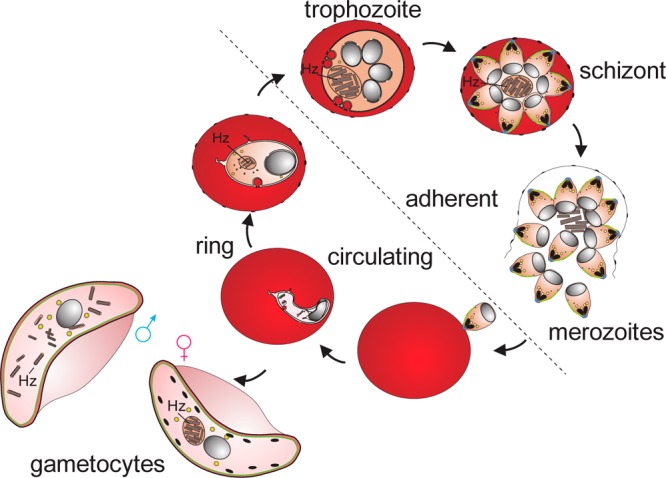
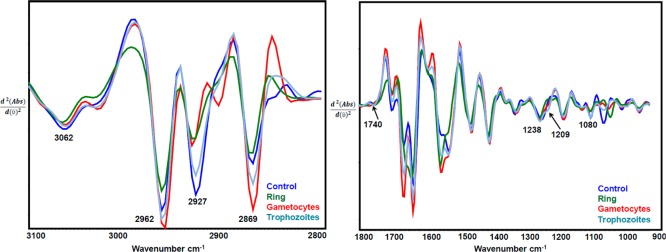
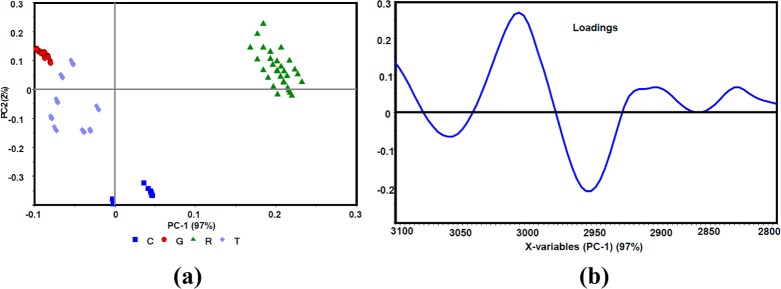
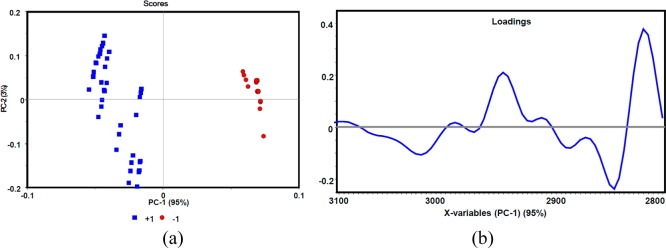
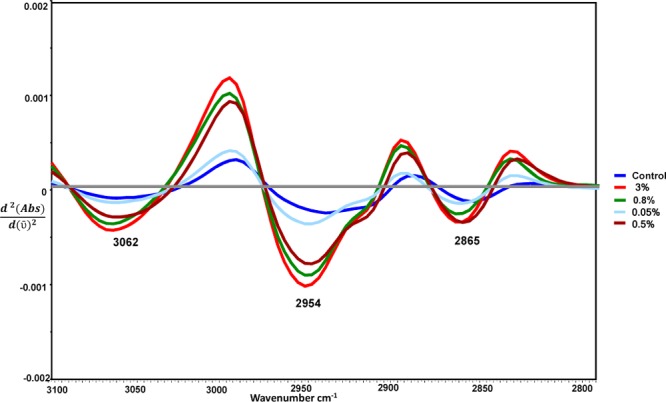
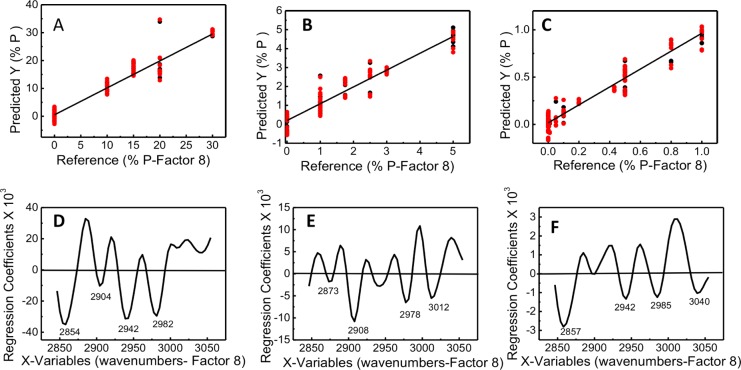
New diagnostic modalities for malaria must have high sensitivity and be affordable to the developing world. We report on a method to rapidly detect and quantify different stages of malaria parasites, including ring and gametocyte forms, using attenuated total reflectance Fourier transform infrared spectroscopy (ATR-FT-IR) and partial least-squares regression (PLS). The absolute detection limit was found to be 0.00001% parasitemia (<1 parasite/μL of blood; p < 0.008) for cultured early ring stage parasites in a suspension of normal erythrocytes. Future development of universal and robust calibration models can significantly improve malaria diagnoses, leading to earlier detection and treatment of this devastating disease.
疟疾的新诊断方法必须具有高灵敏度且价格能为发展中世界所承受。我们报告了一种使用衰减全反射傅里叶变换红外光谱(ATR-FT-IR)和偏最小二乘回归(PLS)快速检测和定量疟原虫不同阶段(包括环状体和配子体形式)的方法。在正常红细胞悬液中培养的早期环状体阶段寄生虫,其绝对检测限为0.00001%的疟原虫血症(<1个寄生虫/微升血液;p<0.008)。通用且稳健的校准模型的未来发展可显著改善疟疾诊断,从而实现对这种毁灭性疾病的更早检测和治疗。