Lourenço Bárbara, Sousa Ana Paula, Almeida-Santos Teresa, Ramalho-Santos João
Biology of Reproduction and Stem Cell Group, Center for Neuroscience and Cell Biology (CNC), University of Coimbra, Coimbra, Portugal.
Biology of Reproduction and Stem Cell Group, Center for Neuroscience and Cell Biology (CNC), University of Coimbra, Coimbra, Portugal ; Human Reproduction Service, University Hospitals of Coimbra, Coimbra, Portugal.
J Reprod Infertil. 2014 Jan;15(1):15-21.
The production of competent oocytes depends on a bi-directional communication between the oocyte and cumulus cells. The goal of this study was to determine whether simple parameters monitored in cumulus cells from individual human oocytes have any predictive value, and thus correlate with clinically relevant parameters.
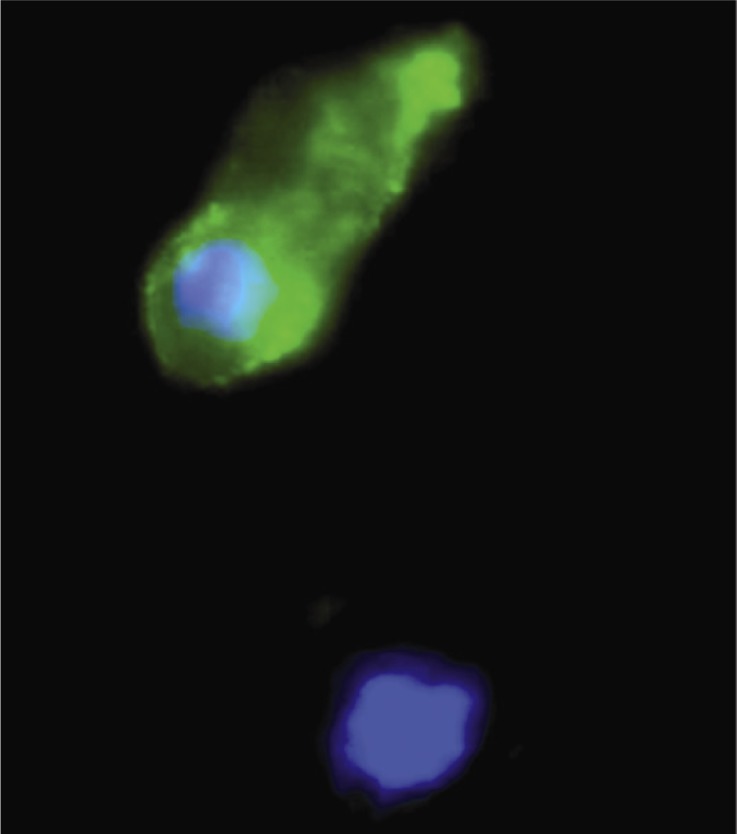
97 cumulus-oocyte complexes were recovered from 31 patients undergoing ICSI treatment. After the oocytes were denuded, cumulus cell density from individual oocytes was determined. Cells were probed for viability using propidium iodide and for apoptosis by Annexin V staining or by monitoring caspase activity. These parameters were correlated with oocyte status, fertilization ability and patient age (≤29 years old and ≥30 years old). All variables were checked for normal distribution and then compared by Kruskal-Wallis, Mann-Whitney or one-way ANOVA tests.
Mature oocytes were surrounded by more cumulus cells (16073±2595, p = 0.026), which were also more viable and less apoptotic than atretic or degenerated oocytes. Mature oocytes that fertilized had higher caspase activity in the surrounding cumulus cells than those that did not fertilize. Younger patients presented lower cumulus cells density (8882±2380 vs. 15036±2143 cells; p = 0.034); and cumulus cells had higher apoptosis levels in younger patients than older ones (6775.5±1831.6 RLU vs. 2591±46.5 RLU, p = 0.002 for caspase activity).
The data suggests that high density and apoptosis of cumulus cells are promising parameters to indirectly predict individual oocyte status. Although more studies and a larger data set are needed, cumulus cells presented the potential to be used as simple predictors of female fertility and/or ovarian ageing.
有功能的卵母细胞的产生依赖于卵母细胞与卵丘细胞之间的双向通讯。本研究的目的是确定在单个人类卵母细胞的卵丘细胞中监测到的简单参数是否具有任何预测价值,从而与临床相关参数相关联。
从31例接受ICSI治疗的患者中回收97个卵丘-卵母细胞复合体。卵母细胞去除颗粒细胞后,测定单个卵母细胞的颗粒细胞密度。使用碘化丙啶检测细胞活力,通过膜联蛋白V染色或监测半胱天冬酶活性检测细胞凋亡。这些参数与卵母细胞状态、受精能力和患者年龄(≤29岁和≥30岁)相关。检查所有变量是否呈正态分布,然后通过Kruskal-Wallis、Mann-Whitney或单因素方差分析进行比较。
成熟卵母细胞周围的颗粒细胞更多(16073±2595,p = 0.026),与闭锁或退化的卵母细胞相比,这些颗粒细胞的活力更强,凋亡更少。受精的成熟卵母细胞周围颗粒细胞中的半胱天冬酶活性高于未受精的成熟卵母细胞。年轻患者的颗粒细胞密度较低(8882±2380对15036±2143个细胞;p = 0.034);年轻患者的颗粒细胞凋亡水平高于老年患者(半胱天冬酶活性:6775.5±1831.6相对荧光单位对2591±46.5相对荧光单位,p = 0.002)。
数据表明,颗粒细胞的高密度和凋亡是间接预测单个卵母细胞状态的有前景的参数。尽管需要更多的研究和更大的数据集,但颗粒细胞有潜力用作女性生育力和/或卵巢衰老的简单预测指标。