McMillan Sarah J, Richards Hannah E, Crocker Paul R
Division of Cell Signalling & Immunology, College of Life Sciences, University of Dundee, Dundee, Scotland, UK, DD1 5EH.
Division of Cell Signalling & Immunology, College of Life Sciences, University of Dundee, Dundee, Scotland, UK, DD1 5EH.
Immunol Lett. 2014 Jul;160(1):11-16. doi: 10.1016/j.imlet.2014.03.008. Epub 2014 Mar 31.
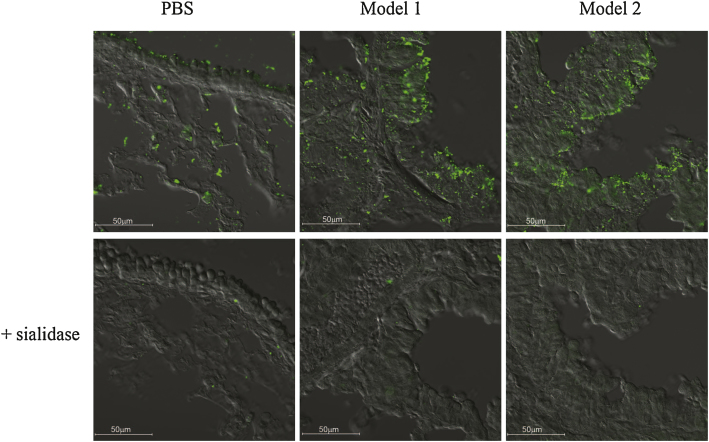
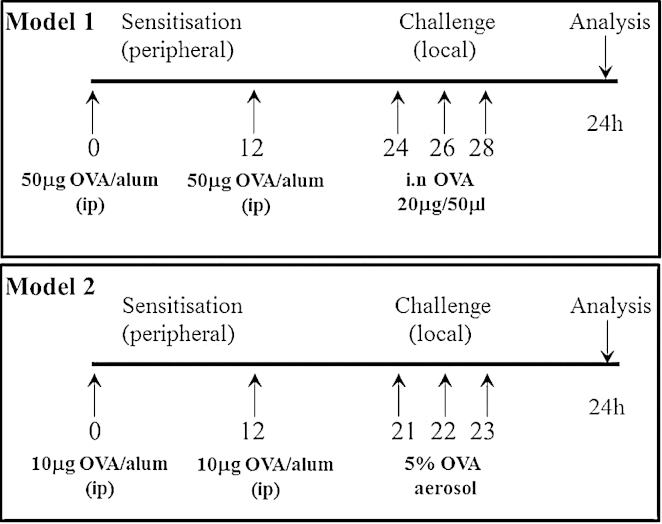
Siglec-8 and siglec-F are paralogous membrane proteins expressed on human and murine eosinophils respectively. They bind similar sialylated and sulphated glycans and mediate eosinophil apoptosis when cross-linked with antibodies or glycan ligands. In models of allergic eosinophilic airway inflammation, siglec-F was shown previously to be important for negatively regulating eosinophilia. It was proposed that this was due to siglec-F-dependent apoptosis, triggered via engagement with ligands that are upregulated on bronchial epithelium. Our aim was to further investigate the functions of siglec-F by comparing two commonly used models of ovalbumin-induced airway inflammation that differ in the dose and route of administration of ovalbumin. In confirmation of published results, siglec-F-deficient mice had enhanced lung tissue eosinophilia in response to intranasal ovalbumin delivered every other day. However, following aerosolised ovalbumin delivered daily, there was no influence of siglec-F deficiency on lung eosinophilia. Expression of siglec-F ligands in lung tissues was similar in both models of allergen induced inflammation. These data demonstrate that siglec-F-dependent regulation of eosinophilia is subtle and depends critically on the model used. The findings also indicate that mechanisms other than ligand-induced apoptosis may be important in siglec-F-dependent suppression of eosinophilia.
Siglec-8和Siglec-F是分别在人类和小鼠嗜酸性粒细胞上表达的同源膜蛋白。它们结合相似的唾液酸化和硫酸化聚糖,并在与抗体或聚糖配体交联时介导嗜酸性粒细胞凋亡。在过敏性嗜酸性气道炎症模型中,Siglec-F先前已被证明对负调控嗜酸性粒细胞增多很重要。有人提出,这是由于与支气管上皮细胞上上调的配体结合而触发的Siglec-F依赖性凋亡。我们旨在通过比较两种常用的卵清蛋白诱导气道炎症模型来进一步研究Siglec-F的功能,这两种模型在卵清蛋白的给药剂量和途径上有所不同。证实已发表的结果,Siglec-F缺陷小鼠对每隔一天给予的鼻内卵清蛋白有增强的肺组织嗜酸性粒细胞增多反应。然而,在每天给予雾化卵清蛋白后,Siglec-F缺陷对肺嗜酸性粒细胞增多没有影响。在两种变应原诱导炎症模型中,肺组织中Siglec-F配体的表达相似。这些数据表明,Siglec-F依赖性对嗜酸性粒细胞增多的调控很微妙,并且严重依赖于所使用的模型。研究结果还表明,除配体诱导的凋亡外,其他机制可能在Siglec-F依赖性抑制嗜酸性粒细胞增多中起重要作用。