Ali Shimaa E, Thoen Even, Evensen Øystein, Skaar Ida
Norwegian Veterinary Institute, Oslo, Norway.
Norwegian Veterinary Institute, Oslo, Norway; Norwegian School of Veterinary Science, Oslo, Norway.
PLoS One. 2014 Apr 3;9(4):e91878. doi: 10.1371/journal.pone.0091878. eCollection 2014.
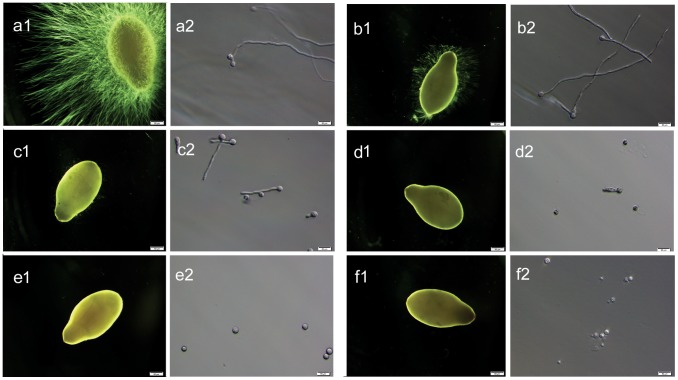
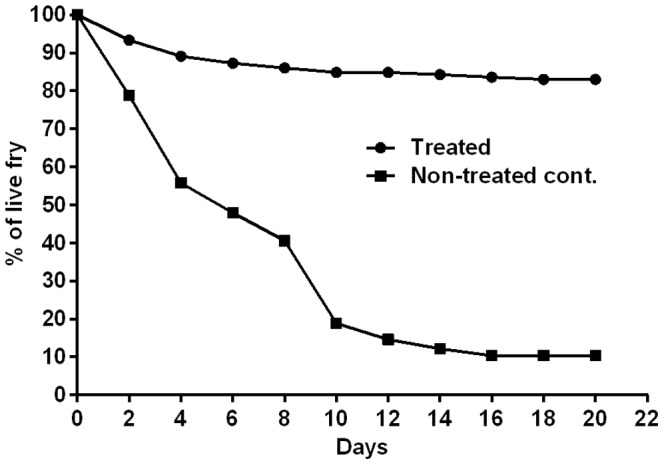
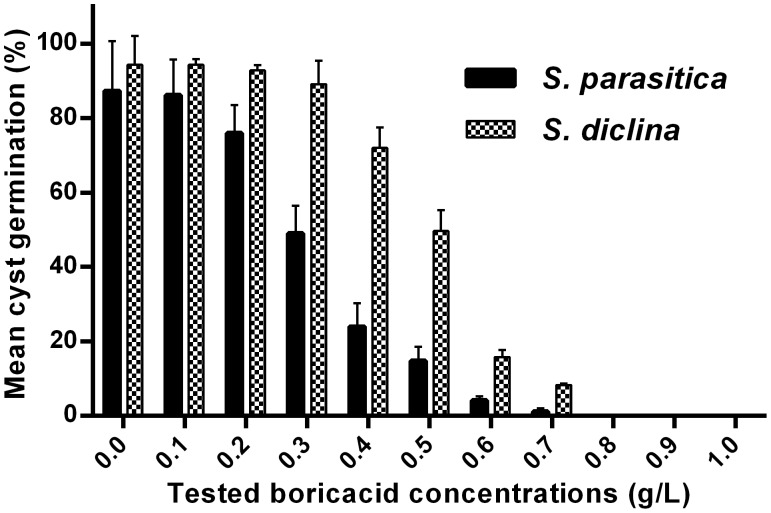
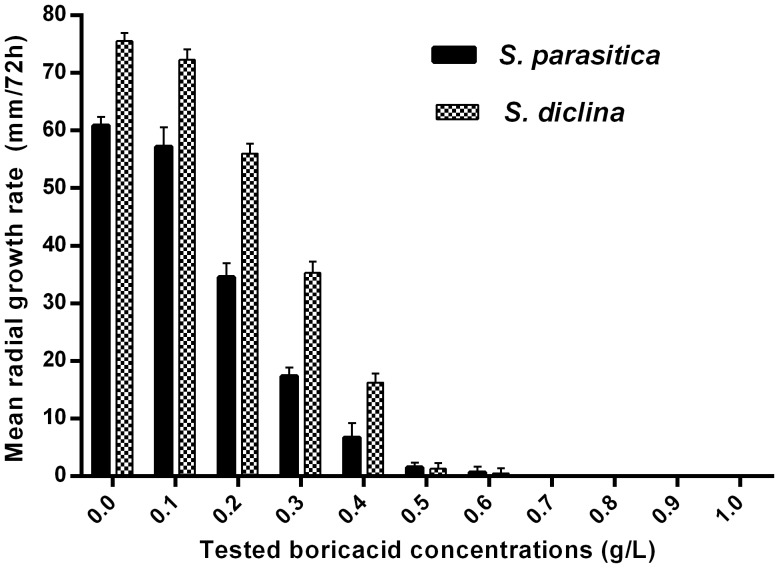
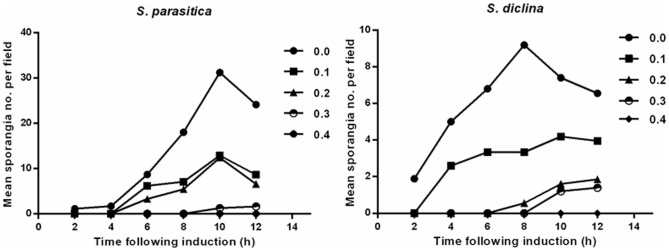
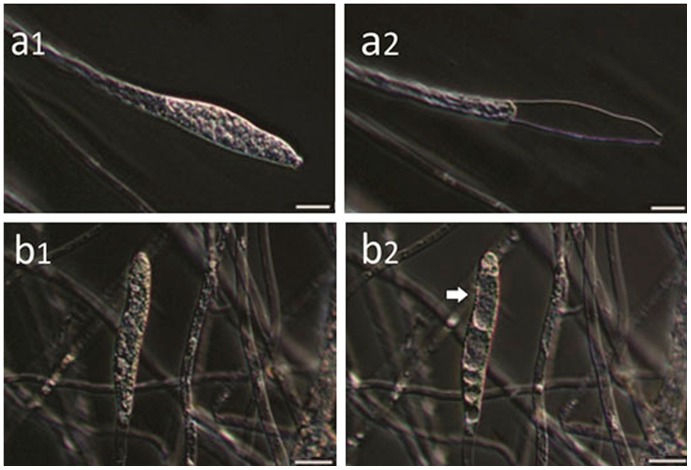
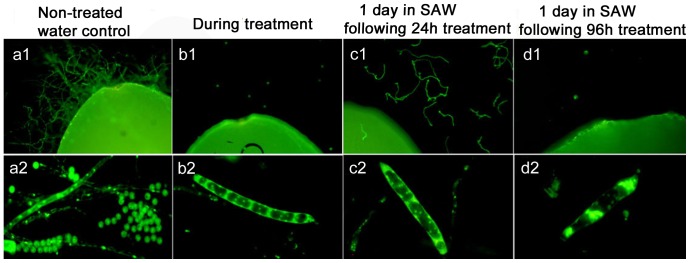
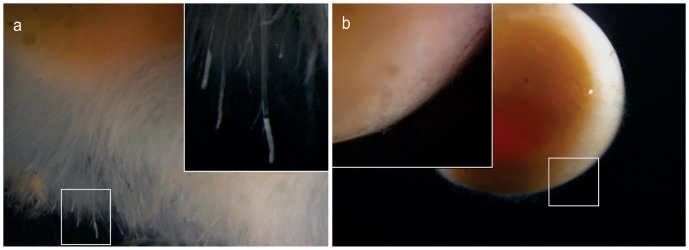
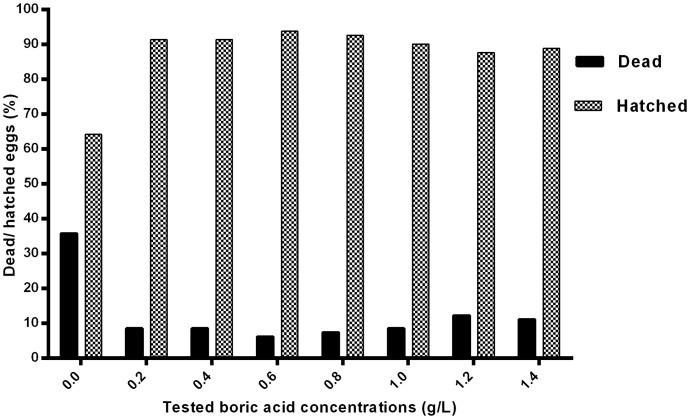
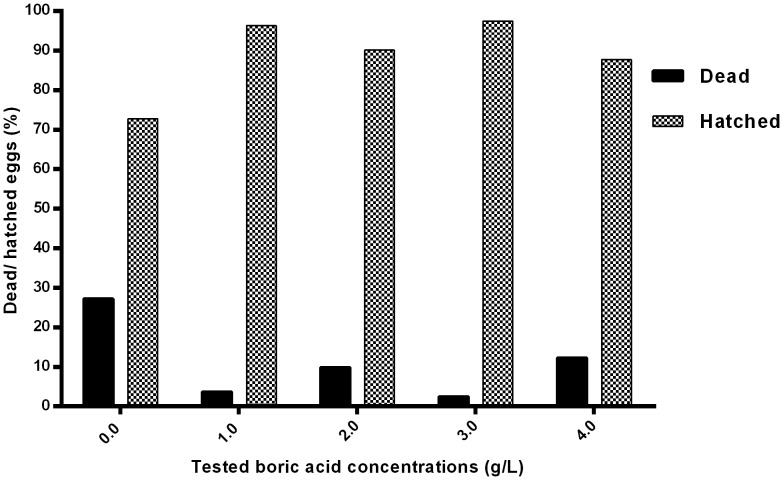
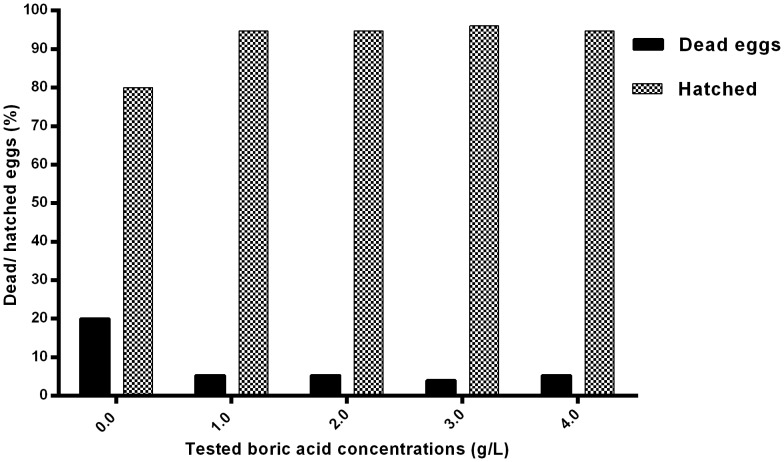
Saprolegnia infections cause severe economic losses among freshwater fish and their eggs. The banning of malachite green increased the demand for finding effective alternative treatments to control the disease. In the present study, we investigated the ability of boric acid to control saprolegniosis in salmon eggs and yolk sac fry. Under in vitro conditions, boric acid was able to decrease Saprolegnia spore activity and mycelial growth in all tested concentrations above 0.2 g/L, while complete inhibition of germination and growth was observed at a concentration of 0.8 g/L. In in vivo experiments using Atlantic salmon eyed eggs, saprolegniosis was controlled by boric acid at concentrations ranging from 0.2-1.4 g/L during continuous exposure, and at 1.0-4.0 g/L during intermittent exposure. The same effect was observed on salmon yolk sac fry exposed continuously to 0.5 g/L boric acid during the natural outbreak of saprolegniosis. During the experiments no negative impact with regard to hatchability and viability was observed in either eggs or fry, which indicate safety of use at all tested concentrations. The high hatchability and survival rates recorded following the in vivo testing suggest that boric acid is a candidate for prophylaxis and control of saprolegniosis.
水霉感染给淡水鱼及其鱼卵造成了严重的经济损失。孔雀石绿的禁用增加了寻找有效替代治疗方法来控制该病的需求。在本研究中,我们调查了硼酸控制鲑鱼鱼卵和卵黄囊仔鱼水霉病的能力。在体外条件下,浓度高于0.2 g/L时,硼酸能够降低所有测试浓度下水霉的孢子活性和菌丝生长,而在浓度为0.8 g/L时观察到发芽和生长完全受到抑制。在使用大西洋鲑有眼卵的体内实验中,连续暴露期间,浓度为0.2 - 1.4 g/L的硼酸可控制水霉病,间歇暴露期间浓度为1.0 - 4.0 g/L时也可控制。在水霉病自然爆发期间,对连续暴露于0.5 g/L硼酸的鲑鱼卵黄囊仔鱼也观察到了同样的效果。在实验过程中,未在鱼卵或仔鱼中观察到对孵化率和活力的负面影响,这表明在所有测试浓度下使用都是安全的。体内测试后记录的高孵化率和存活率表明硼酸是预防和控制水霉病的一个候选药物。