Kehrl Jason M, Sahaya Kinshuk, Dalton Hans M, Charbeneau Raelene A, Kohut Kevin T, Gilbert Kristen, Pelz Madeline C, Parent Jack, Neubig Richard R
Department of Pharmacology, University of Michigan, Ann Arbor, MI, 48109, USA.
Mamm Genome. 2014 Jun;25(5-6):202-10. doi: 10.1007/s00335-014-9509-z. Epub 2014 Apr 5.
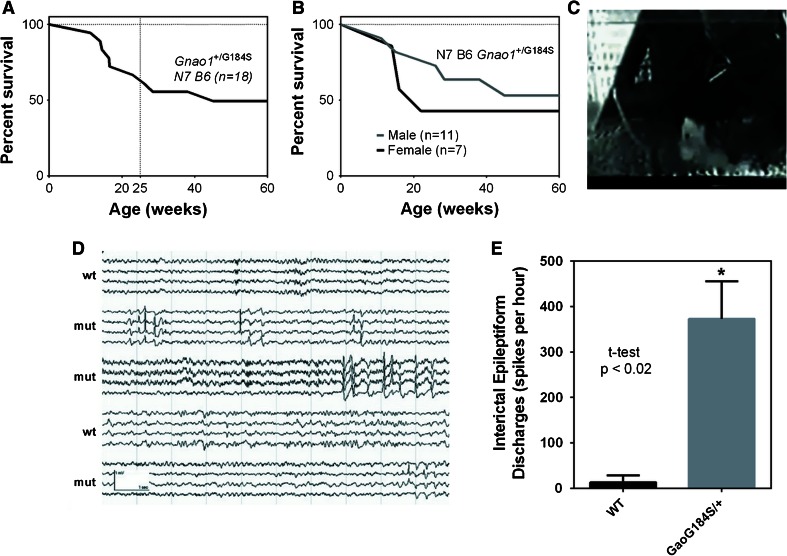
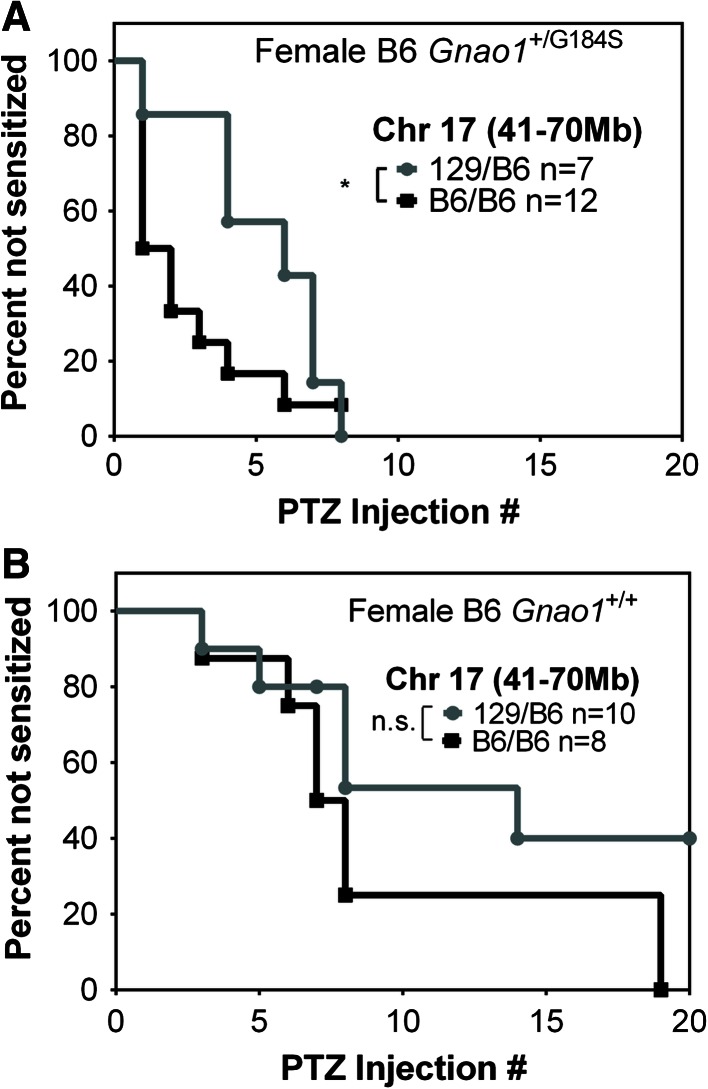
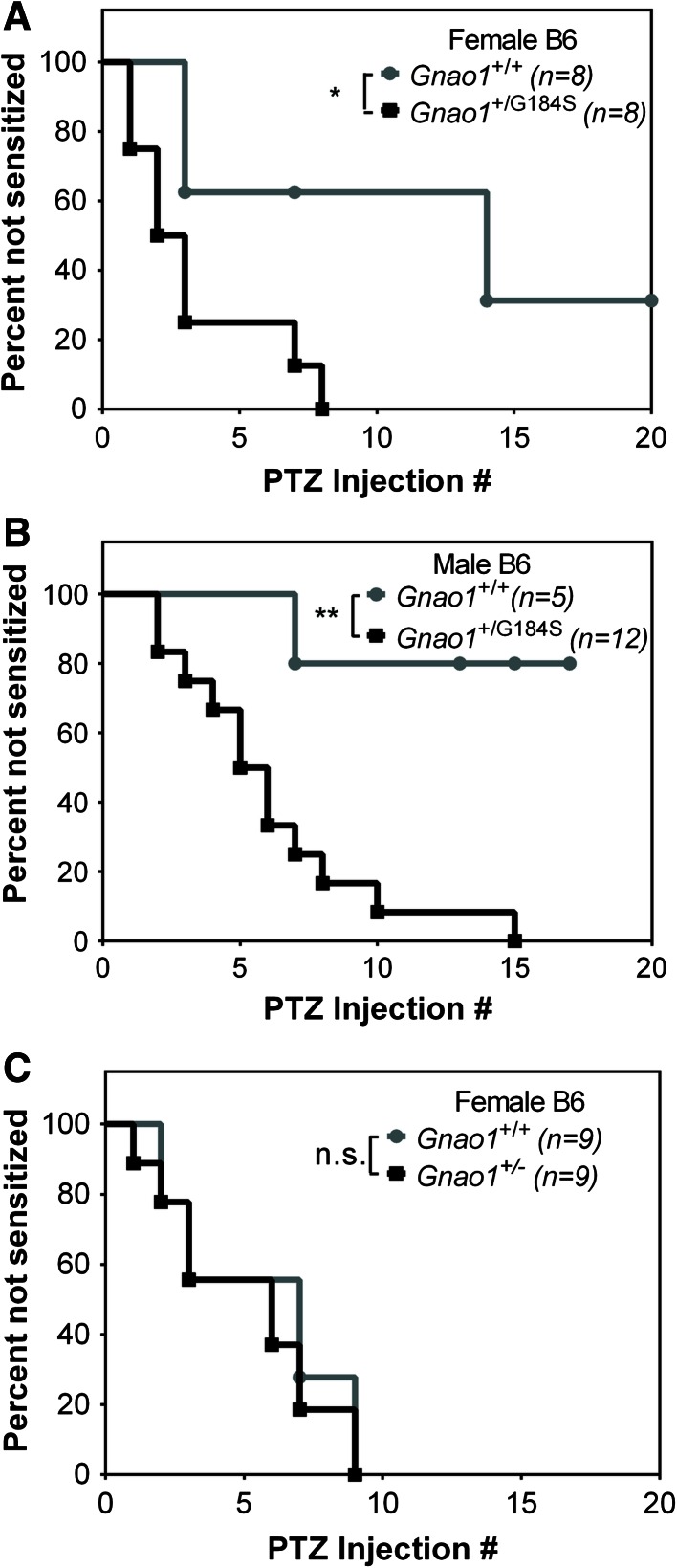
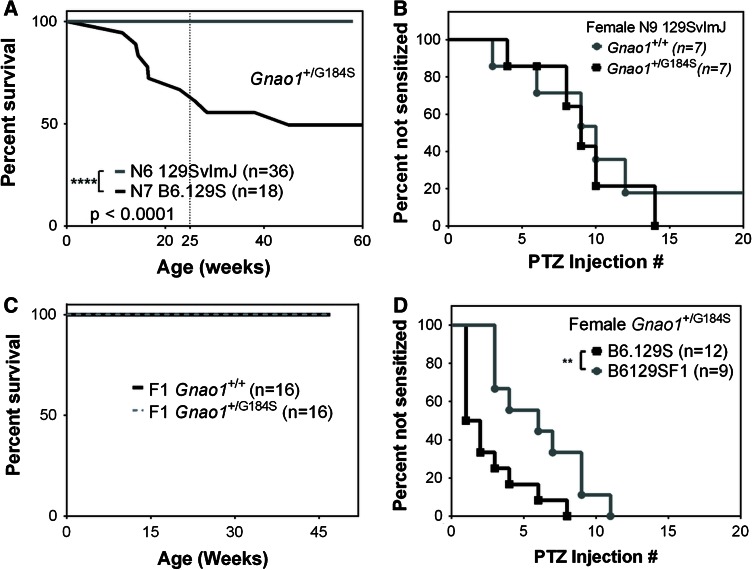
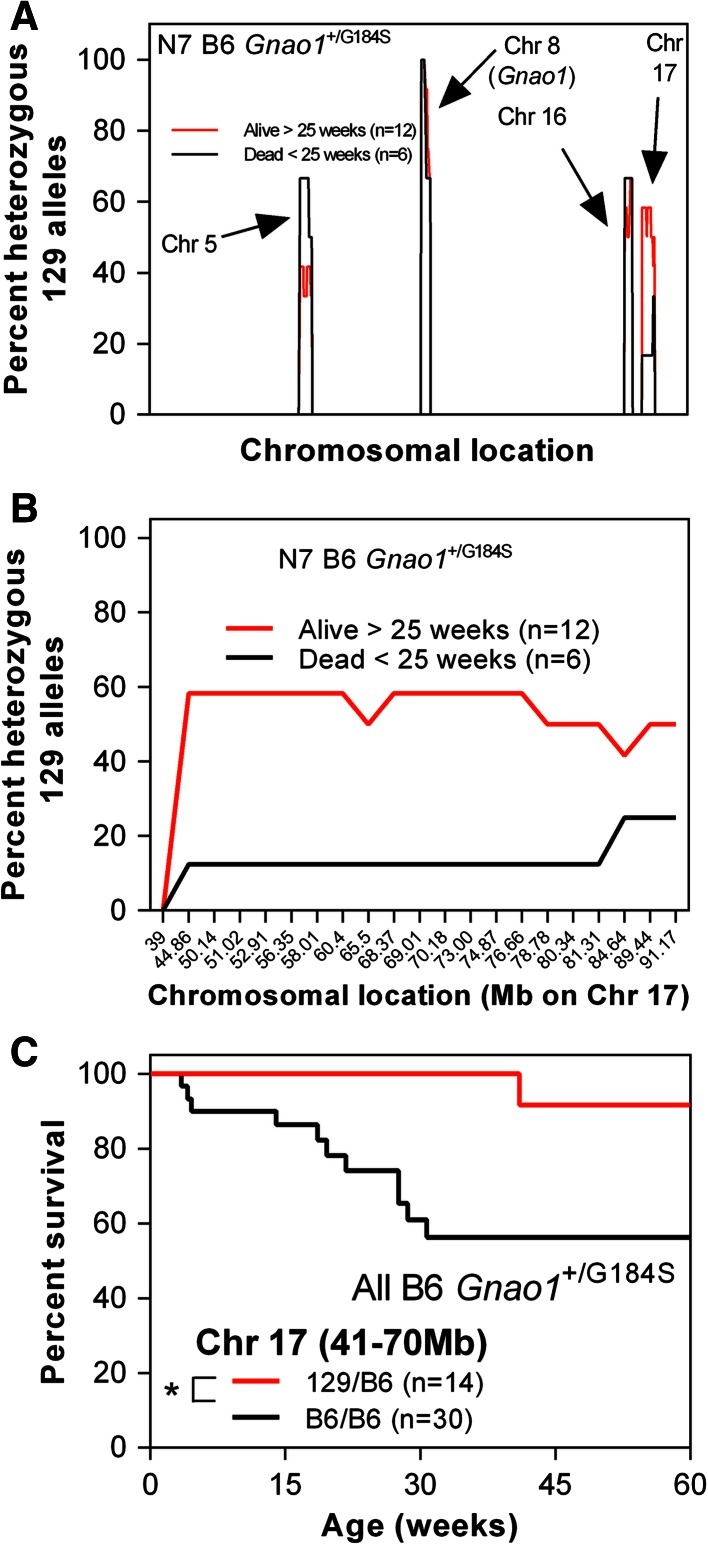
G protein-coupled receptors strongly modulate neuronal excitability but there has been little evidence for G protein mechanisms in genetic epilepsies. Recently, four patients with epileptic encephalopathy (EIEE17) were found to have mutations in GNAO1, the most abundant G protein in brain, but the mechanism of this effect is not known. The GNAO1 gene product, Gαo, negatively regulates neurotransmitter release. Here, we report a dominant murine model of Gnao1-related seizures and sudden death. We introduced a genomic gain-of-function knock-in mutation (Gnao1 (+/G184S)) that prevents Go turnoff by Regulators of G protein signaling proteins. This results in rare seizures, strain-dependent death between 15 and 40 weeks of age, and a markedly increased frequency of interictal epileptiform discharges. Mutants on a C57BL/6J background also have faster sensitization to pentylenetetrazol (PTZ) kindling. Both premature lethality and PTZ kindling effects are suppressed in the 129SvJ mouse strain. We have mapped a 129S-derived modifier locus on Chromosome 17 (within the region 41-70 MB) as a Modifer of G protein Seizures (Mogs1). Our mouse model suggests a novel gain-of-function mechanism for the newly defined subset of epileptic encephalopathy (EIEE17). Furthermore, it reveals a new epilepsy susceptibility modifier Mogs1 with implications for the complex genetics of human epilepsy as well as sudden death in epilepsy.
G蛋白偶联受体能强烈调节神经元兴奋性,但在遗传性癫痫中,几乎没有证据表明存在G蛋白机制。最近,发现四名患有癫痫性脑病(EIEE17)的患者在GNAO1(大脑中最丰富的G蛋白)中存在突变,但这种效应的机制尚不清楚。GNAO1基因产物Gαo对神经递质释放起负调节作用。在此,我们报告了一种与Gnao1相关的癫痫发作和猝死的显性小鼠模型。我们引入了一种基因组功能获得性敲入突变(Gnao1(+/G184S)),该突变可阻止G蛋白信号调节蛋白对Go的关闭。这导致罕见的癫痫发作、15至40周龄之间的品系依赖性死亡以及发作间期癫痫样放电频率显著增加。C57BL/6J背景的突变体对戊四氮(PTZ)点燃也有更快的敏化作用。在129SvJ小鼠品系中,过早死亡和PTZ点燃效应均受到抑制。我们在17号染色体(41-70MB区域内)定位了一个源自129S的修饰基因座,作为G蛋白癫痫修饰基因(Mogs1)。我们的小鼠模型为新定义的癫痫性脑病(EIEE17)子集提出了一种新的功能获得性机制。此外,它揭示了一种新的癫痫易感性修饰基因Mogs1,对人类癫痫的复杂遗传学以及癫痫猝死具有重要意义。