Mozaffari Shilan, Nikfar Shekoufeh, Abdollahi Mohammad
Department of Toxicology and Pharmacology, Faculty of Pharmacy, Tehran University of Medical Sciences, Tehran, Iran.
Department of Pharmacoeconomics and Pharmaceutical Administration, Faculty of Pharmacy, Tehran University of Medical Sciences, Tehran, Iran ; Iranian Food and Drug Administration, Ministry of Health and Medical Education, Tehran, Iran.
Arch Med Sci. 2014 Feb 24;10(1):10-8. doi: 10.5114/aoms.2014.40729. Epub 2014 Feb 23.
By targeting different subtypes of 5-hydroxytryptamine (5HT) receptors in the gastrointestinal (GI) tract, several drugs have been introduced for the management of irritable bowel syndrome (IBS). Renzapride is a full agonist for 5HT4 receptor and an antagonist to 5HT2b and 5HT3 receptors which is thought a promising therapeutic agent for constipation predominant IBS (C-IBS) patients due to its accelerating effect on the GI tract. In this meta-analysis, our aim was to evaluate the efficacy and tolerability of renzapride in the management of IBS.
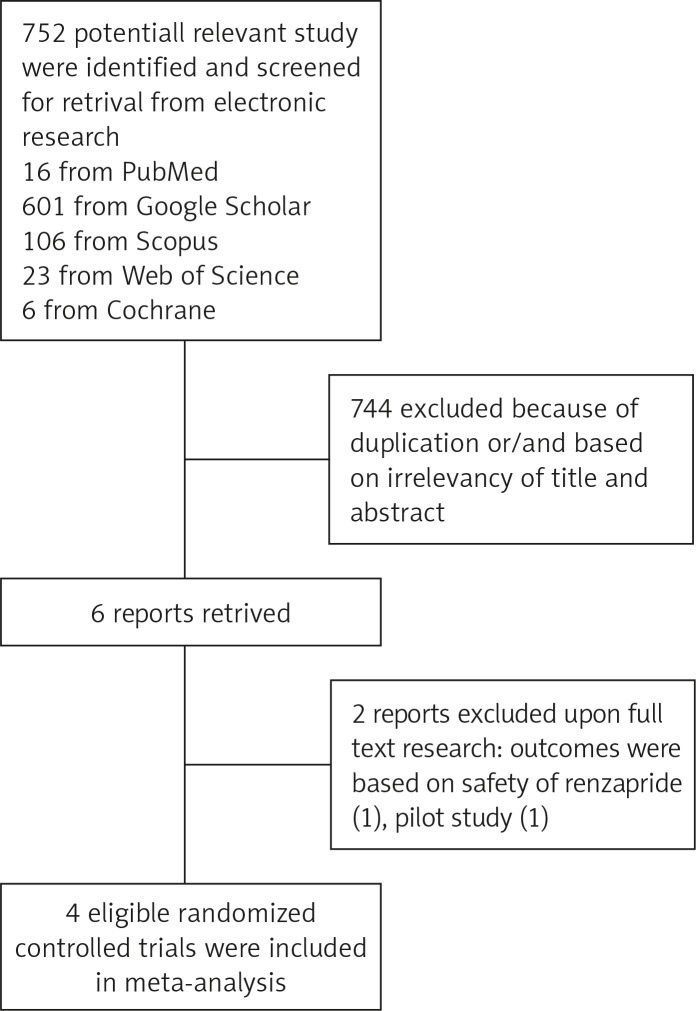
A search was done from 1992 to February 2013 for placebo-controlled trials that investigated the efficacy of renzapride in IBS.
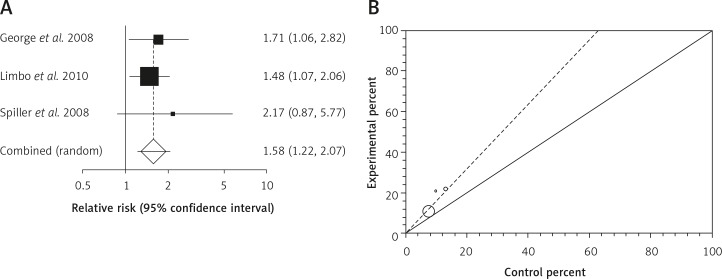
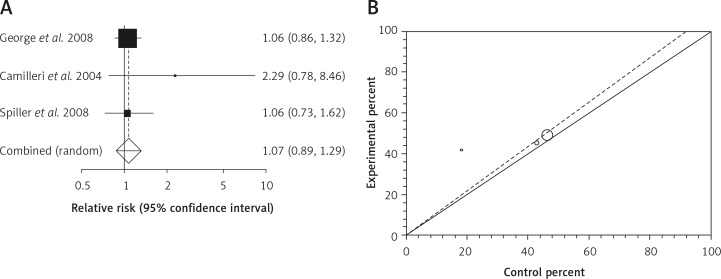
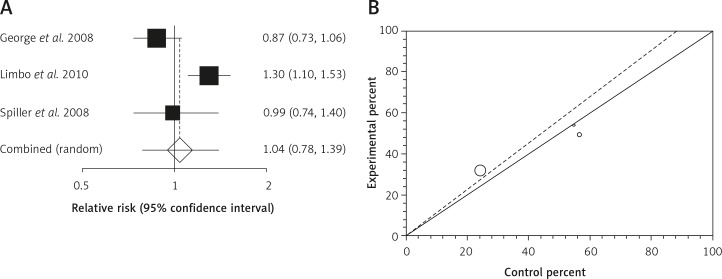
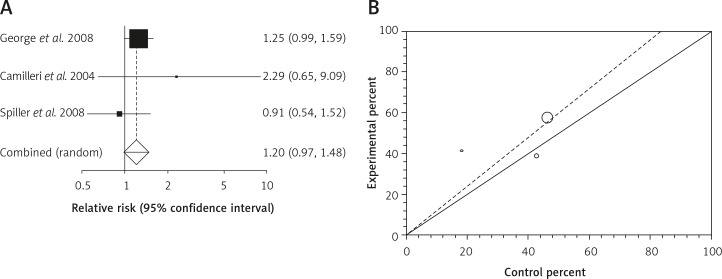
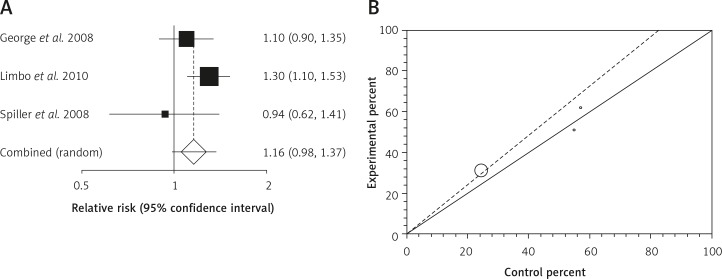
Relative risk (RR) for clinical efficacy in IBS patients treated for 5 weeks or less comparing renzapride to placebo was 1.07 (95% CI = 0.89-1.29, p = 0.38). This value for IBS patients treated for more than 5 weeks was 1.04 (95% CI = 0.78-1.239, p = 0.77). The RR for clinical efficacy in IBS patients treated with renzapride (4 mg) for 5 weeks or less and more than 5 weeks in comparison to placebo was 1.2 (95% CI = 0.97-1.48, p = 0.1) and 1.16 (95% CI = 0.98-1.37, p = 0.08), respectively, which were statistically non-significant but clinically important. The analysis of tolerability demonstrated that amongst different reported adverse effects, renzapride caused diarrhea more than placebo (RR = 1.61 with a 95% CI = 1.16-2.24, p = 0.004). The RR for withdrawals from renzapride compared to placebo was 1.58 (95% CI = 1.26-2.07, p = 0.0007).
Renzapride is not superior to placebo in relieving IBS symptoms and causes significant incidences of diarrhea and drop-outs due to adverse effects in treated patients vs. placebo. Thus, this medicine might be a cost burden to patients without providing good effectiveness.
通过作用于胃肠道(GI)中不同亚型的5-羟色胺(5HT)受体,已有多种药物被用于治疗肠易激综合征(IBS)。瑞扎普明是一种5HT4受体的完全激动剂,同时也是5HT2b和5HT3受体的拮抗剂,因其对胃肠道的促进作用,被认为是治疗以便秘为主的IBS(C-IBS)患者的一种有前景的治疗药物。在这项荟萃分析中,我们的目的是评估瑞扎普明治疗IBS的疗效和耐受性。
检索了1992年至2013年2月间调查瑞扎普明治疗IBS疗效的安慰剂对照试验。
治疗5周及以内的IBS患者,瑞扎普明与安慰剂相比的临床疗效相对危险度(RR)为1.07(95%可信区间[CI]=0.89-1.29,p=0.38)。治疗超过5周的IBS患者,该值为1.04(95%CI=0.78-1.239,p=0.77)。与安慰剂相比,接受瑞扎普明(4mg)治疗5周及以内和超过5周的IBS患者的临床疗效RR分别为1.2(95%CI=0.97-1.48,p=0.1)和1.16(95%CI=0.98-1.37,p=0.08),虽无统计学意义,但具有临床重要性。耐受性分析表明,在不同报告的不良反应中,瑞扎普明导致腹泻的发生率高于安慰剂(RR=1.61,95%CI=1.16-2.24,p=0.004)。与安慰剂相比,因瑞扎普明导致停药的RR为1.58(95%CI=1.26-2.07,p=0.0007)。
在缓解IBS症状方面,瑞扎普明并不优于安慰剂,且与安慰剂相比,治疗患者因不良反应导致腹泻和停药的发生率显著增加。因此,这种药物可能在未提供良好疗效的情况下给患者带来经济负担。