Sokouti Massoud, Sadeghi Ramin, Pashazadeh Saeid, Abadi Saeed Eslami Hasan, Sokouti Mohsen, Ghojazadeh Morteza, Sokouti Babak
Nuclear Medicine Research Center, Mashhad University of Medical Sciences, Mashhad, Iran.
Department of Computer and Electrical Engineering, University of Tabriz, Tabriz, Iran.
Arch Med Sci. 2019 Mar;15(2):284-308. doi: 10.5114/aoms.2018.73344. Epub 2018 Mar 2.
There is an academic debate over surgical treatments of liver hydatid cyst disease. In this study, a systematic review and meta-analysis were carried out in order to evaluate the pros and cons of both PAIR (Puncture, Aspiration, Injection, Respiration) and laparoscopic techniques by considering the outcomes of liver hydatid cysts.
We designed descriptive Boolean queries to search two databases, PubMed and Scopus, to derive the articles published in the period of January 2000 to December 2016 in order to evaluate the outcomes of these research articles. The outcomes of laparoscopic and PAIR procedures include the rates of cure, postoperative complications, recurrences, and mortality, which were extracted, assessed, and used as their corresponding effect sizes.
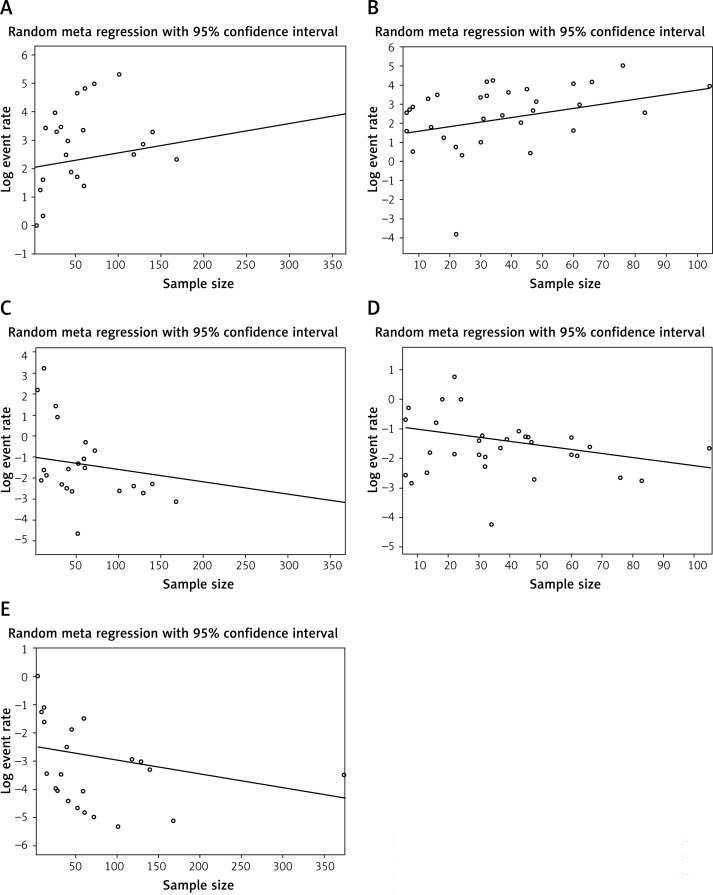
Fifty-seven studies including a total of 2832 patients (PAIR group = 1650 and laparoscopic group = 1182) were analyzed. In this meta-analysis study, a random effect model of correlations of outcomes (postoperative complications, mortalities, recurrences, and cure rates) of PAIR and laparoscopy procedures was used. The meta-analysis and the forest plots of the two procedures show that the PAIR approach is superior in terms of cure, complication, and mortality rates compared with the laparoscopy technique. However, the recurrence rate is low in laparoscopic approaches. Moreover, Egger's tests for determining publication bias and heterogeneity tests were also performed.
This study shows promising trends toward an advantage of PAIR procedures in treatment of liver hydatid cyst in comparison with laparoscopic procedures. The PAIR procedure is superior to laparoscopy due to having a higher cure rate and lower complication and mortality rates; however, the latter has a lower recurrence rate.
关于肝包虫囊肿病的手术治疗存在学术争论。在本研究中,通过考量肝包虫囊肿的治疗结果,进行了一项系统评价和荟萃分析,以评估穿刺、抽吸、注射、再抽吸(PAIR)和腹腔镜技术的优缺点。
我们设计了描述性布尔查询,以检索两个数据库(PubMed和Scopus),获取2000年1月至2016年12月期间发表的文章,以评估这些研究文章的结果。腹腔镜手术和PAIR手术的结果包括治愈率、术后并发症、复发率和死亡率,这些数据被提取、评估并用作相应的效应量。
分析了57项研究,共纳入2832例患者(PAIR组 = 1650例,腹腔镜组 = 1182例)。在这项荟萃分析研究中,采用了PAIR手术和腹腔镜手术结果(术后并发症、死亡率、复发率和治愈率)相关性的随机效应模型。两种手术的荟萃分析和森林图显示,与腹腔镜技术相比,PAIR方法在治愈率、并发症和死亡率方面更具优势。然而,腹腔镜手术的复发率较低。此外,还进行了用于确定发表偏倚的Egger检验和异质性检验。
本研究表明,与腹腔镜手术相比,PAIR手术在治疗肝包虫囊肿方面具有优势,呈现出良好的趋势。PAIR手术优于腹腔镜手术,因为其治愈率更高,并发症和死亡率更低;然而,后者的复发率较低。