Goodman Christopher D, McFadden Geoffrey I
School of Botany, University of Melbourne, Parkville, Victoria, Australia.
PLoS One. 2014 Apr 4;9(4):e91178. doi: 10.1371/journal.pone.0091178. eCollection 2014.
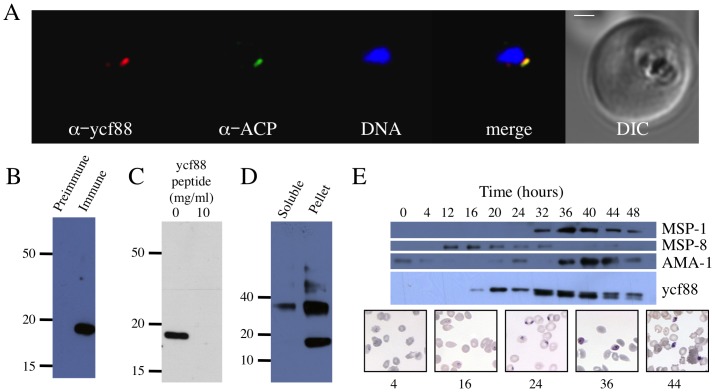
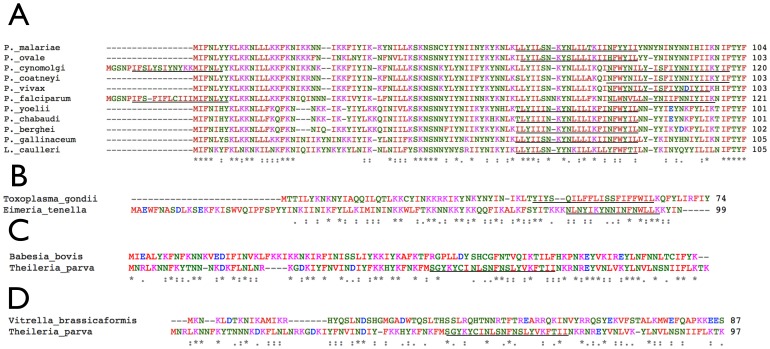
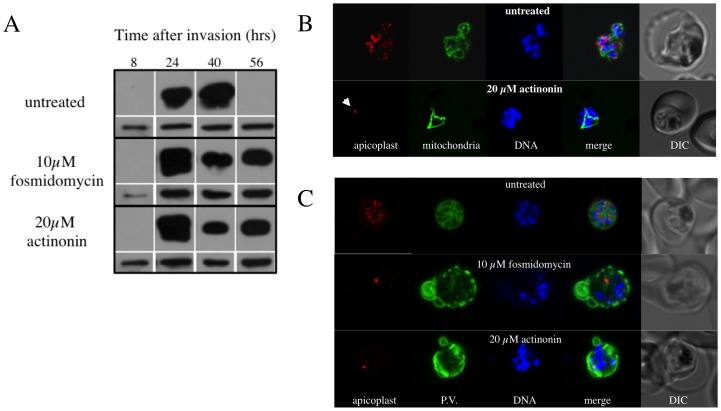
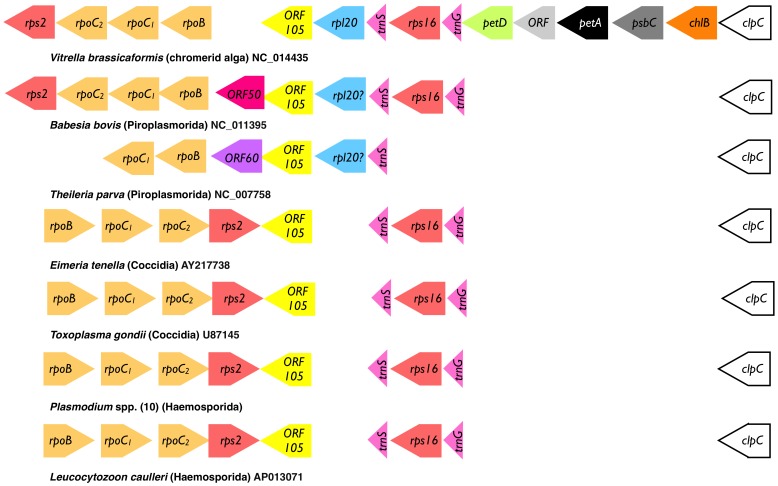
Malaria parasites retain a relict plastid (apicoplast) from a photosynthetic ancestor shared with dinoflagellate algae. The apicoplast is a useful drug target; blocking housekeeping pathways such as genome replication and translation in the organelle kills parasites and protects against malaria. The apicoplast of Plasmodium falciparum encodes 30 proteins and a suite of rRNAs and tRNAs that facilitate their expression. orf105 is a hypothetical apicoplast gene that would encode a small protein (PfOrf105) with a predicted C-terminal transmembrane domain. We produced antisera to a predicted peptide within PfOrf105. Western blot analysis confirmed expression of orf105 and immunofluorescence localised the gene product to the apicoplast. Pforf105 encodes a membrane protein that has an apparent mass of 17.5 kDa and undergoes substantial turnover during the 48-hour asexual life cycle of the parasite in blood stages. The effect of actinonin, an antimalarial with a putative impact on post-translational modification of apicoplast proteins like PfOrf105, was examined. Unlike other drugs perturbing apicoplast housekeeping that induce delayed death, actinonin kills parasites immediately and has an identical drug exposure phenotype to the isopentenyl diphosphate synthesis blocker fosmidomycin. Open reading frames of similar size to PfOrf105, which also have predicted C-terminal trans membrane domains, occur in syntenic positions in all sequenced apicoplast genomes from Phylum Apicomplexa. We therefore propose to name these genes ycf93 (hypothetical chloroplast reading frame 93) according to plastid gene nomenclature convention for conserved proteins of unknown function.
疟原虫保留了一个来自与甲藻共享的光合祖先的残余质体(顶质体)。顶质体是一个有用的药物靶点;阻断细胞器中的基因组复制和翻译等管家途径可杀死寄生虫并预防疟疾。恶性疟原虫的顶质体编码30种蛋白质以及一套有助于它们表达的rRNA和tRNA。orf105是一个假定的顶质体基因,它将编码一种具有预测的C端跨膜结构域的小蛋白质(PfOrf105)。我们针对PfOrf105内的一个预测肽段制备了抗血清。蛋白质免疫印迹分析证实了orf105的表达,免疫荧光将基因产物定位到顶质体。PfOrf105编码一种膜蛋白,其表观质量为17.5 kDa,并且在寄生虫血液阶段的48小时无性生命周期中经历大量周转。研究了放线菌素(一种对PfOrf105等顶质体蛋白的翻译后修饰有假定影响的抗疟药)的作用。与其他干扰顶质体管家功能并导致延迟死亡的药物不同,放线菌素可立即杀死寄生虫,并且与异戊烯基二磷酸合成阻断剂磷霉素具有相同的药物暴露表型。与PfOrf105大小相似且也具有预测的C端跨膜结构域的开放阅读框,出现在来自顶复门的所有已测序顶质体基因组的同线位置。因此,我们建议根据质体基因命名惯例,将这些基因命名为ycf93(假定的叶绿体阅读框93),用于功能未知的保守蛋白。