Institute of Biotechnology, University of Helsinki, Helsinki, Finland.
Department of Genetics and Complex Diseases, Harvard School of Public Health, Boston, Massachusetts, United States of America.
PLoS One. 2014 Apr 4;9(4):e93911. doi: 10.1371/journal.pone.0093911. eCollection 2014.
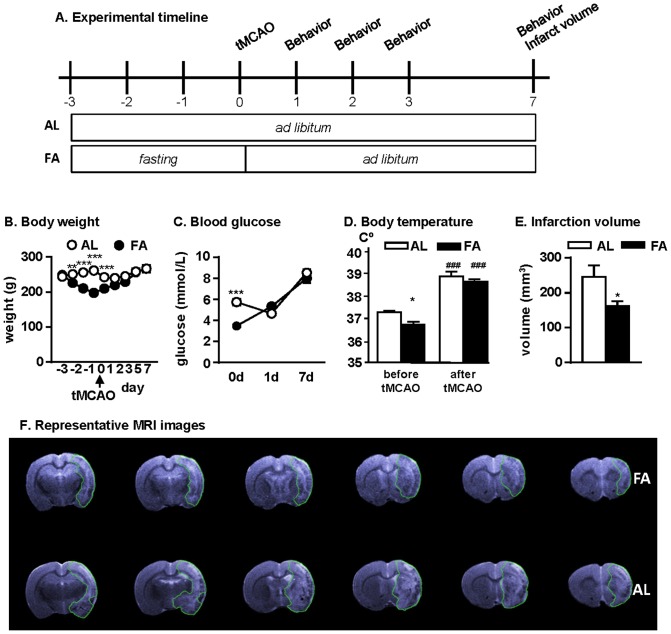
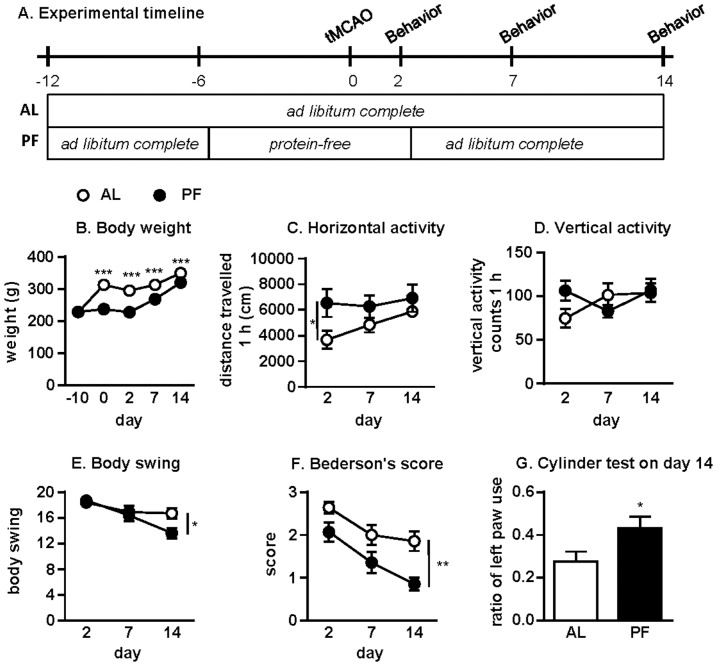
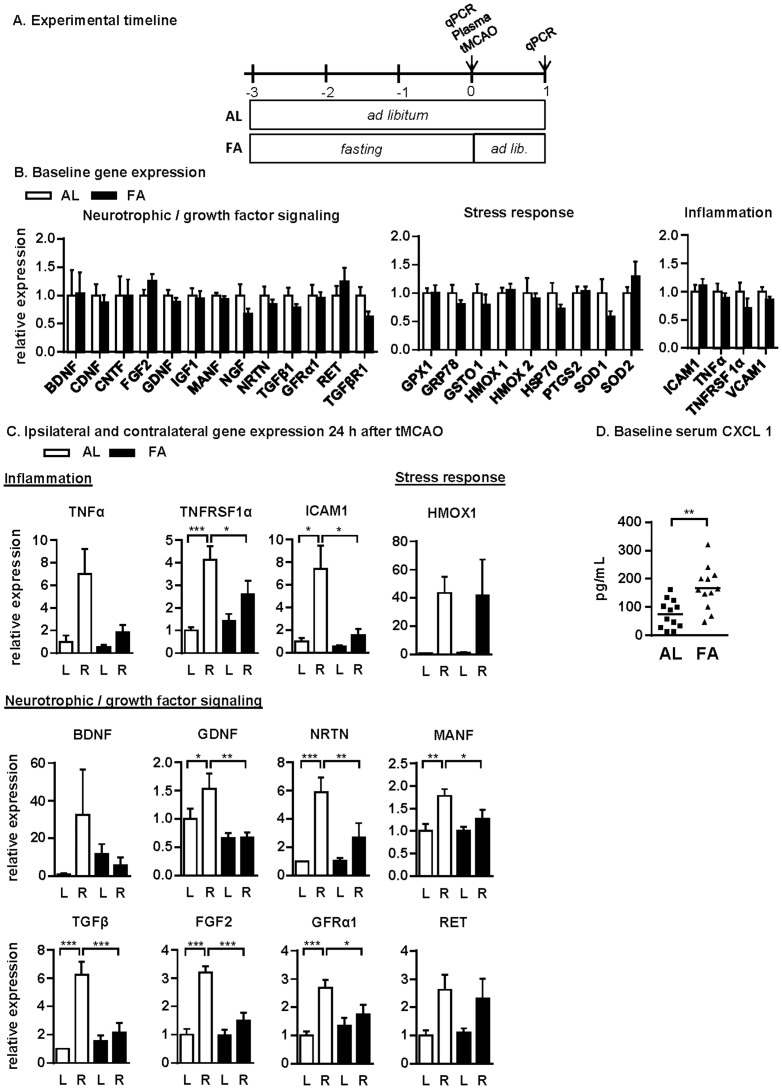
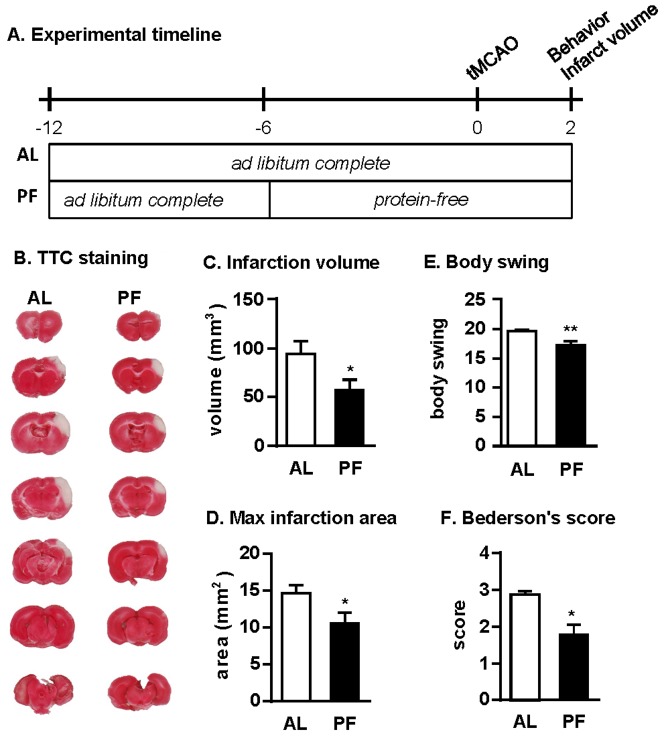
Stroke is a major complication of cardiovascular surgery, resulting in over 100,000 deaths and over a million postoperative encephalopathies annually in the US and Europe. While mitigating damage from stroke after it occurs has proven elusive, opportunities to reduce the incidence and/or severity of stroke prior to surgery in at-risk individuals remain largely unexplored. We tested the potential of short-term preoperative dietary restriction to provide neuroprotection in rat models of focal stroke. Rats were preconditioned with either three days of water-only fasting or six days of a protein free diet prior to induction of transient middle cerebral artery occlusion using two different methods, resulting in either a severe focal stroke to forebrain and midbrain, or a mild focal stroke localized to cortex only. Infarct volume, functional recovery and molecular markers of damage and protection were assessed up to two weeks after reperfusion. Preoperative fasting for 3 days reduced infarct volume after severe focal stroke. Neuroprotection was associated with modulation of innate immunity, including elevation of circulating neutrophil chemoattractant C-X-C motif ligand 1 prior to ischemia and suppression of striatal pro-inflammatory markers including tumor necrosis factor α, its receptor and downstream effector intercellular adhesion molecule-1 after reperfusion. Similarly, preoperative dietary protein restriction for 6 days reduced ischemic injury and improved functional recovery in a milder cortical infarction model. Our results suggest that short-term dietary restriction regimens may provide simple and translatable approaches to reduce perioperative stroke severity in high-risk elective vascular surgery.
中风是心血管手术的主要并发症,每年在美国和欧洲导致超过 10 万人死亡和超过 100 万例术后脑病。虽然减轻中风发生后的损伤已被证明难以实现,但在高危个体中,在手术前降低中风发生率和/或严重程度的机会在很大程度上仍未得到探索。我们测试了短期术前饮食限制在局灶性中风大鼠模型中提供神经保护的潜力。在使用两种不同方法诱导短暂性大脑中动脉闭塞之前,大鼠分别进行了三天的仅饮水禁食或六天的无蛋白饮食预处理,导致前脑和中脑的严重局灶性中风,或仅局限于皮质的轻度局灶性中风。在再灌注后最多两周评估梗死体积、功能恢复以及损伤和保护的分子标志物。术前禁食 3 天可减少严重局灶性中风后的梗死体积。神经保护与先天免疫的调节有关,包括缺血前循环中性粒细胞趋化因子 C-X-C 基序配体 1 的升高,以及再灌注后纹状体促炎标志物如肿瘤坏死因子 α、其受体和下游效应细胞间黏附分子-1 的抑制。同样,术前 6 天的饮食蛋白限制可减少轻度皮质梗死模型中的缺血损伤并改善功能恢复。我们的结果表明,短期饮食限制方案可能为降低高危择期血管手术围手术期中风严重程度提供简单且可转化的方法。