Diagnostic Genetic Unit, Careggi Hospital, Azienda Ospedaliera Universitaria Careggi, University of Florence, Florence, Italy.
Department of Internal Medicine, University of Florence Medical School, Florence, Italy.
Genes (Basel). 2010 Sep 14;1(2):294-307. doi: 10.3390/genes1020294.
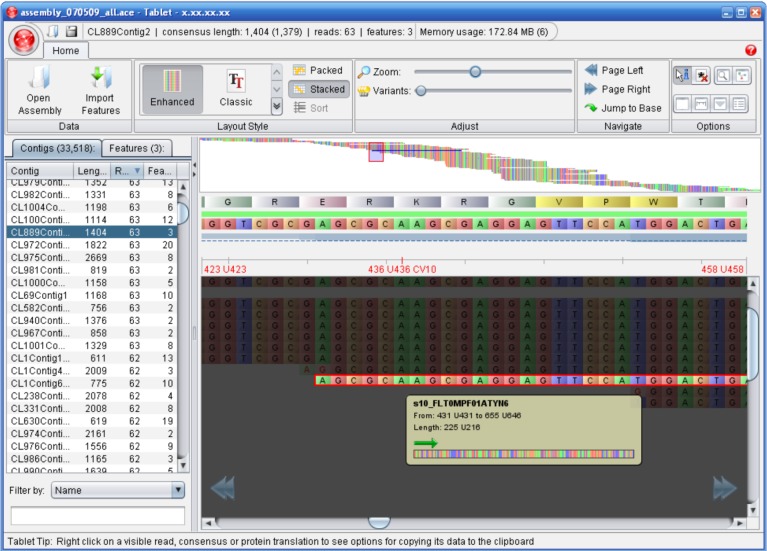
The emergence of next-generation sequencing (NGS) platforms imposes increasing demands on statistical methods and bioinformatic tools for the analysis and the management of the huge amounts of data generated by these technologies. Even at the early stages of their commercial availability, a large number of softwares already exist for analyzing NGS data. These tools can be fit into many general categories including alignment of sequence reads to a reference, base-calling and/or polymorphism detection, de novo assembly from paired or unpaired reads, structural variant detection and genome browsing. This manuscript aims to guide readers in the choice of the available computational tools that can be used to face the several steps of the data analysis workflow.
下一代测序(NGS)平台的出现对统计方法和生物信息学工具提出了越来越高的要求,以分析和管理这些技术产生的大量数据。即使在它们商业可用性的早期阶段,已经有大量的软件可用于分析 NGS 数据。这些工具可以归入许多一般类别,包括将序列读取与参考序列进行比对、碱基调用和/或多态性检测、从配对或未配对读取进行从头组装、结构变异检测和基因组浏览。本文旨在指导读者选择可用的计算工具,以应对数据分析工作流程的几个步骤。