Mouse Imaging Centre, The Hospital for Sick Children, Toronto, Ontario, Canada.
1] Division of Cardiology, Department of Paediatrics, The Hospital for Sick Children, Toronto, Ontario, Canada [2] Diagnostic Imaging, The Hospital for Sick Children, Toronto, Ontario, Canada.
J Cereb Blood Flow Metab. 2014 Jun;34(6):1082-8. doi: 10.1038/jcbfm.2014.62. Epub 2014 Apr 9.
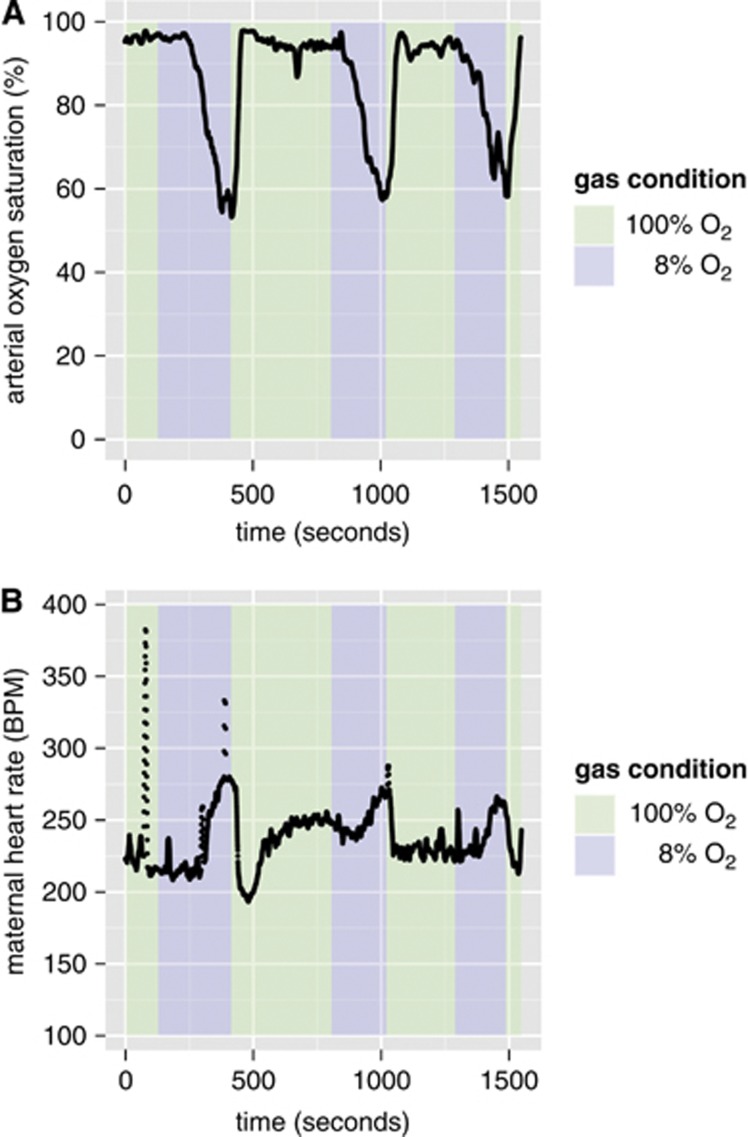
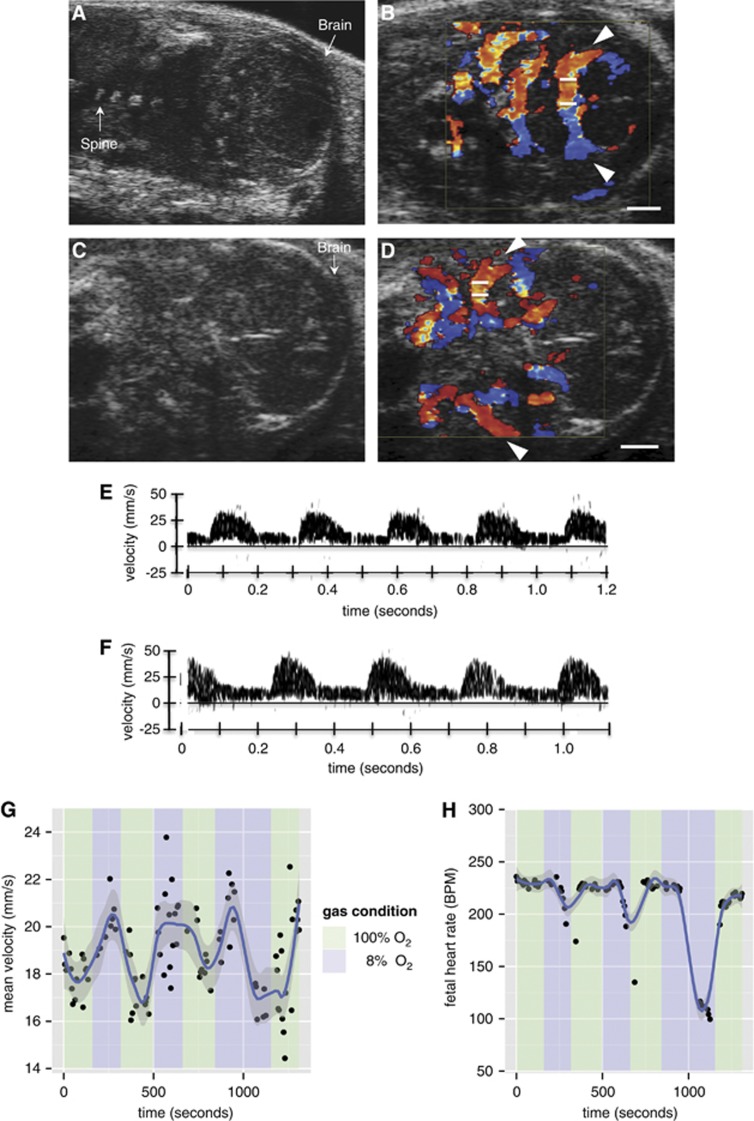
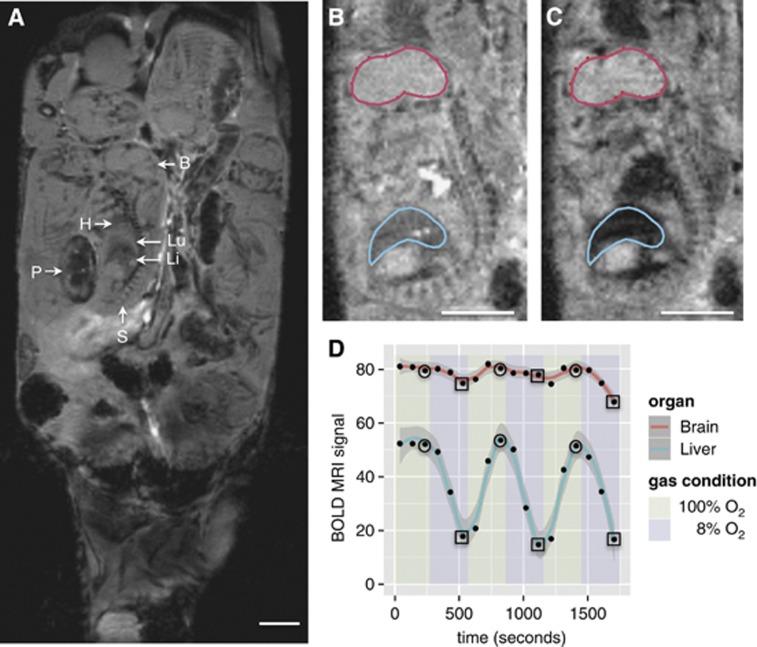
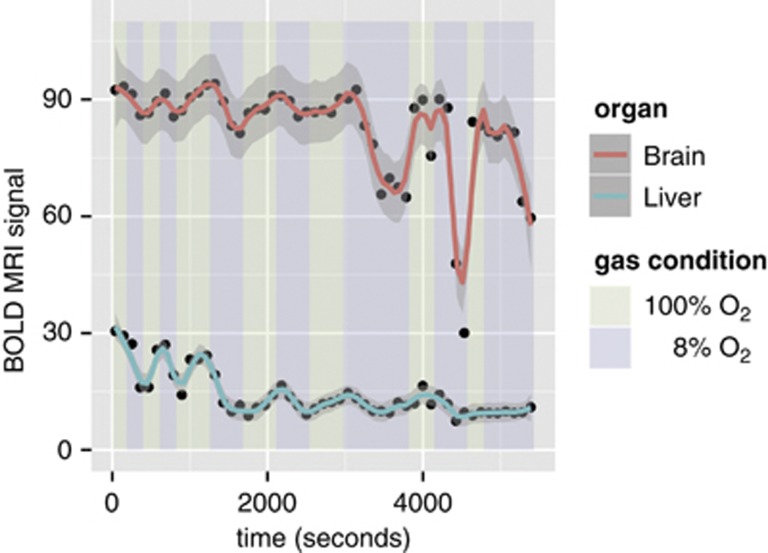
Mice reproduce many features of human pregnancy and have been widely used to model disorders of pregnancy. However, it has not been known whether fetal mice reproduce the physiologic response to hypoxia known as brain sparing, where blood flow is redistributed to preserve oxygenation of the brain at the expense of other fetal organs. In the present study, blood oxygen level-dependent (BOLD) magnetic resonance imaging (MRI) and Doppler ultrasound were used to determine the effect of acute hypoxia on the fetal blood flow in healthy, pregnant mice. As the maternal inspired gas mixture was varied between 100% and 8% oxygen on the timescale of minutes, the BOLD signal intensity decreased by 44±18% in the fetal liver and by 12±7% in the fetal brain. Using Doppler ultrasound measurements, mean cerebral blood velocity was observed to rise by 15±8% under hypoxic conditions relative to hyperoxia. These findings are consistent with active regulation of cerebral oxygenation and clearly show brain sparing in fetal mice.
小鼠在很多方面重现了人类妊娠的特征,已被广泛用于模拟妊娠相关疾病。然而,目前还不清楚胎儿小鼠是否会产生对缺氧的生理反应,即脑保护,其中血流重新分配以牺牲其他胎儿器官为代价来维持大脑的氧合。在本研究中,使用血氧水平依赖(BOLD)磁共振成像(MRI)和多普勒超声来确定急性缺氧对健康妊娠小鼠胎儿血流的影响。当在数分钟的时间尺度内将母体吸入的气体混合物从 100%变为 8%氧气时,胎儿肝脏的 BOLD 信号强度降低了 44±18%,而胎儿大脑的信号强度降低了 12±7%。使用多普勒超声测量,在缺氧条件下观察到大脑平均血流速度相对于高氧水平上升了 15±8%。这些发现与大脑氧合的主动调节一致,并清楚地显示了胎儿小鼠的脑保护。