Sarrabayrouse Guillaume, Bossard Céline, Chauvin Joe-Marc, Jarry Anne, Meurette Guillaume, Quévrain Elodie, Bridonneau Chantal, Preisser Laurence, Asehnoune Karim, Labarrière Nathalie, Altare Frédéric, Sokol Harry, Jotereau Francine
INSERM, U892, Nantes, France; Université de Nantes, Nantes, France; CNRS, UMR 6299, Nantes, France.
Department of Medicine, Division of Hematology/Oncology, University of Pittsburgh, School of Medicine, Pittsburgh, Pennsylvania, United States of America.
PLoS Biol. 2014 Apr 8;12(4):e1001833. doi: 10.1371/journal.pbio.1001833. eCollection 2014 Apr.
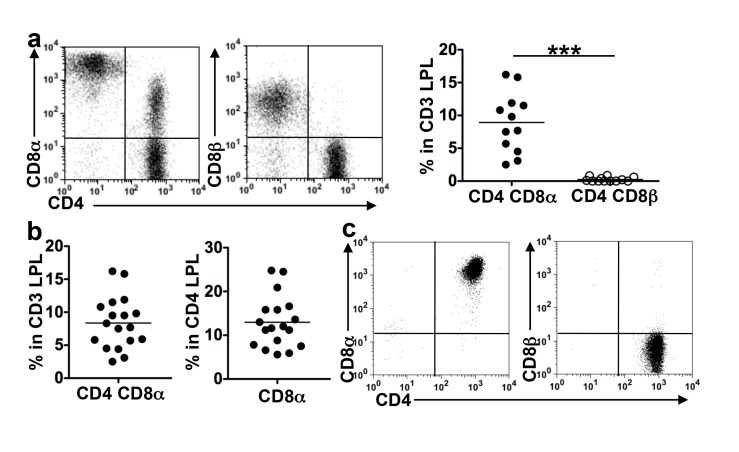
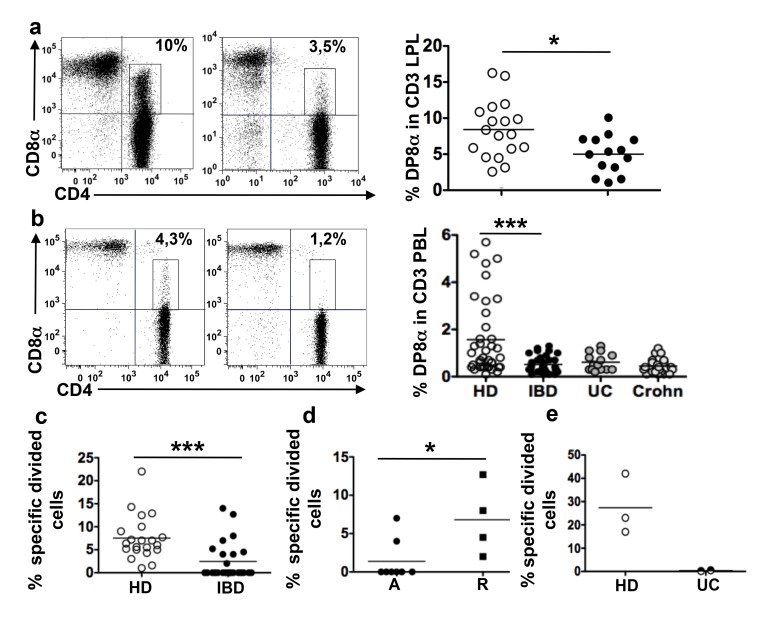
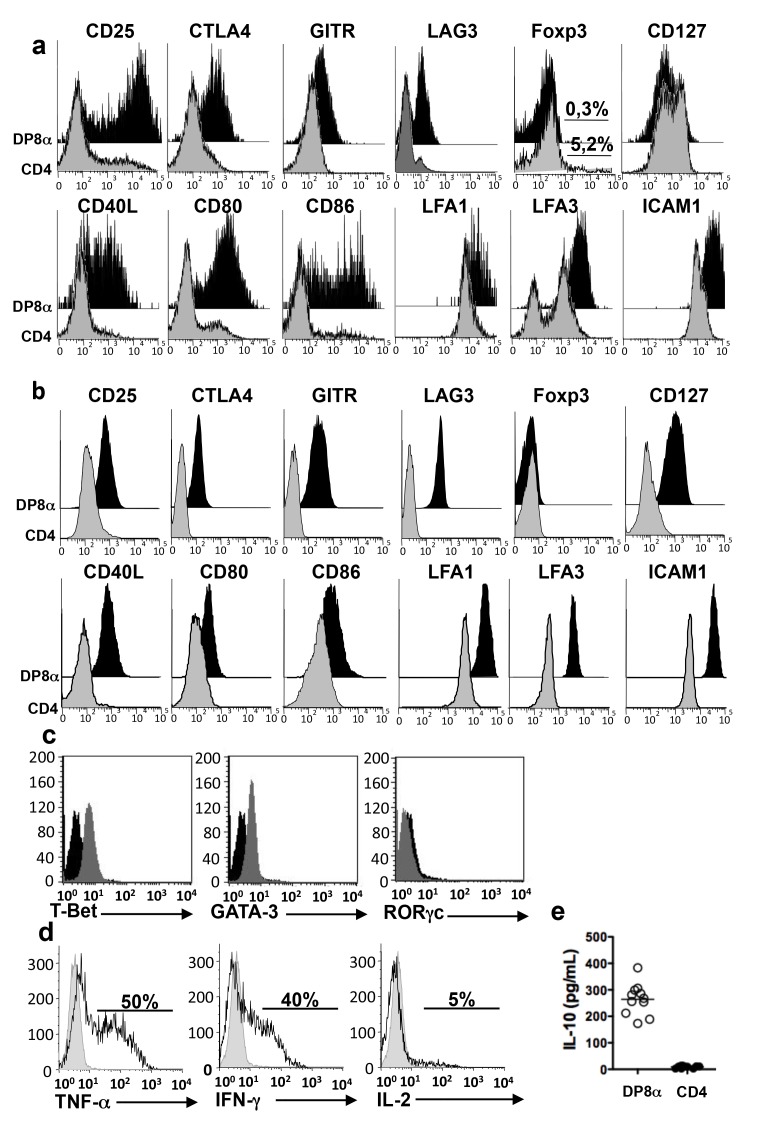
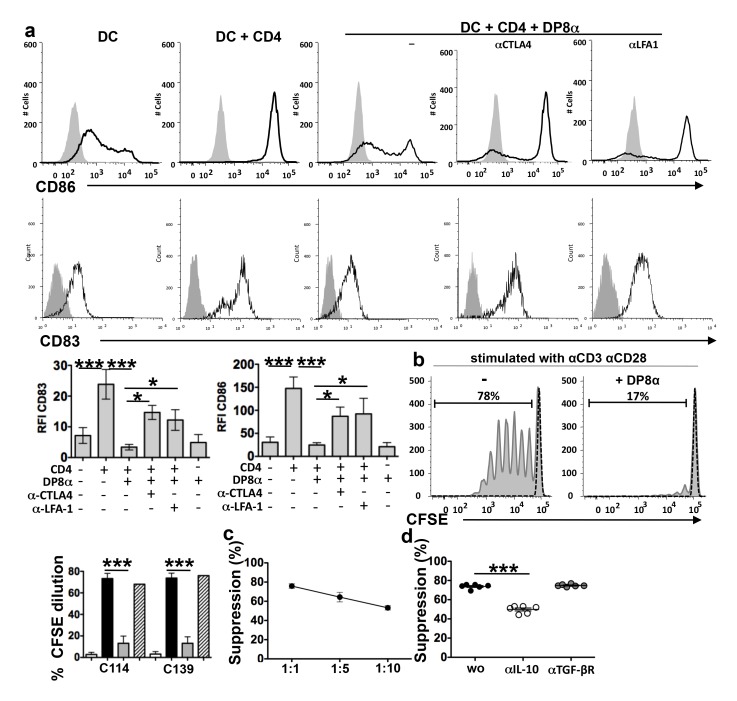
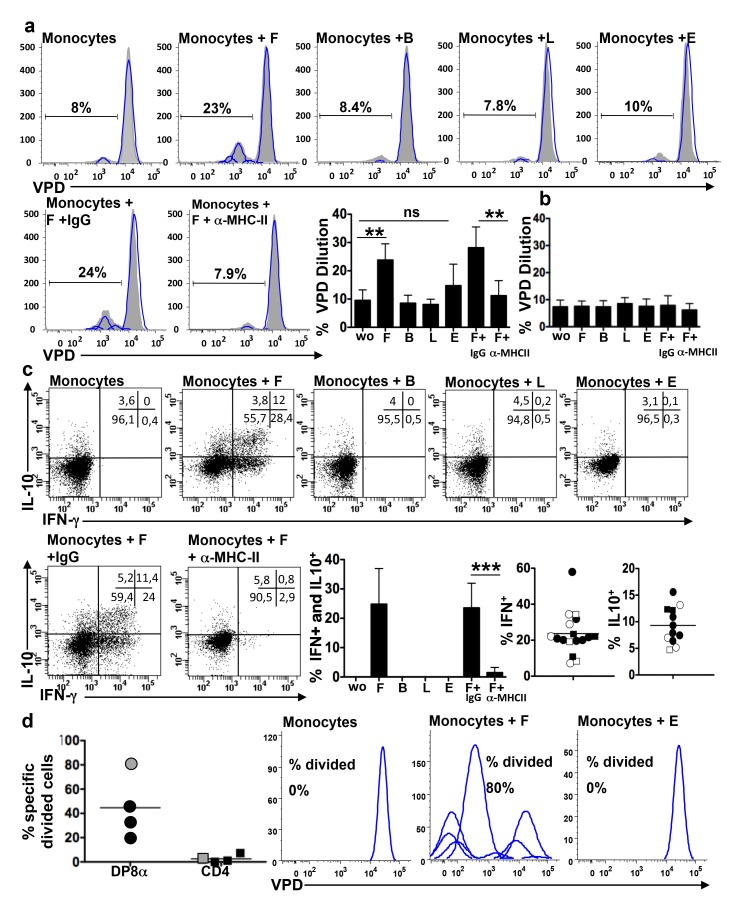
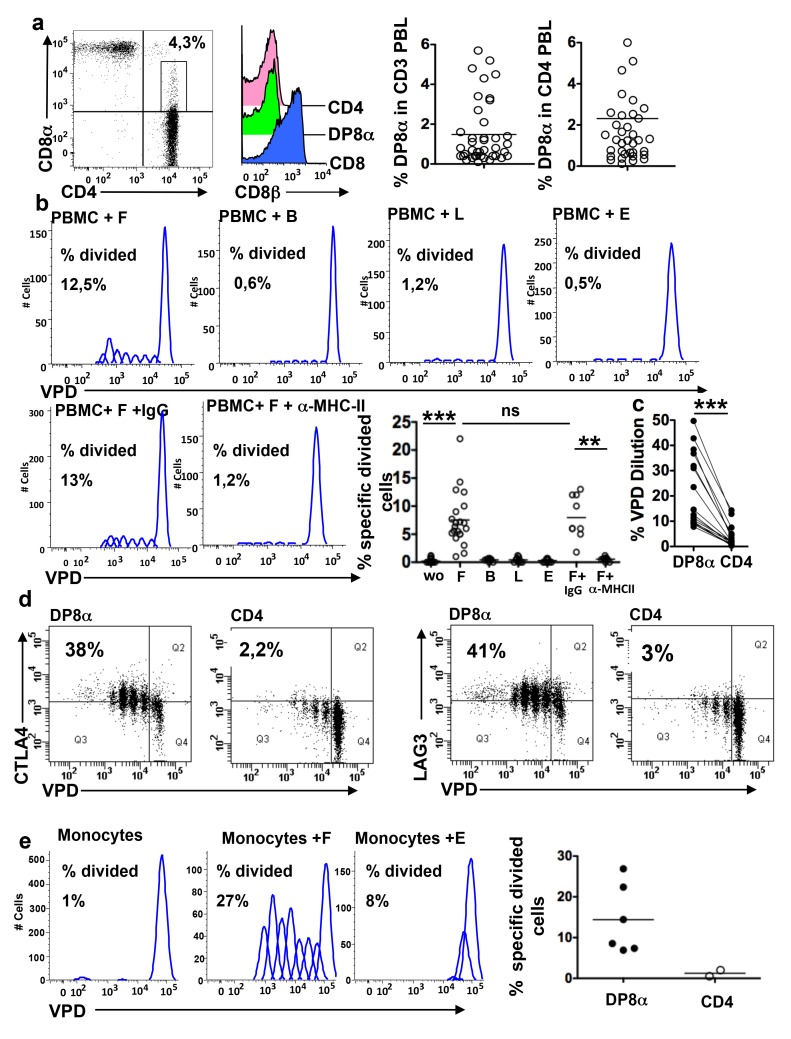
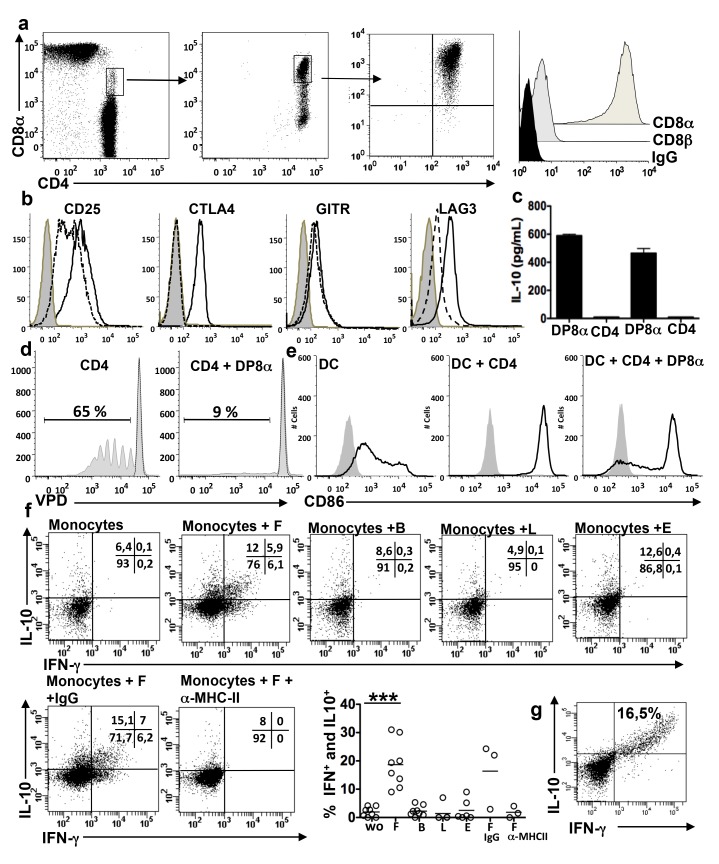
How the microbiota affects health and disease is a crucial question. In mice, gut Clostridium bacteria are potent inducers of colonic interleukin (IL)-10-producing Foxp3 regulatory T cells (Treg), which play key roles in the prevention of colitis and in systemic immunity. In humans, although gut microbiota dysbiosis is associated with immune disorders, the underlying mechanism remains unknown. In contrast with mice, the contribution of Foxp3 Treg in colitis prevention has been questioned, suggesting that other compensatory regulatory cells or mechanisms may exist. Here we addressed the regulatory role of the CD4CD8 T cells whose presence had been reported in the intestinal mucosa and blood. Using colonic lamina propria lymphocytes (LPL) and peripheral blood lymphocytes (PBL) from healthy individuals, and those with colon cancer and irritable bowel disease (IBD), we demonstrated that CD4CD8αα (DP8α) T lymphocytes expressed most of the regulatory markers and functions of Foxp3 Treg and secreted IL-10. Strikingly, DP8α LPL and PBL exhibited a highly skewed repertoire toward the recognition of Faecalibacterium prausnitzii, a major Clostridium species of the human gut microbiota, which is decreased in patients with IBD. Furthermore, the frequencies of DP8α PBL and colonic LPL were lower in patients with IBD than in healthy donors and in the healthy mucosa of patients with colon cancer, respectively. Moreover, PBL and LPL from most patients with active IBD failed to respond to F. prausnitzii in contrast to PBL and LPL from patients in remission and/or healthy donors. These data (i) uncover a Clostridium-specific IL-10-secreting Treg subset present in the human colonic LP and blood, (ii) identify F. prausnitzii as a major inducer of these Treg, (iii) argue that these cells contribute to the control or prevention of colitis, opening new diagnostic and therapeutic strategies for IBD, and (iv) provide new tools to address the systemic impact of both these Treg and the intestinal microbiota on the human immune homeostasis.
微生物群如何影响健康与疾病是一个关键问题。在小鼠中,肠道梭菌是结肠中产生白细胞介素(IL)-10的叉头框蛋白3(Foxp3)调节性T细胞(Treg)的强效诱导剂,这些细胞在预防结肠炎和全身免疫中起关键作用。在人类中,尽管肠道微生物群失调与免疫紊乱有关,但其潜在机制仍不清楚。与小鼠不同,Foxp3 Treg在预防结肠炎中的作用受到质疑,这表明可能存在其他代偿性调节细胞或机制。在这里,我们探讨了在肠道黏膜和血液中已被报道存在的CD4CD8 T细胞的调节作用。我们使用来自健康个体、结肠癌患者和肠易激综合征(IBD)患者的结肠固有层淋巴细胞(LPL)和外周血淋巴细胞(PBL),证明CD4CD8αα(DP8α)T淋巴细胞表达了Foxp3 Treg的大多数调节标志物和功能,并分泌IL-10。引人注目的是,DP8α LPL和PBL表现出高度偏向于识别普拉梭菌的库,普拉梭菌是人类肠道微生物群中的一种主要梭菌,在IBD患者中数量减少。此外,IBD患者的DP8α PBL和结肠LPL频率分别低于健康供体和结肠癌患者的健康黏膜。此外,与缓解期患者和/或健康供体的PBL和LPL不同,大多数活动性IBD患者的PBL和LPL对普拉梭菌无反应。这些数据(i)揭示了人类结肠固有层和血液中存在的一种特定于梭菌的分泌IL-10的Treg亚群,(ii)确定普拉梭菌是这些Treg的主要诱导剂,(iii)认为这些细胞有助于控制或预防结肠炎,为IBD开辟了新的诊断和治疗策略,(iv)提供了新工具来解决这些Treg和肠道微生物群对人类免疫稳态的全身影响。