Southern Medical University, Guangzhou, China.
Department of Orthopedic Surgery, Wuhan General Hospital of Guangzhou Military Command, Wuhan, China.
Clinics (Sao Paulo). 2014;69(4):234-40. doi: 10.6061/clinics/2014(04)03.
The aim of this article was to determine the effects of minimally invasive percutaneous plates versus interlocking intramedullary nailing in the treatment of tibial shaft fractures in adults.
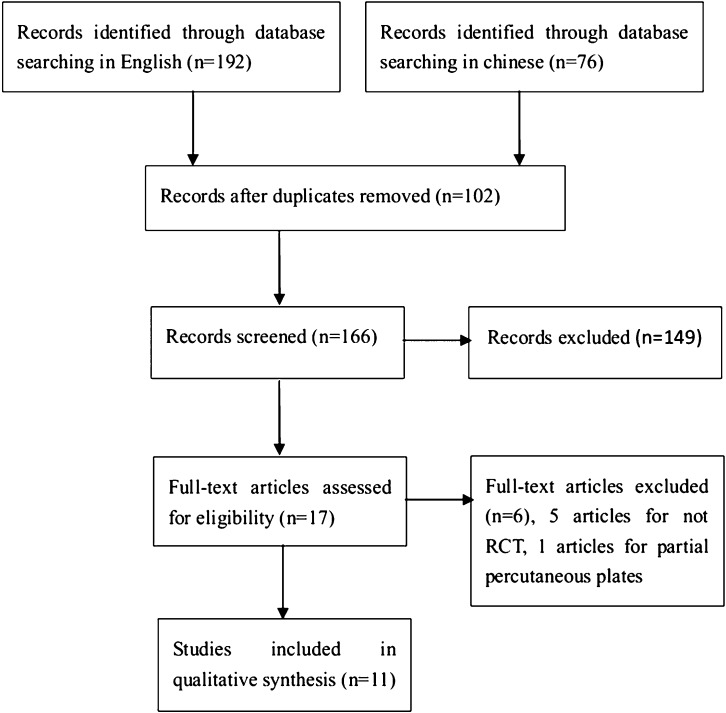
Literature searches of the Cochrane Library, PubMed, EMBASE, the Chinese Biomedical Literature database, the CNKI database, Wanfang Data, and the Weipu Journal database were performed up to August 2013. Only randomized and quasi-randomized controlled clinical trials comparing the use of percutaneous plates and interlocking intramedullary nails for tibial shaft fractures were included. Data collection and extraction, quality assessment, and data analyses were performed according to the Cochrane standards.
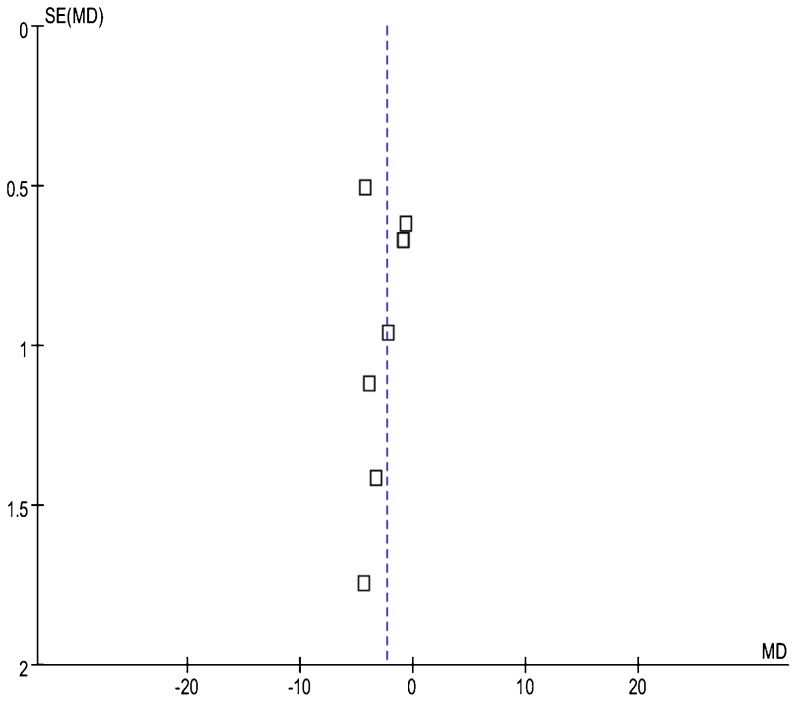
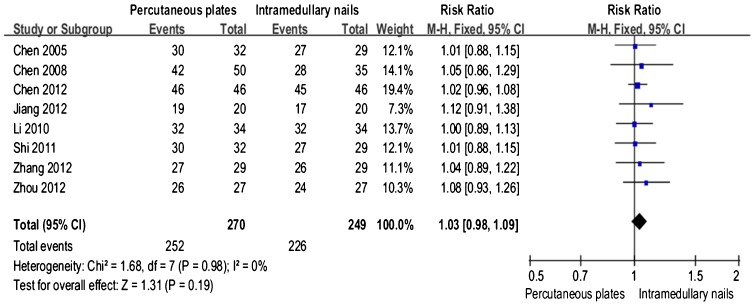
Eleven trials were included. Compared with interlocking intramedullary nailing, minimally invasive percutaneous plates shortened fracture healing time and resulted in lower rates of postoperative delayed union and pain. There was no significant difference between the two methods with regard to the rates of excellent and good Johner-Wruh scoring, the rate of reoperation, and other complications.
Overall, insufficient evidence exists regarding the effects of minimally invasive percutaneous plates versus interlocking intramedullary nailing in the treatment of tibial shaft fractures in adults. Low-quality evidence suggests that minimally invasive percutaneous plates could shorten fracture healing time, decrease the rate of postoperative delayed union, and decrease pain levels compared with interlocking intramedullary nailing. There is no significant difference between the two groups in terms of functional recovery scores, reoperation, and other complications. Further research that includes high-quality randomized controlled, multicenter trials is required to compare the effects of minimally invasive percutaneous plates versus interlocking intramedullary nailing in the treatment of tibial shaft fractures in adults.
本文旨在确定微创经皮钢板与交锁髓内钉治疗成人胫骨骨干骨折的疗效。
检索 Cochrane 图书馆、PubMed、EMBASE、中国生物医学文献数据库、中国知网数据库、万方数据和维普期刊数据库,检索时限均截至 2013 年 8 月。仅纳入比较微创经皮钢板与交锁髓内钉治疗胫骨骨干骨折的随机和半随机对照临床试验。按照 Cochrane 系统评价方法进行数据提取、质量评价和资料分析。
共纳入 11 项研究。与交锁髓内钉相比,微创经皮钢板可缩短骨折愈合时间,降低术后延迟愈合和疼痛发生率,但两组优良率、再手术率及其他并发症发生率差异无统计学意义。
目前微创经皮钢板与交锁髓内钉治疗成人胫骨骨干骨折的疗效尚缺乏足够证据,低质量证据表明微创经皮钢板可缩短骨折愈合时间,降低术后延迟愈合发生率,减轻疼痛程度,但在功能恢复评分、再手术率及其他并发症方面与交锁髓内钉无显著差异。需要进一步开展高质量的随机对照、多中心临床试验,比较微创经皮钢板与交锁髓内钉治疗成人胫骨骨干骨折的疗效。