Department of Radiotherapy and Radiation Oncology, Klinikum rechts der Isar, Technische Universität München, Ismaninger Straße 22, 81675 Munich, Germany.
GmbH, Munich, Ismaningerstr. 22, 81675 Munich, Germany.
Cancers (Basel). 2014 Apr 8;6(2):813-28. doi: 10.3390/cancers6020813.
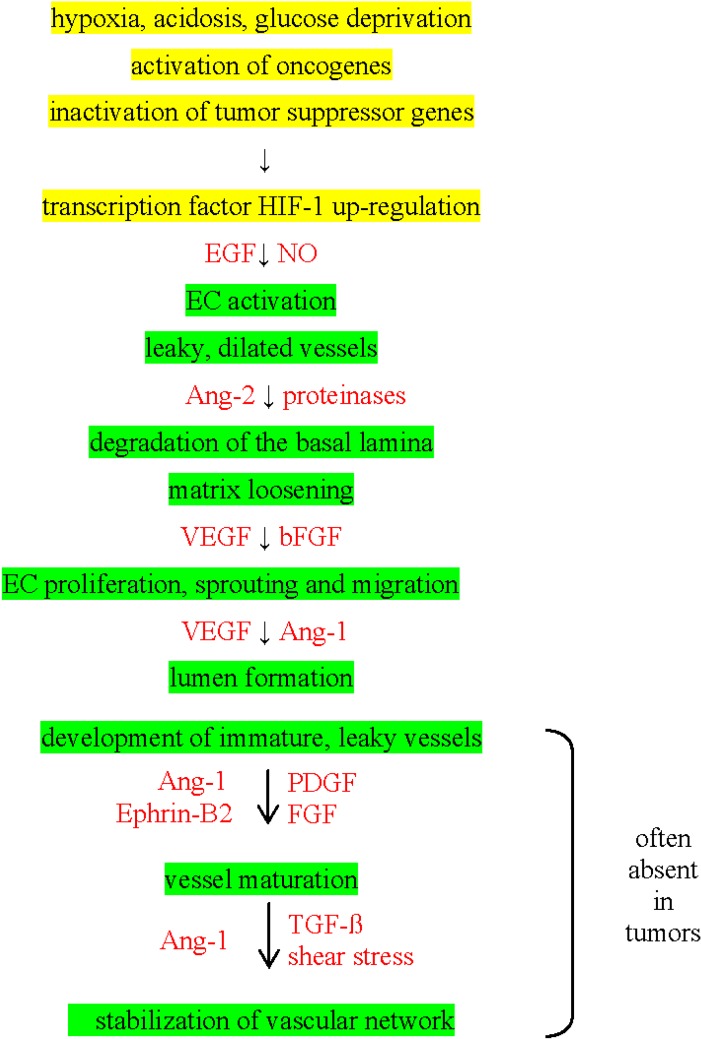
Newly formed microvessels in most solid tumors show an abnormal morphology and thus do not fulfil the metabolic demands of the growing tumor mass. Due to the chaotic and heterogeneous tumor microcirculation, a hostile tumor microenvironment develops, that is characterized inter alia by local hypoxia, which in turn can stimulate the HIF-system. The latter can lead to tumor progression and may be involved in hypoxia-mediated radioresistance of tumor cells. Herein, cellular and molecular mechanisms in tumor angiogenesis are discussed that, among others, might impact hypoxia-related radioresistance.
大多数实体肿瘤中新形成的微血管呈现异常形态,因此无法满足不断生长的肿瘤团块的代谢需求。由于肿瘤微循环的混乱和异质性,会产生一个不利于肿瘤生长的微环境,其特征除其他外还包括局部缺氧,这反过来又可以刺激 HIF 系统。后者可导致肿瘤进展,并可能参与肿瘤细胞缺氧介导的放射抵抗。本文讨论了肿瘤血管生成中的细胞和分子机制,这些机制可能会影响与缺氧相关的放射抵抗。