Orecchini Elisa, Doria Margherita, Michienzi Alessandro, Giuliani Erica, Vassena Lia, Ciafrè Silvia Anna, Farace Maria Giulia, Galardi Silvia
Deptartment of Biomedicine and Prevention; University of Rome "Tor Vergata"; Rome, Italy.
Laboratory of Immunoinfectivology; Bambino Gesù Children's Hospital; IRCCS, Rome, Italy.
RNA Biol. 2014;11(4):334-8. doi: 10.4161/rna.28372. Epub 2014 Mar 6.
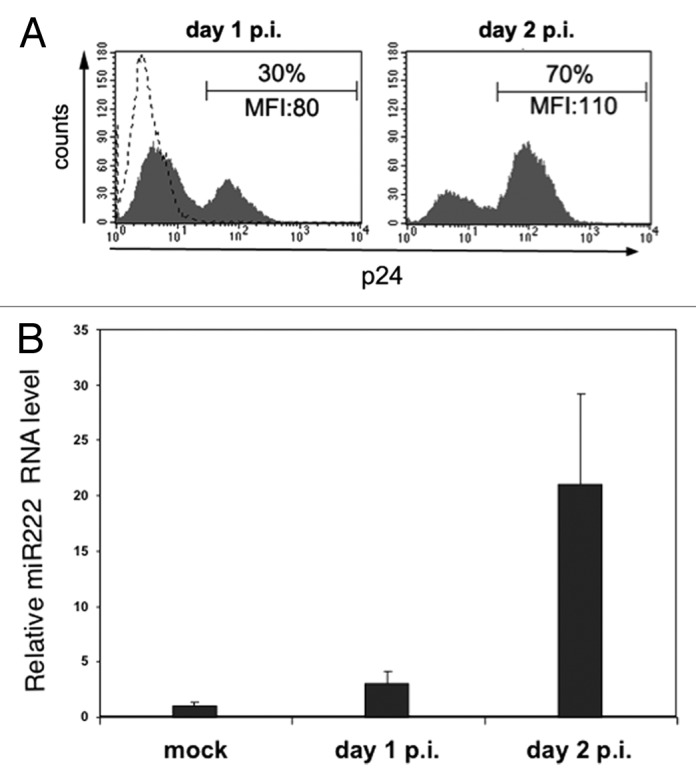
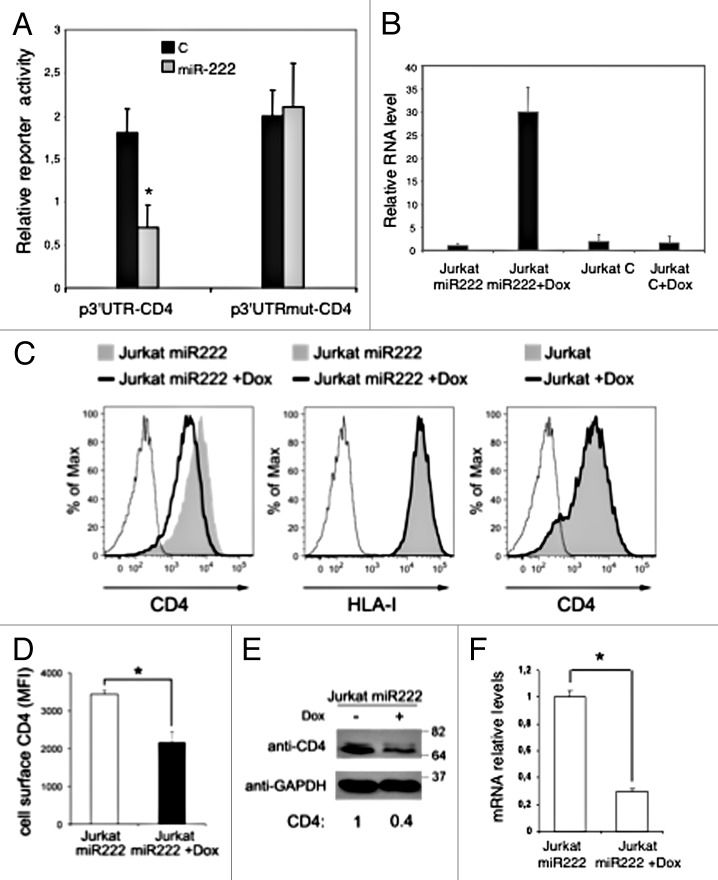
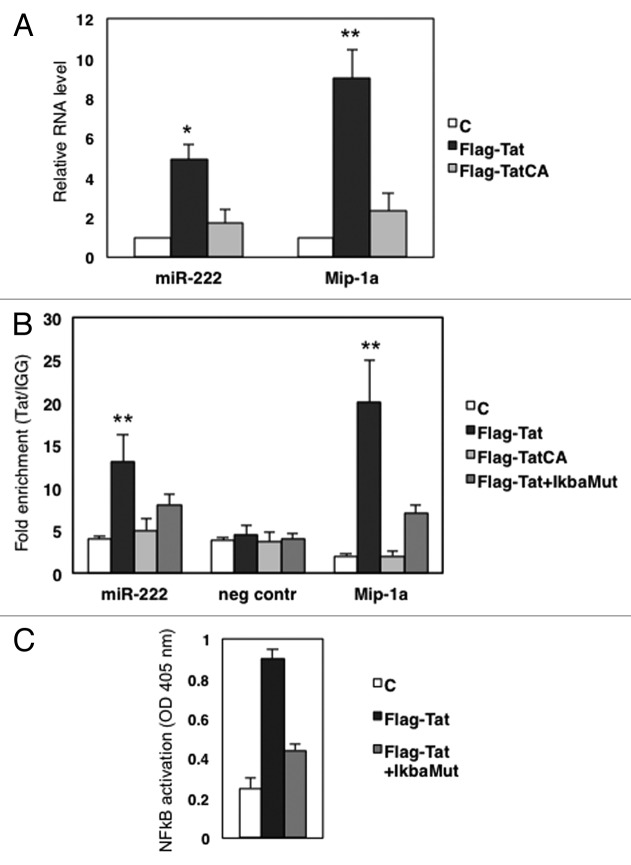
Several cellular microRNAs show substantial changes in expression during HIV-1 infection and their active role in the viral life cycle is progressively emerging. In the present study, we found that HIV-1 infection of Jurkat T cells significantly induces the expression of miR-222. We show that this induction depends on HIV-1 Tat protein, which is able to increase the transcriptional activity of NFkB on miR-222 promoter. Moreover, we demonstrate that miR-222 directly targets CD4, a key receptor for HIV-1, thus reducing its expression. We propose that Tat, by inducing miR-222 expression, complements the CD4 downregulation activity exerted by other viral proteins (i.e., Nef, Vpu, and Env), and we suggest that this represents a novel mechanism through which HIV-1 efficiently represses CD4 expression in infected cells.
几种细胞微小RNA在HIV-1感染期间表达出现显著变化,并且它们在病毒生命周期中的积极作用正逐渐显现。在本研究中,我们发现Jurkat T细胞受HIV-1感染会显著诱导miR-222的表达。我们表明这种诱导依赖于HIV-1 Tat蛋白,它能够增加NFkB对miR-222启动子的转录活性。此外,我们证明miR-222直接靶向HIV-1的关键受体CD4,从而降低其表达。我们提出,Tat通过诱导miR-222表达,补充了其他病毒蛋白(即Nef、Vpu和Env)所发挥的CD4下调活性,并且我们认为这代表了HIV-1在受感染细胞中有效抑制CD4表达的一种新机制。