Klintmalm Goran B, Nashan Björn
Baylor Simmons Transplant Institute, Baylor University Medical Center, 3410 Worth Street, Suite 950, Dallas, TX 75246, USA.
Department of Hepatobiliary Surgery and Visceral Transplantation, University Medical Center Eppendorf, Martinistra β e 52, 20246 Hamburg, Germany.
J Transplant. 2014;2014:845438. doi: 10.1155/2014/845438. Epub 2014 Feb 25.
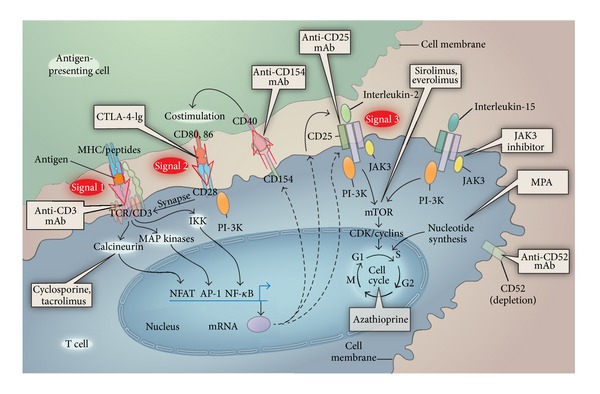
Despite the success of liver transplantation, long-term complications remain, including de novo malignancies, metabolic syndrome, and the recurrence of hepatitis C virus (HCV) and hepatocellular carcinoma (HCC). The current mainstay of treatment, calcineurin inhibitors (CNIs), can also worsen posttransplant renal dysfunction, neurotoxicity, and diabetes. Clearly there is a need for better immunosuppressive agents that maintain similar rates of efficacy and renal function whilst minimizing adverse effects. The mammalian target of rapamycin (mTOR) inhibitors with a mechanism of action that is different from other immunosuppressive agents has the potential to address some of these issues. In this review we surveyed the literature for reports of the use of mTOR inhibitors in adult liver transplantation with respect to renal function, efficacy, safety, neurological symptoms, de novo tumors, and the recurrence of HCC and HCV. The results of our review indicate that mTOR inhibitors are associated with efficacy comparable to CNIs while having benefits on renal function in liver transplantation. We also consider newer dosing schedules that may limit side effects. Finally, we discuss evidence that mTOR inhibitors may have benefits in the oncology setting and in relation to HCV-related allograft fibrosis, metabolic syndrome, and neurotoxicity.
尽管肝移植取得了成功,但长期并发症仍然存在,包括新发恶性肿瘤、代谢综合征以及丙型肝炎病毒(HCV)和肝细胞癌(HCC)的复发。目前的主要治疗药物钙调神经磷酸酶抑制剂(CNIs)也会加重移植后肾功能障碍、神经毒性和糖尿病。显然,需要更好的免疫抑制剂,在维持相似疗效和肾功能的同时,尽量减少不良反应。雷帕霉素靶蛋白(mTOR)抑制剂的作用机制与其他免疫抑制剂不同,有可能解决其中一些问题。在本综述中,我们检索了文献,以了解mTOR抑制剂在成人肝移植中用于肾功能、疗效、安全性、神经症状、新发肿瘤以及HCC和HCV复发方面的报道。我们的综述结果表明,mTOR抑制剂在肝移植中的疗效与CNIs相当,同时对肾功能有益。我们还考虑了可能限制副作用的新给药方案。最后,我们讨论了mTOR抑制剂在肿瘤治疗方面以及与HCV相关的移植物纤维化、代谢综合征和神经毒性方面可能具有益处的证据。