Claudius Ann-Katrin, Romani Patrizia, Lamkemeyer Tobias, Jindra Marek, Uhlirova Mirka
Institute for Genetics and Cologne Excellence Cluster on Cellular Stress Responses in Aging-Associated Diseases (CECAD), University of Cologne, Cologne, Germany.
Dipartimento di Biologia Evoluzionistica Sperimentale, Università di Bologna, Bologna, Italy.
PLoS Genet. 2014 Apr 10;10(4):e1004287. doi: 10.1371/journal.pgen.1004287. eCollection 2014 Apr.
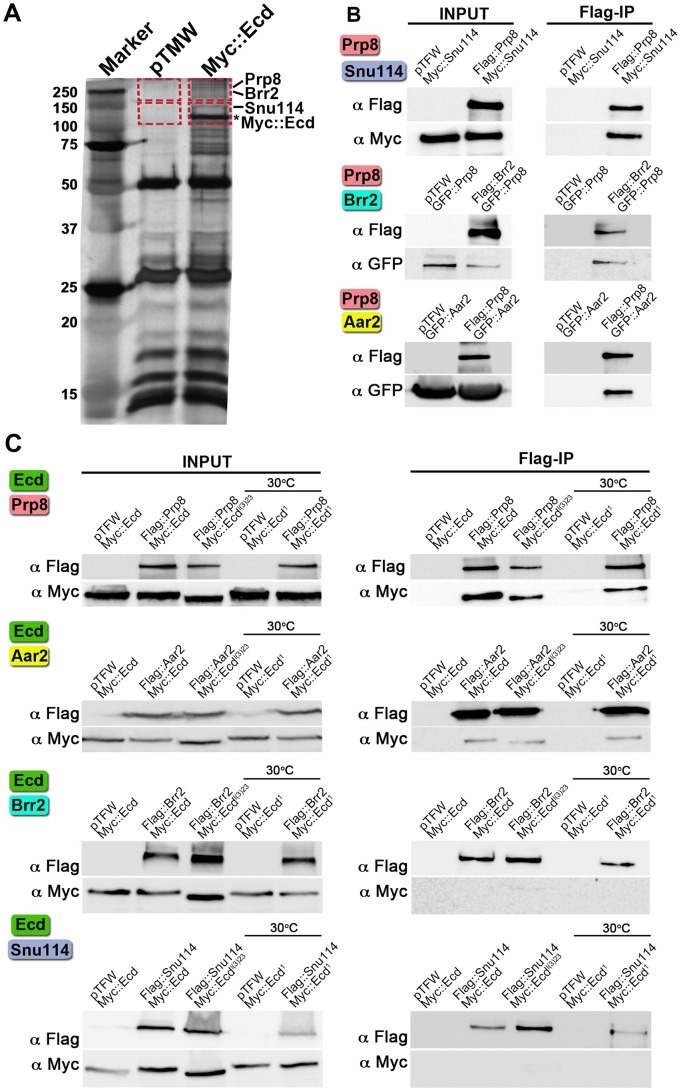
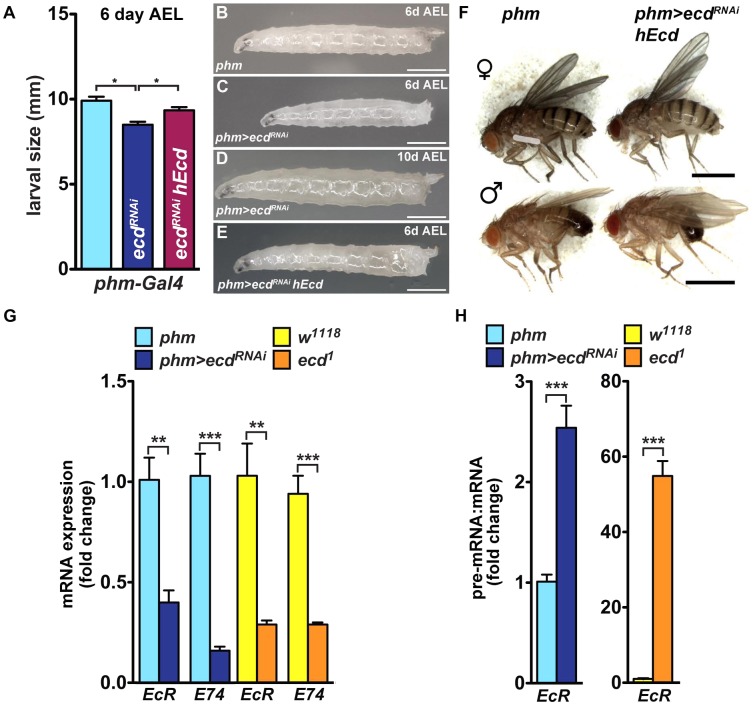
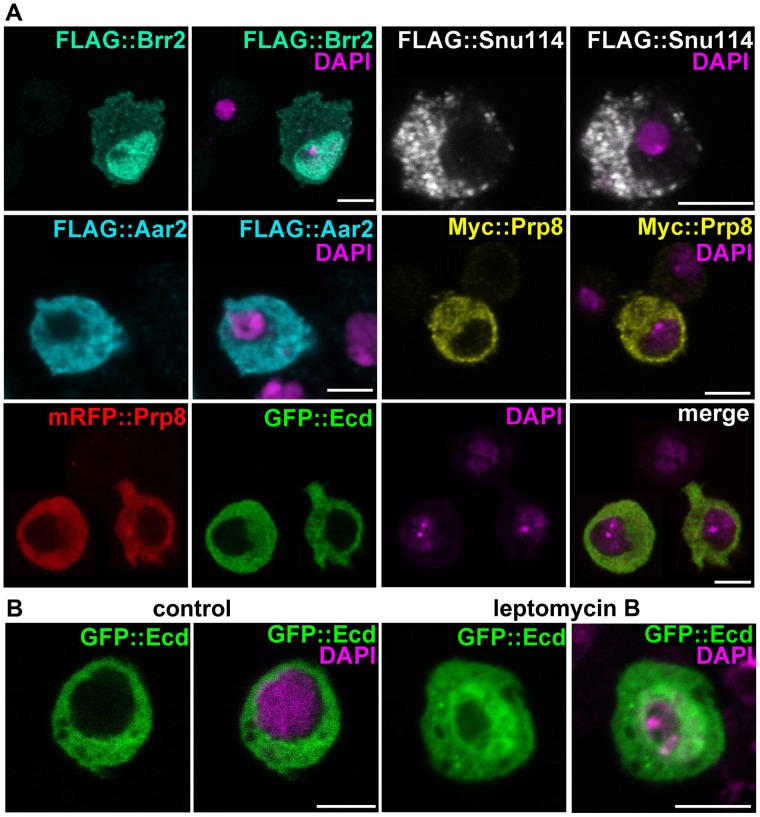
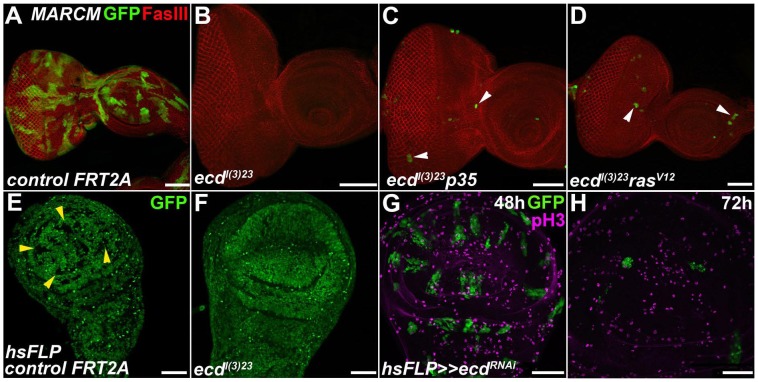
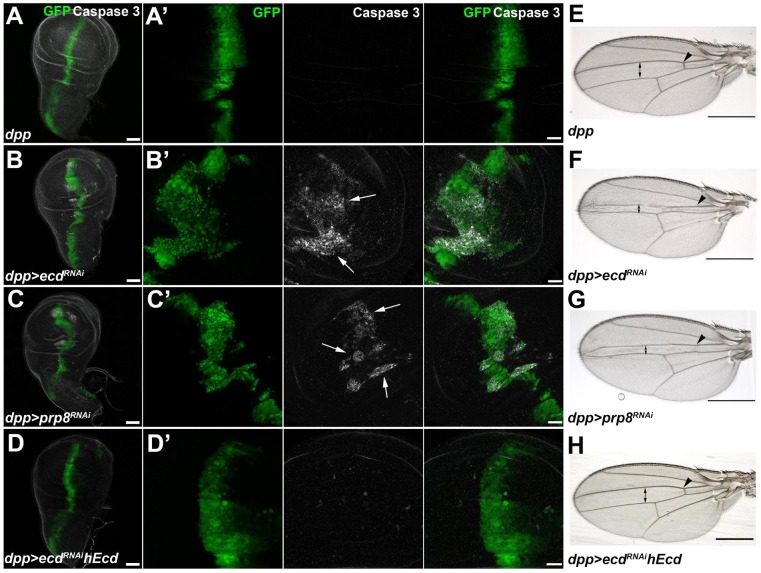
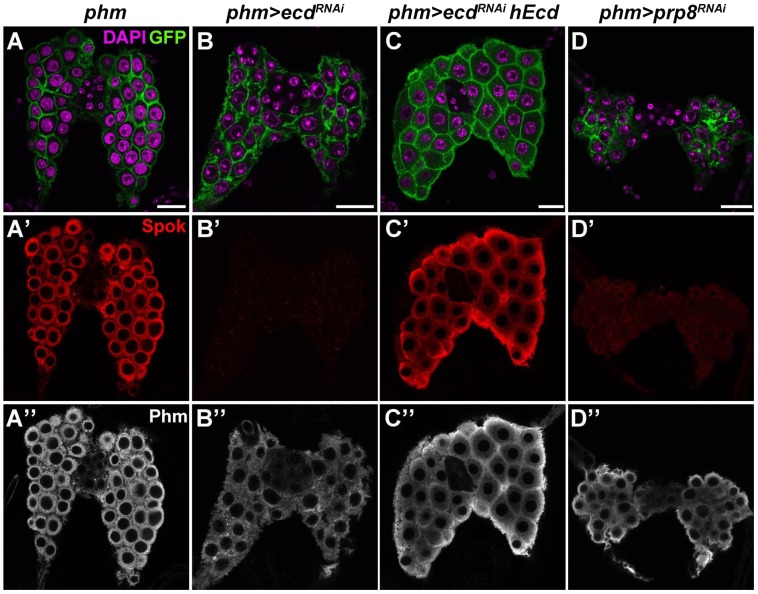
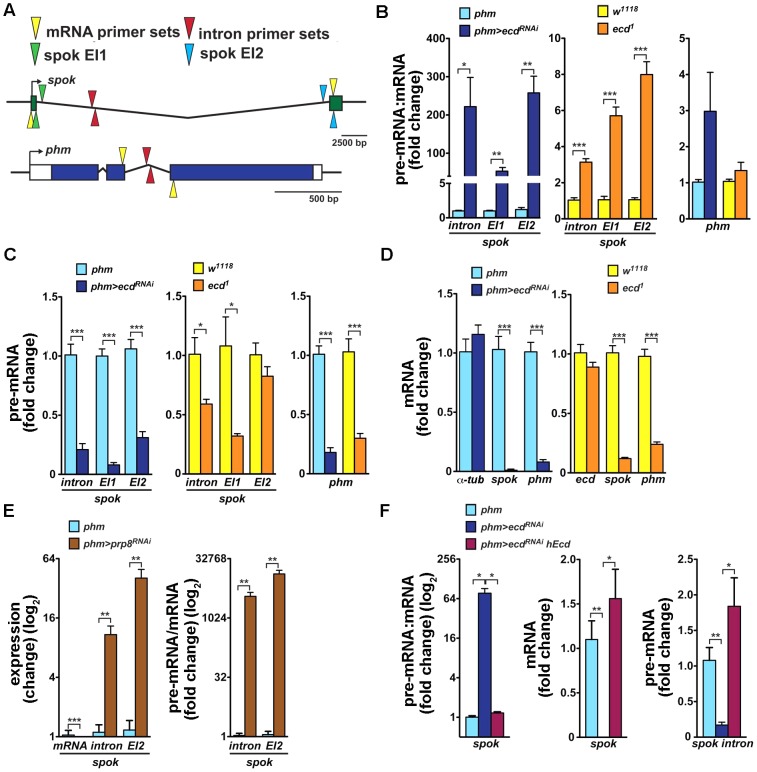
The steroid hormone ecdysone coordinates insect growth and development, directing the major postembryonic transition of forms, metamorphosis. The steroid-deficient ecdysoneless1 (ecd1) strain of Drosophila melanogaster has long served to assess the impact of ecdysone on gene regulation, morphogenesis, or reproduction. However, ecd also exerts cell-autonomous effects independently of the hormone, and mammalian Ecd homologs have been implicated in cell cycle regulation and cancer. Why the Drosophila ecd1 mutants lack ecdysone has not been resolved. Here, we show that in Drosophila cells, Ecd directly interacts with core components of the U5 snRNP spliceosomal complex, including the conserved Prp8 protein. In accord with a function in pre-mRNA splicing, Ecd and Prp8 are cell-autonomously required for survival of proliferating cells within the larval imaginal discs. In the steroidogenic prothoracic gland, loss of Ecd or Prp8 prevents splicing of a large intron from CYP307A2/spookier (spok) pre-mRNA, thus eliminating this essential ecdysone-biosynthetic enzyme and blocking the entry to metamorphosis. Human Ecd (hEcd) can substitute for its missing fly ortholog. When expressed in the Ecd-deficient prothoracic gland, hEcd re-establishes spok pre-mRNA splicing and protein expression, restoring ecdysone synthesis and normal development. Our work identifies Ecd as a novel pre-mRNA splicing factor whose function has been conserved in its human counterpart. Whether the role of mammalian Ecd in cancer involves pre-mRNA splicing remains to be discovered.
类固醇激素蜕皮激素协调昆虫的生长和发育,指导主要的胚后形态转变——变态。果蝇的类固醇缺陷型无蜕皮激素1(ecd1)品系长期以来一直用于评估蜕皮激素对基因调控、形态发生或繁殖的影响。然而,Ecd也独立于该激素发挥细胞自主效应,并且哺乳动物的Ecd同源物与细胞周期调控和癌症有关。果蝇ecd1突变体为何缺乏蜕皮激素尚未得到解决。在这里,我们表明在果蝇细胞中,Ecd直接与U5 snRNP剪接体复合物的核心成分相互作用,包括保守的Prp8蛋白。与在前体mRNA剪接中的功能一致,Ecd和Prp8是幼虫成虫盘内增殖细胞存活所必需的细胞自主因子。在类固醇生成的前胸腺中,Ecd或Prp8的缺失会阻止CYP307A2/更怪异(spok)前体mRNA中一个大内含子的剪接,从而消除这种必需的蜕皮激素生物合成酶并阻断变态的开始。人类Ecd(hEcd)可以替代缺失的果蝇直系同源物。当在缺乏Ecd的前胸腺中表达时,hEcd重新建立spok前体mRNA的剪接和蛋白质表达,恢复蜕皮激素合成和正常发育。我们的工作将Ecd鉴定为一种新型的前体mRNA剪接因子,其功能在人类对应物中得以保留。哺乳动物Ecd在癌症中的作用是否涉及前体mRNA剪接仍有待发现。