Potze L, Mullauer F B, Colak S, Kessler J H, Medema J P
Laboratory for Experimental Oncology and Radiobiology (LEXOR), Center for Experimental and Molecular Medicine, Academic Medical Center (AMC), Amsterdam, The Netherlands.
Cell Death Dis. 2014 Apr 10;5(4):e1169. doi: 10.1038/cddis.2014.139.
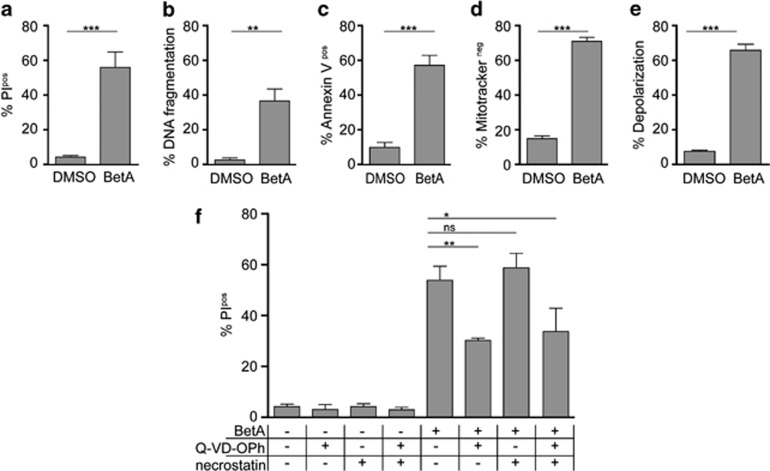
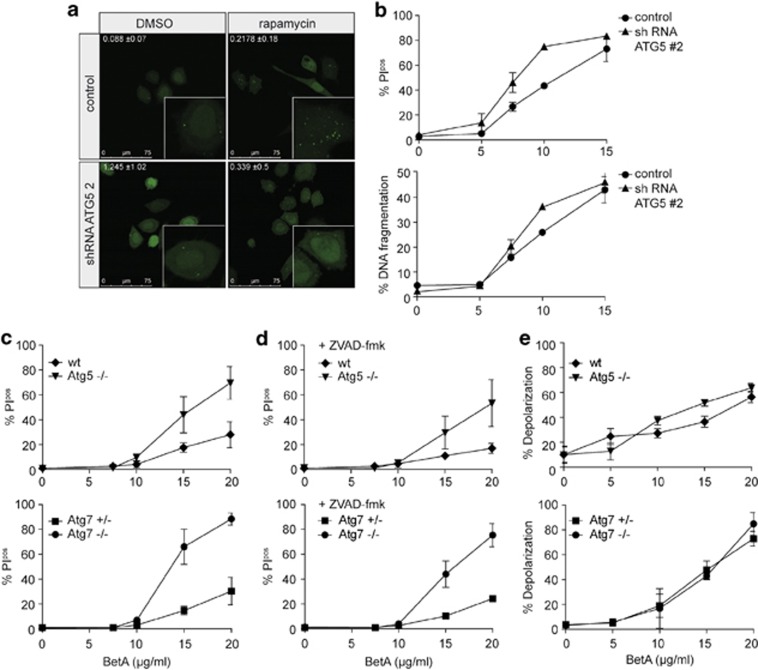
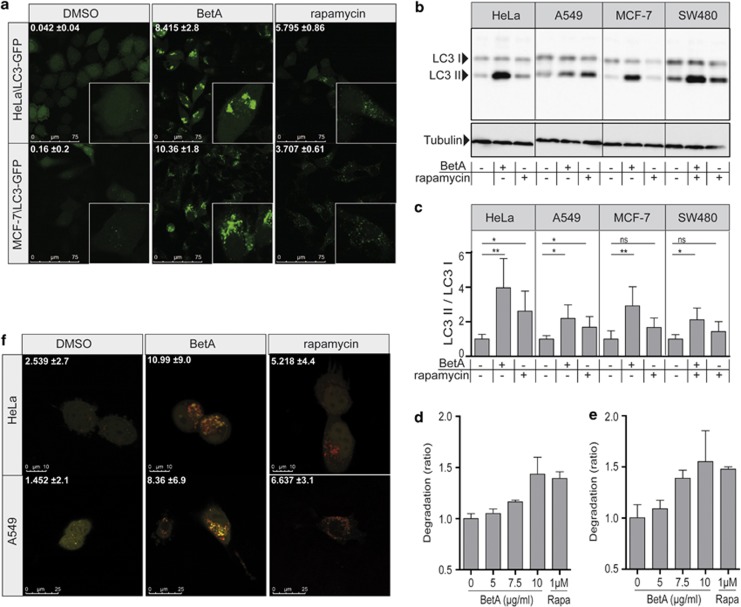
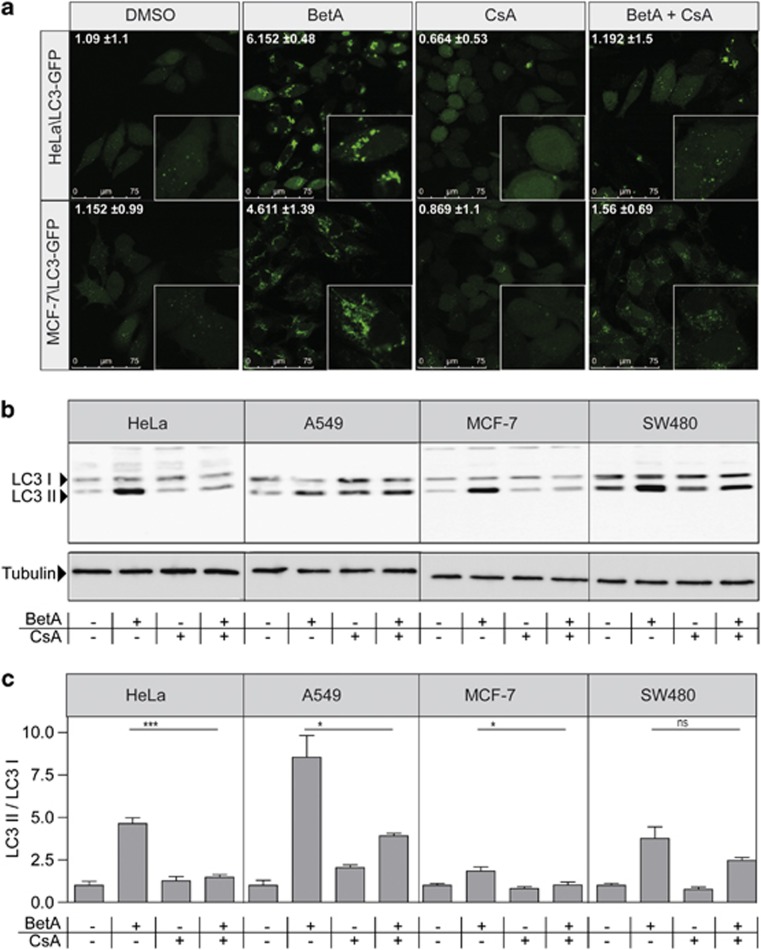
Betulinic acid (BetA) is a plant-derived pentacyclic triterpenoid that exerts potent anti-cancer effects in vitro and in vivo. It was shown to induce apoptosis via a direct effect on mitochondria. This is largely independent of proapoptotic BAK and BAX, but can be inhibited by cyclosporin A (CsA), an inhibitor of the permeability transition (PT) pore. Here we show that blocking apoptosis with general caspase inhibitors did not prevent cell death, indicating that alternative, caspase-independent cell death pathways were activated. BetA did not induce necroptosis, but we observed a strong induction of autophagy in several cancer cell lines. Autophagy was functional as shown by enhanced flux and degradation of long-lived proteins. BetA-induced autophagy could be blocked, just like apoptosis, with CsA, suggesting that autophagy is activated as a response to the mitochondrial damage inflicted by BetA. As both a survival and cell death role have been attributed to autophagy, autophagy-deficient tumor cells and mouse embryo fibroblasts were analyzed to determine the role of autophagy in BetA-induced cell death. This clearly established BetA-induced autophagy as a survival mechanism and indicates that BetA utilizes an as yet-undefined mechanism to kill cancer cells.
桦木酸(BetA)是一种植物来源的五环三萜类化合物,在体外和体内均具有强大的抗癌作用。研究表明,它通过对线粒体的直接作用诱导细胞凋亡。这在很大程度上不依赖于促凋亡蛋白BAK和BAX,但可被通透性转换(PT)孔抑制剂环孢菌素A(CsA)抑制。在此我们表明,用通用的半胱天冬酶抑制剂阻断细胞凋亡并不能阻止细胞死亡,这表明激活了其他非半胱天冬酶依赖性细胞死亡途径。BetA不会诱导坏死性凋亡,但我们在几种癌细胞系中观察到自噬的强烈诱导。自噬具有功能,这表现为长寿命蛋白质的通量增加和降解。与细胞凋亡一样,BetA诱导的自噬可用CsA阻断,这表明自噬是作为对BetA造成的线粒体损伤的一种反应而被激活的。由于自噬既具有生存作用又具有细胞死亡作用,因此对自噬缺陷的肿瘤细胞和小鼠胚胎成纤维细胞进行了分析,以确定自噬在BetA诱导的细胞死亡中的作用。这明确地将BetA诱导的自噬确立为一种生存机制,并表明BetA利用一种尚未明确的机制杀死癌细胞。