Da Silva David, Han Liqi, Faivre Robert, Costes Evelyne
Ann Bot. 2014 Sep;114(4):739-52. doi: 10.1093/aob/mcu034.
The impact of a fruit tree's architecture on its performance is still under debate, especially with regard to the definition of varietal ideotypes and the selection of architectural traits in breeding programmes. This study aimed at providing proof that a modelling approach can contribute to this debate, by using in silico exploration of different combinations of traits and their consequences on light interception, here considered as one of the key parameters to optimize fruit tree production.
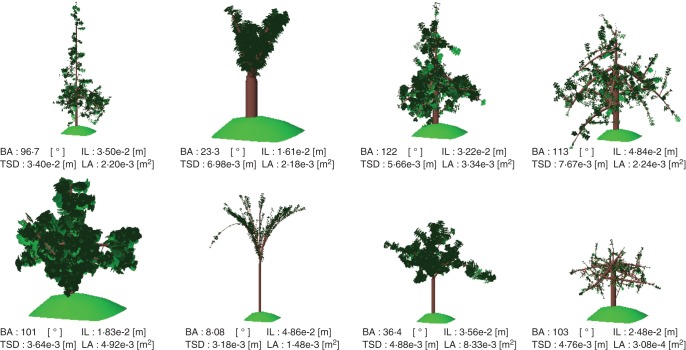
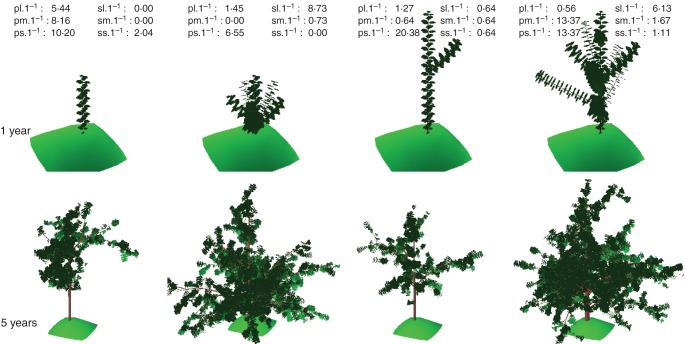
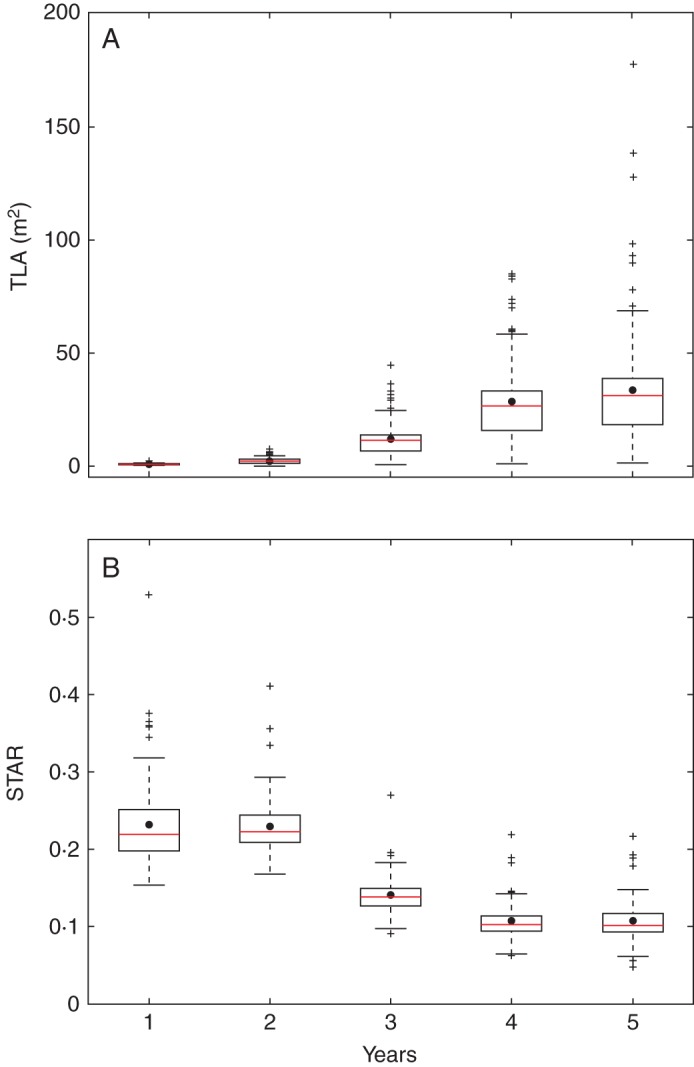
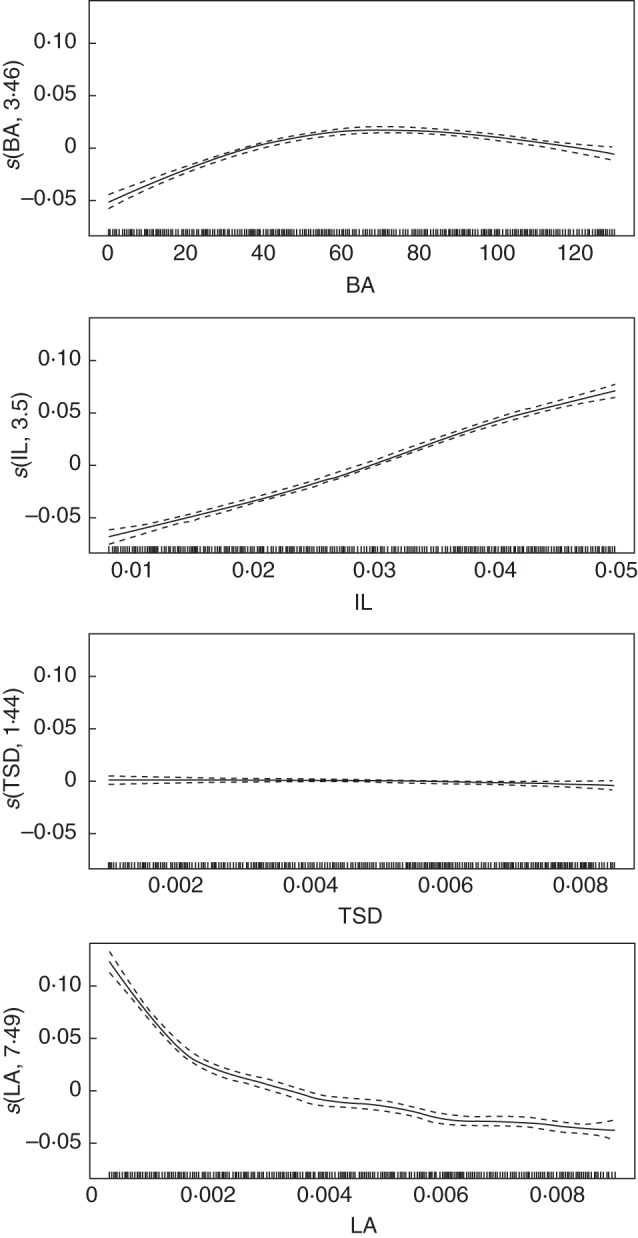
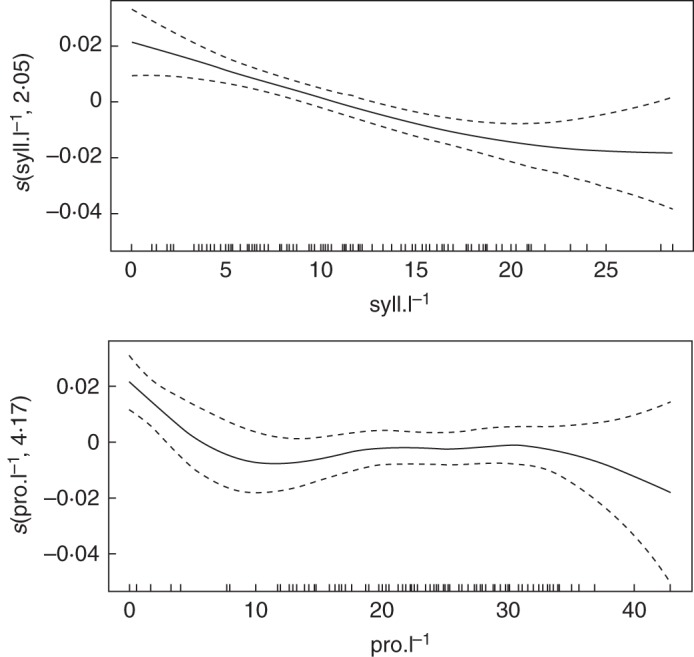
The variability of organ geometrical traits, previously described in a bi-parental population, was used to simulate 1- to 5-year-old apple trees (Malus × domestica). Branching sequences along trunks observed during the first year of growth of the same hybrid trees were used to initiate the simulations, and hidden semi-Markov chains previously parameterized were used in subsequent years. Tree total leaf area (TLA) and silhouette to total area ratio (STAR) values were estimated, and a sensitivity analysis was performed, based on a metamodelling approach and a generalized additive model (GAM), to analyse the relative impact of organ geometry and lateral shoot types on STAR.
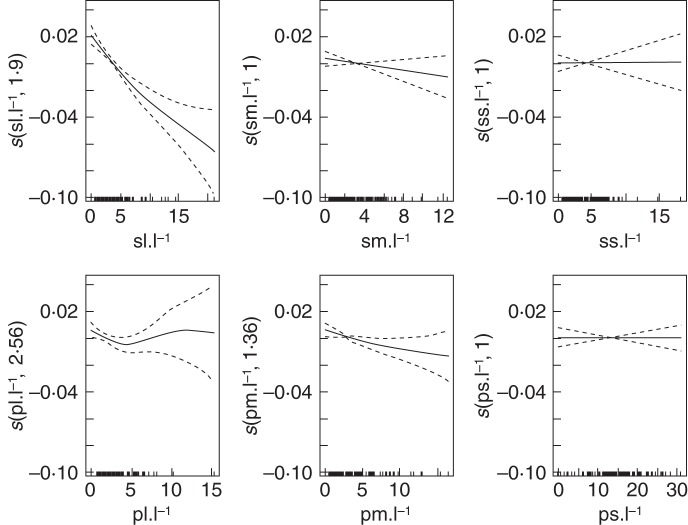
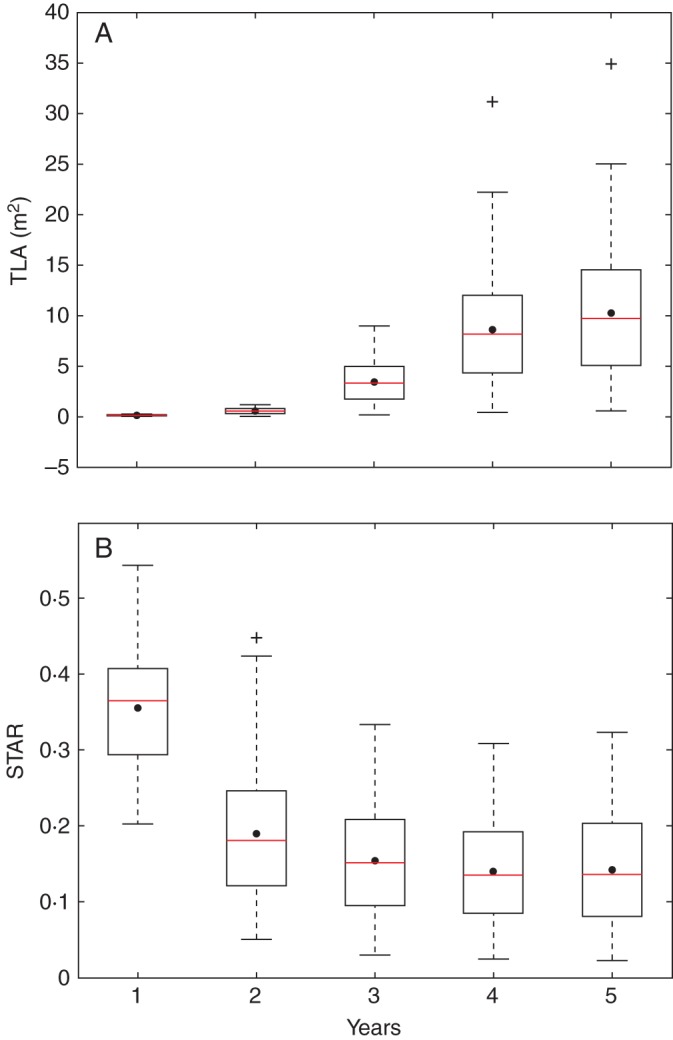
A larger increase over years in TLA mean and variance was generated by varying branching along trunks than by varying organ geometry, whereas the inverse was observed for STAR, where mean values stabilized from year 3 to year 5. The internode length and leaf area had the highest impact on STAR, whereas long sylleptic shoots had a more significant effect than proleptic shoots. Although the GAM did not account for interactions, the additive effects of the geometrical factors explained >90% of STAR variation, but much less in the case of branching factors.
This study demonstrates that the proposed modelling approach could contribute to screening architectural traits and their relative impact on tree performance, here viewed through light interception. Even though trait combinations and antagonism will need further investigation, the approach opens up new perspectives for breeding and genetic selection to be assisted by varietal ideotype definition.
果树的树形结构对其性能的影响仍存在争议,尤其是在品种理想型的定义以及育种计划中树形结构特征的选择方面。本研究旨在通过对不同性状组合及其对光照截获的影响进行计算机模拟探索,为这一争议提供证据,光照截获被视为优化果树产量的关键参数之一。
利用先前在一个双亲群体中描述的器官几何性状变异性,模拟1至5年生的苹果树(苹果属× domestica)。使用在同一杂交树生长第一年观察到的树干上的分枝序列启动模拟,并在后续年份使用先前参数化的隐马尔可夫链。估计树的总叶面积(TLA)和轮廓面积与总面积比(STAR)值,并基于元建模方法和广义相加模型(GAM)进行敏感性分析,以分析器官几何形状和侧枝类型对STAR的相对影响。
通过改变树干上的分枝产生的TLA均值和方差随年份的增加幅度大于通过改变器官几何形状产生的增加幅度,而对于STAR则观察到相反情况, 其均值从第3年到第5年趋于稳定。节间长度和叶面积对STAR的影响最大,而长的夏梢比春梢的影响更显著。尽管GAM没有考虑相互作用,但几何因素的加性效应解释了STAR变异的90%以上,但在分枝因素的情况下解释程度要低得多。
本研究表明,所提出的建模方法有助于筛选树形结构特征及其对树木性能的相对影响,这里是通过光照截获来观察的。尽管性状组合和拮抗作用仍需进一步研究,但该方法为通过品种理想型定义辅助育种和遗传选择开辟了新的前景。