Yang Hsin-Ling, Huang Pei-Jane, Liu Yi-Ru, Kumar K J Senthil, Hsu Li-Sung, Lu Te-Ling, Chia Yi-Chen, Takajo Tokuko, Kazunori Anzai, Hseu You-Cheng
Institute of Nutrition, China Medical University, Taichung, Taiwan.
Department of Health and Nutrition Biotechnology, Asia University, Taichung, Taiwan.
Oxid Med Cell Longev. 2014;2014:901315. doi: 10.1155/2014/901315. Epub 2014 Mar 4.
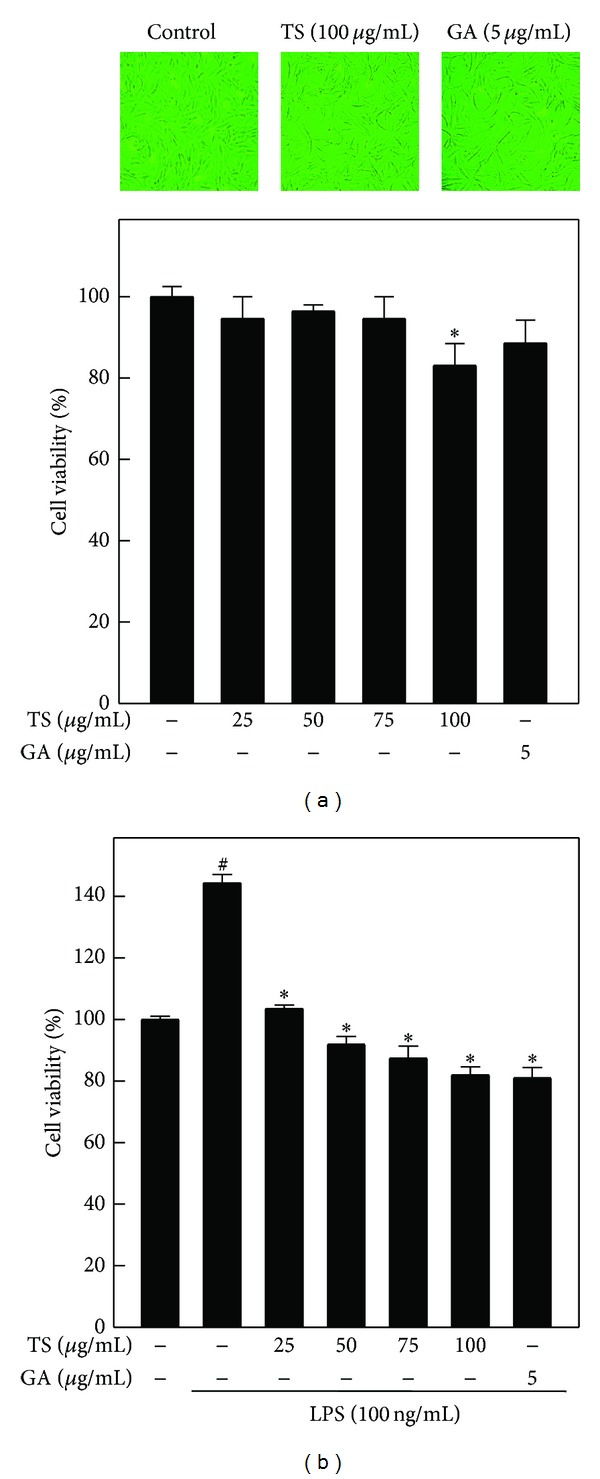
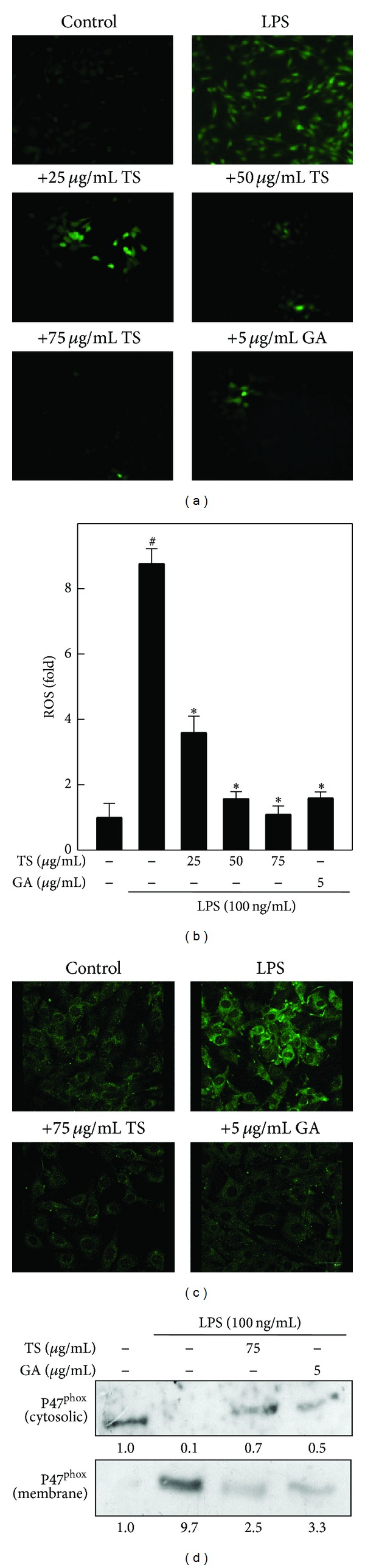
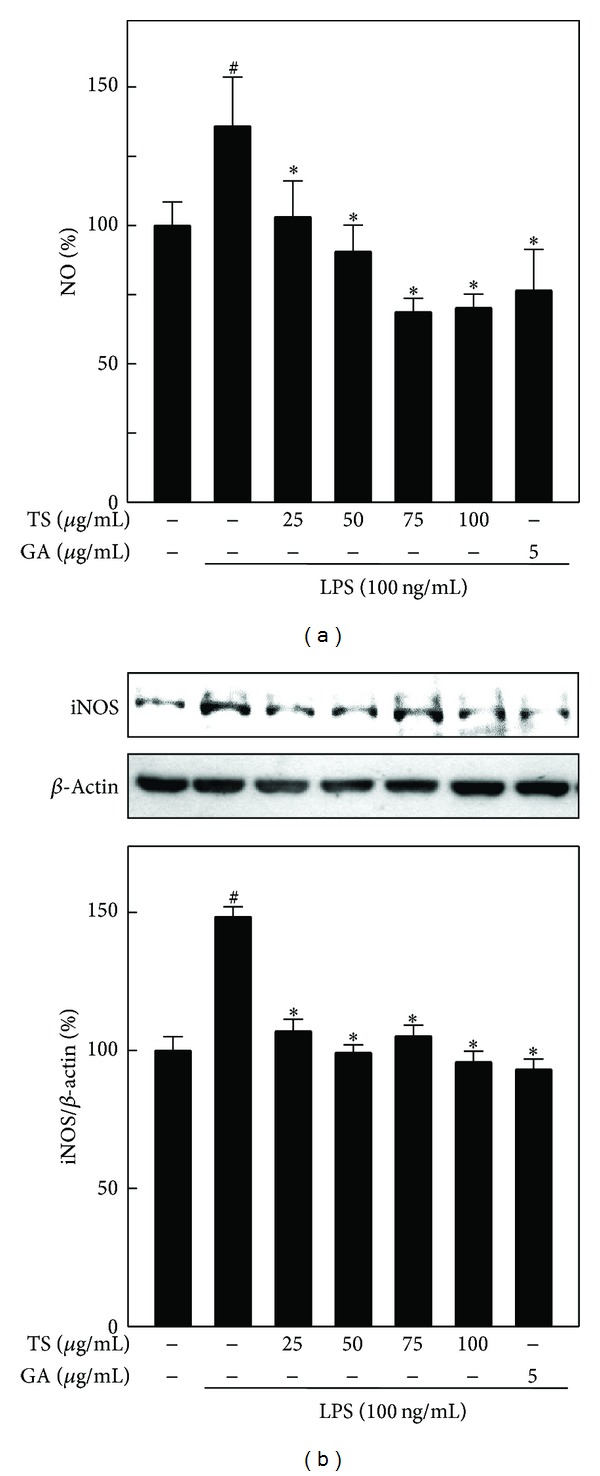
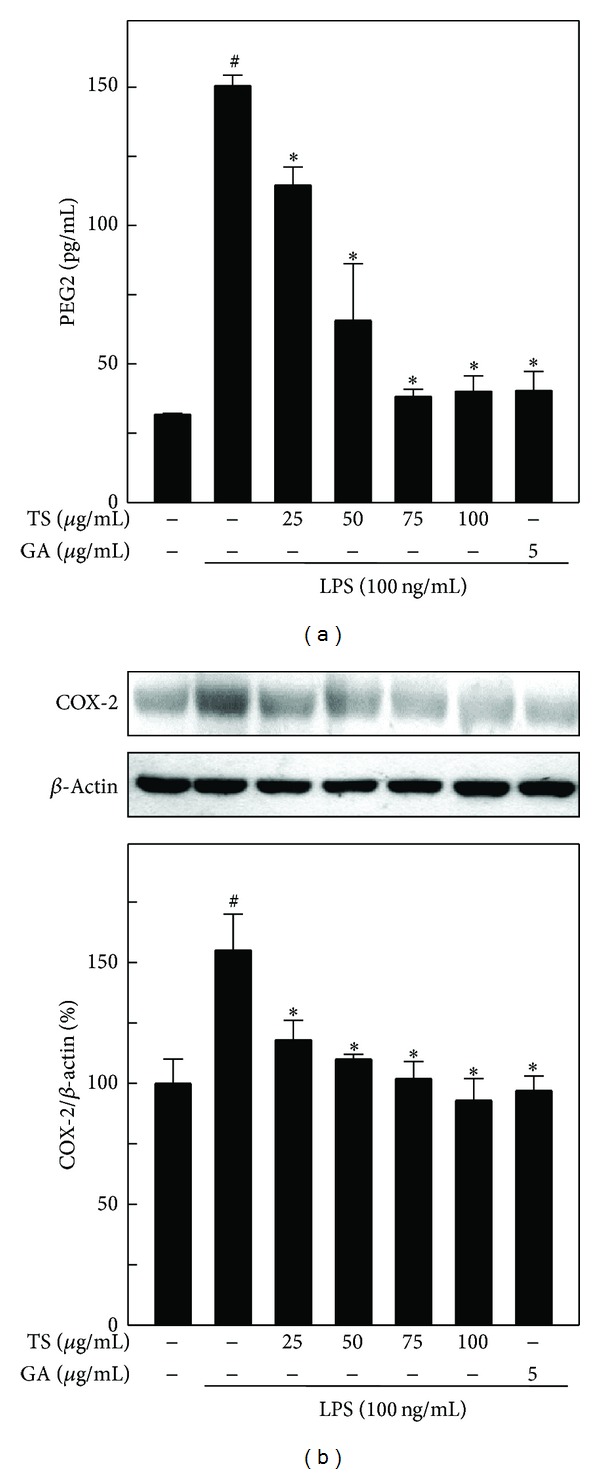
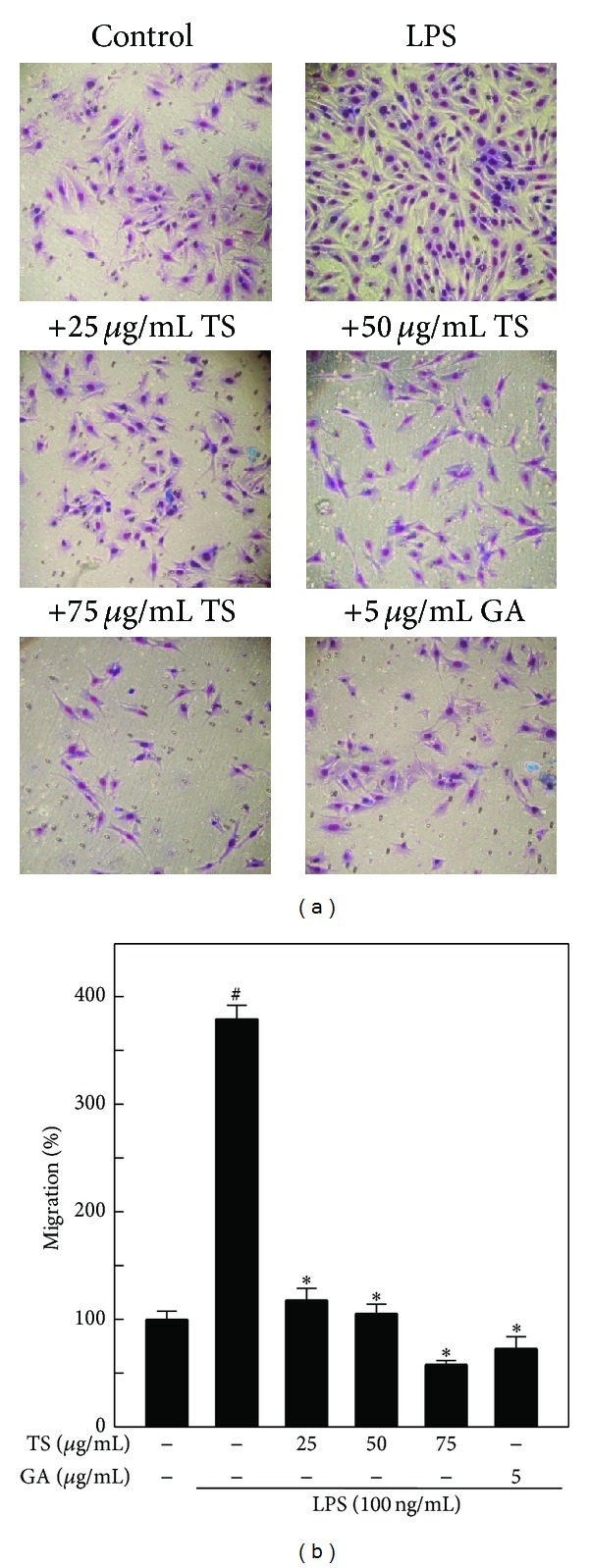
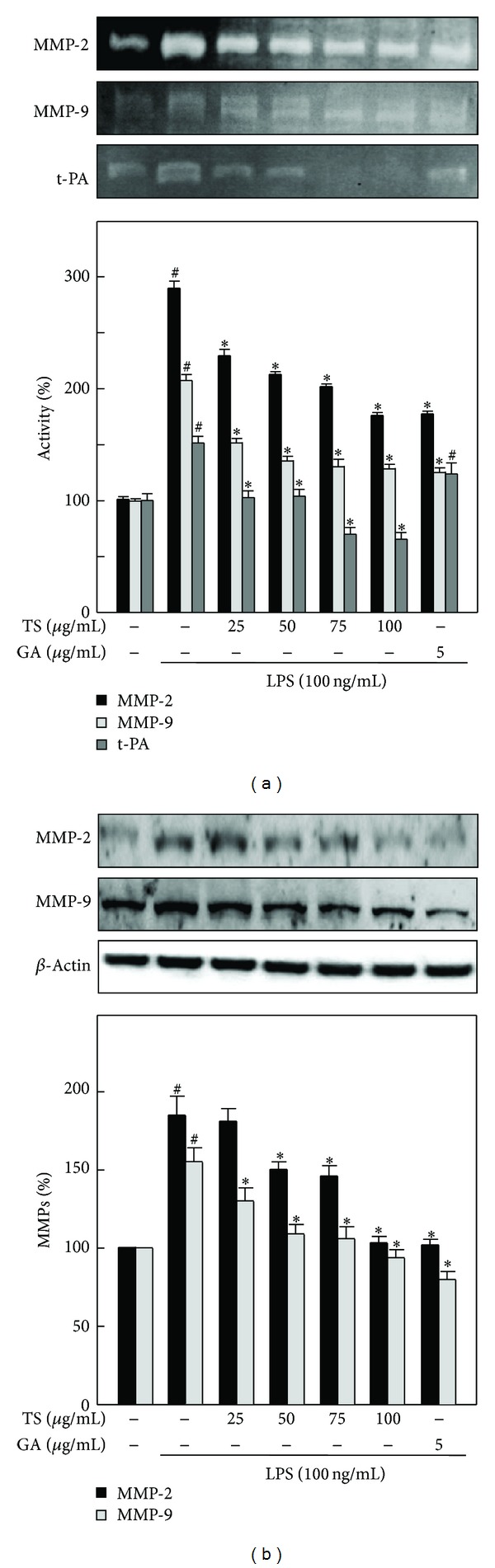
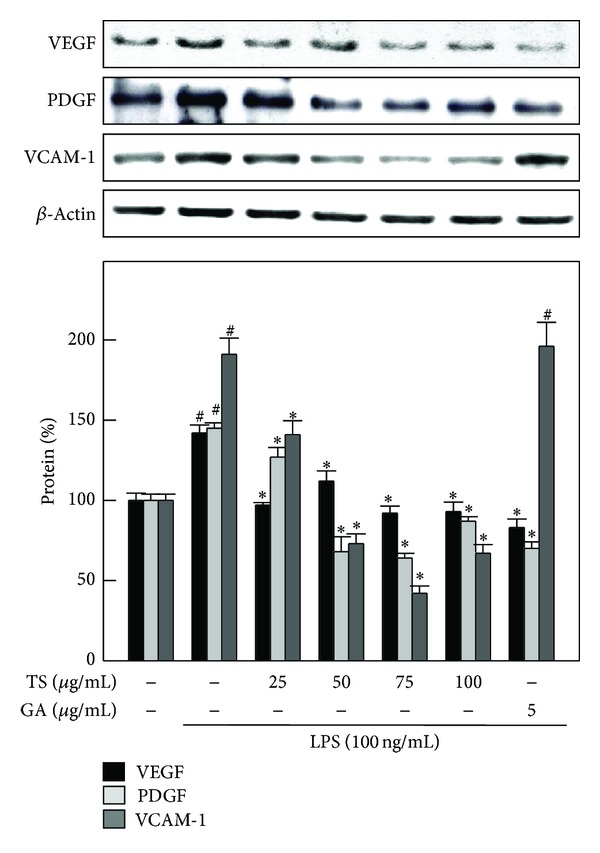
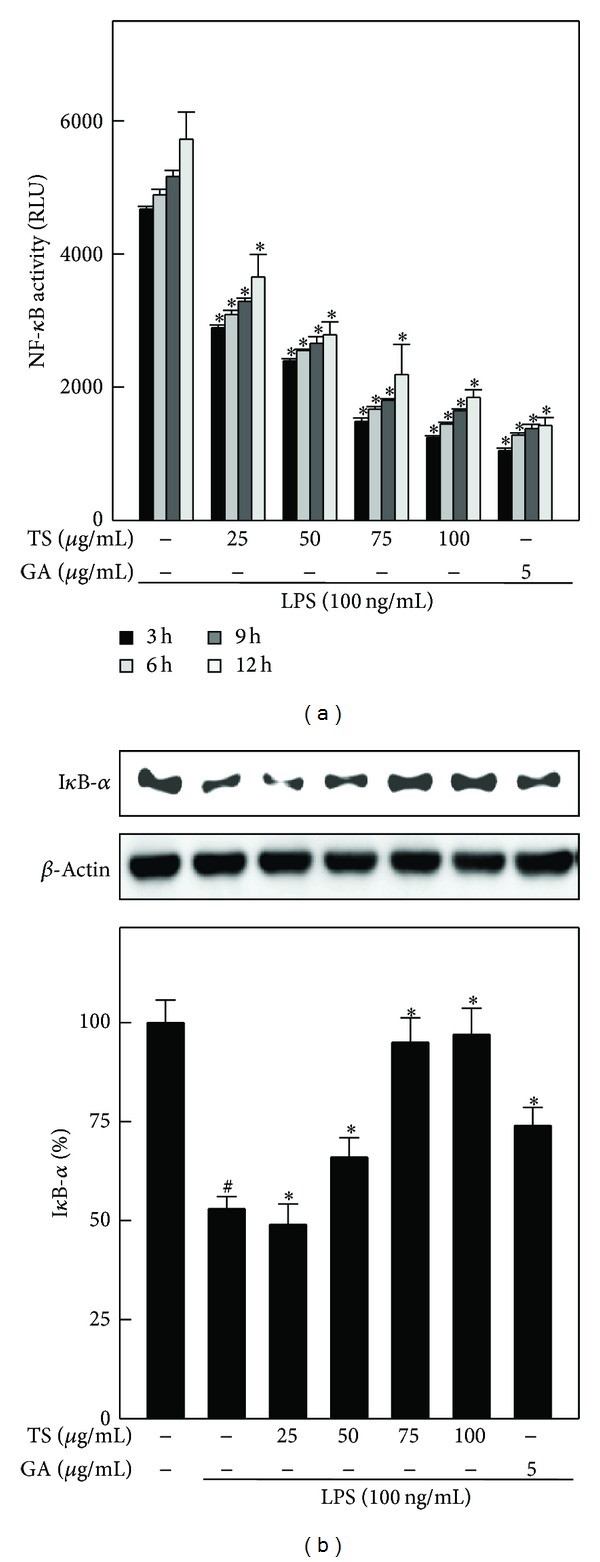
Toona sinensis is one of the most popular vegetarian cuisines in Taiwan and it has been shown to possess antioxidant, antiangiogenic, and anticancer properties. In this study, we investigated the antiatherosclerotic potential of aqueous leaf extracts from Toona sinensis (TS; 25-100 μg/mL) and its major bioactive compound, gallic acid (GA; 5 μg/mL), in LPS-treated rat aortic smooth muscle (A7r5) cells. We found that pretreatment with noncytotoxic concentrations of TS and GA significantly inhibited inflammatory NO and PGE2 production by downregulating their precursors, iNOS and COX-2, respectively, in LPS-treated A7r5 cells. Furthermore, TS and GA inhibited LPS-induced intracellular ROS and their corresponding mediator, p47(phox). Notably, TS and GA pretreatment significantly inhibited LPS-induced migration in transwell assays. Gelatin zymography and western blotting demonstrated that treatment with TS and GA suppressed the activity or expression of MMP-9, MMP-2, and t-PA. Additionally, TS and GA significantly inhibited LPS-induced VEGF, PDGF, and VCAM-1 expression. Further investigation revealed that the inhibition of iNOS/COX-2, MMPs, growth factors, and adhesion molecules was associated with the suppression of NF-κB activation and MAPK (ERK1/2, JNK1/2, and p38) phosphorylation. Thus, Toona sinensis may be useful for the prevention of atherosclerosis.
香椿是台湾最受欢迎的素食菜肴之一,已被证明具有抗氧化、抗血管生成和抗癌特性。在本研究中,我们研究了香椿水叶提取物(TS;25 - 100μg/mL)及其主要生物活性化合物没食子酸(GA;5μg/mL)对脂多糖处理的大鼠主动脉平滑肌(A7r5)细胞的抗动脉粥样硬化潜力。我们发现,用无细胞毒性浓度的TS和GA预处理可通过分别下调脂多糖处理的A7r5细胞中炎症性一氧化氮和前列腺素E2的前体iNOS和COX - 2的表达,显著抑制它们的产生。此外,TS和GA抑制脂多糖诱导的细胞内活性氧及其相应介质p47(phox)。值得注意的是,TS和GA预处理在transwell实验中显著抑制脂多糖诱导的迁移。明胶酶谱法和蛋白质免疫印迹法表明,TS和GA处理可抑制MMP - 9、MMP - 2和组织型纤溶酶原激活剂的活性或表达。此外,TS和GA显著抑制脂多糖诱导的血管内皮生长因子、血小板衍生生长因子和血管细胞黏附分子 - 1的表达。进一步研究表明,对iNOS/COX - 2、基质金属蛋白酶、生长因子和黏附分子的抑制与核因子κB激活和丝裂原活化蛋白激酶(ERK1/2、JNK1/2和p38)磷酸化的抑制有关。因此,香椿可能对预防动脉粥样硬化有用。