Wang Cheng, Volotskova Olga, Lu Kuangda, Ahmad Moiz, Sun Conroy, Xing Lei, Lin Wenbin
Department of Chemistry, University of Chicago , 929 E 57th St, Chicago, Illinois 60637, United States.
J Am Chem Soc. 2014 Apr 30;136(17):6171-4. doi: 10.1021/ja500671h. Epub 2014 Apr 16.
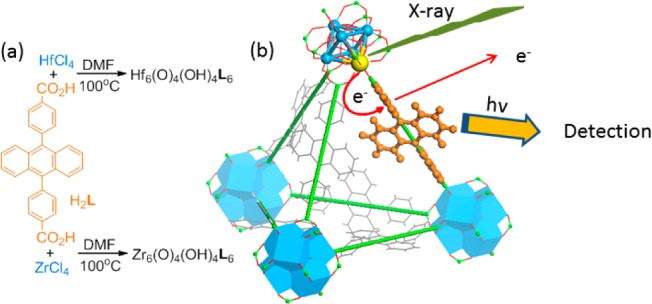
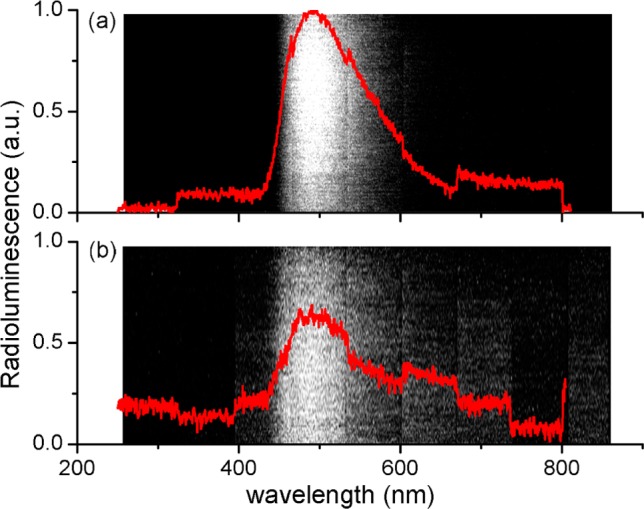
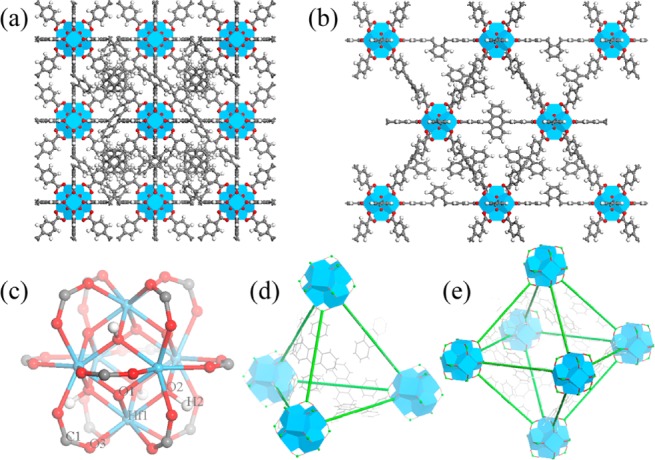
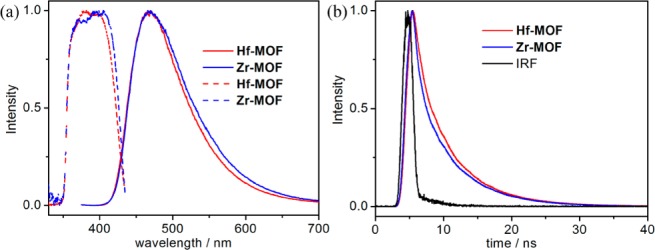
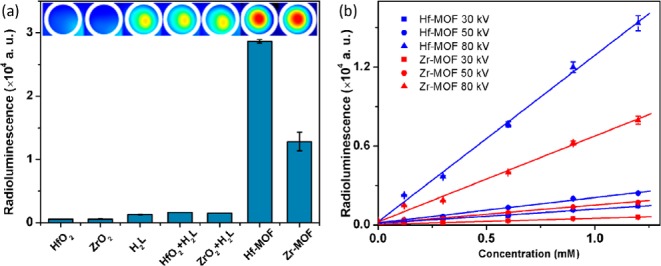
We have designed two metal-organic frameworks (MOFs) to efficiently convert X-ray to visible-light luminescence. The MOFs are constructed from M6(μ3-O)4(μ3-OH)4(carboxylate)12 (M = Hf or Zr) secondary building units (SBUs) and anthracene-based dicarboxylate bridging ligands. The high atomic number of Zr and Hf in the SBUs serves as effective X-ray antenna by absorbing X-ray photons and converting them to fast electrons through the photoelectric effect. The generated electrons then excite multiple anthracene-based emitters in the MOF through inelastic scattering, leading to efficient generation of detectable photons in the visible spectrum. The MOF materials thus serve as efficient X-ray scintillators via synergistic X-ray absorption by the metal-cluster SBUs and optical emission by the bridging ligands.
我们设计了两种金属有机框架(MOF),以有效地将X射线转换为可见光发光。这些MOF由M6(μ3-O)4(μ3-OH)4(羧酸盐)12(M = Hf或Zr)二级构筑单元(SBU)和基于蒽的二羧酸桥连配体构建而成。SBU中Zr和Hf的高原子序数通过吸收X射线光子并通过光电效应将它们转换为快速电子,从而作为有效的X射线天线。然后,产生的电子通过非弹性散射激发MOF中多个基于蒽的发射体,从而在可见光谱中高效产生可检测的光子。因此,MOF材料通过金属簇SBU的协同X射线吸收和桥连配体的光发射,作为高效的X射线闪烁体。