Zheng Junying, Wei Chih-Chang, Hase Naoki, Shi Ke, Killingsworth Cheryl R, Litovsky Silvio H, Powell Pamela C, Kobayashi Tsunefumi, Ferrario Carlos M, Rab Andras, Aban Inmaculada, Collawn James F, Dell'Italia Louis J
Birmingham Veteran Affairs Medical Center and Division of Cardiovascular Disease, Department of Medicine, University of Alabama at Birmingham, Birmingham, Alabama, United States of America.
Teijin Institute for Bio-Medical Research, Teijin Pharma Ltd, Tokyo, Japan.
PLoS One. 2014 Apr 14;9(4):e94732. doi: 10.1371/journal.pone.0094732. eCollection 2014.
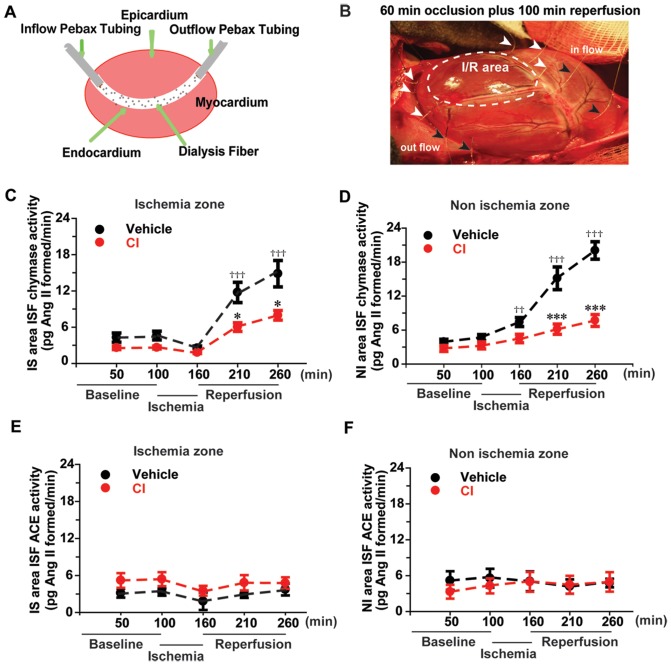
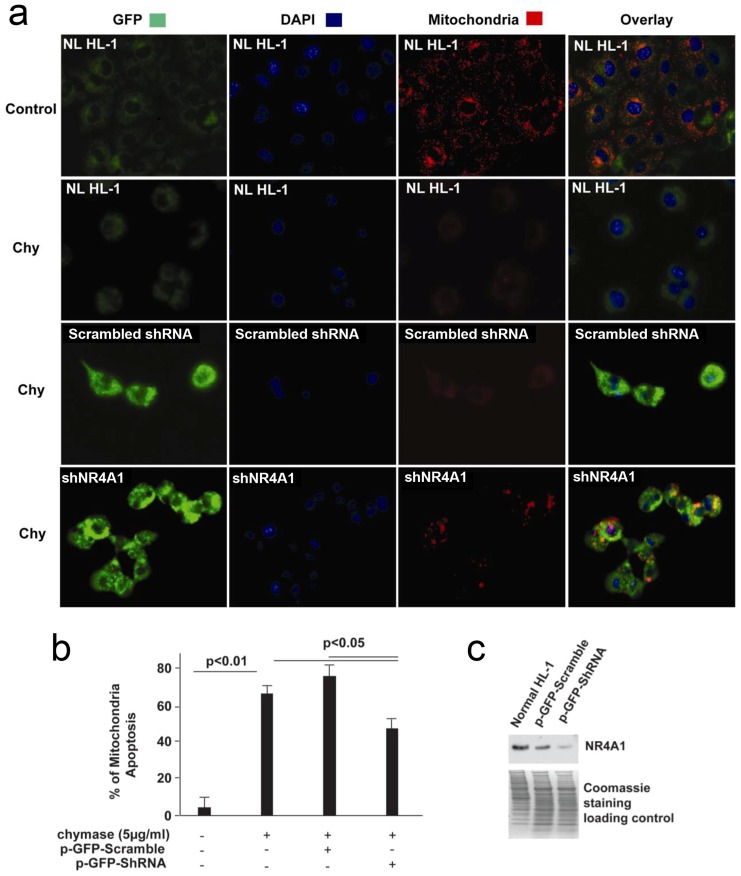
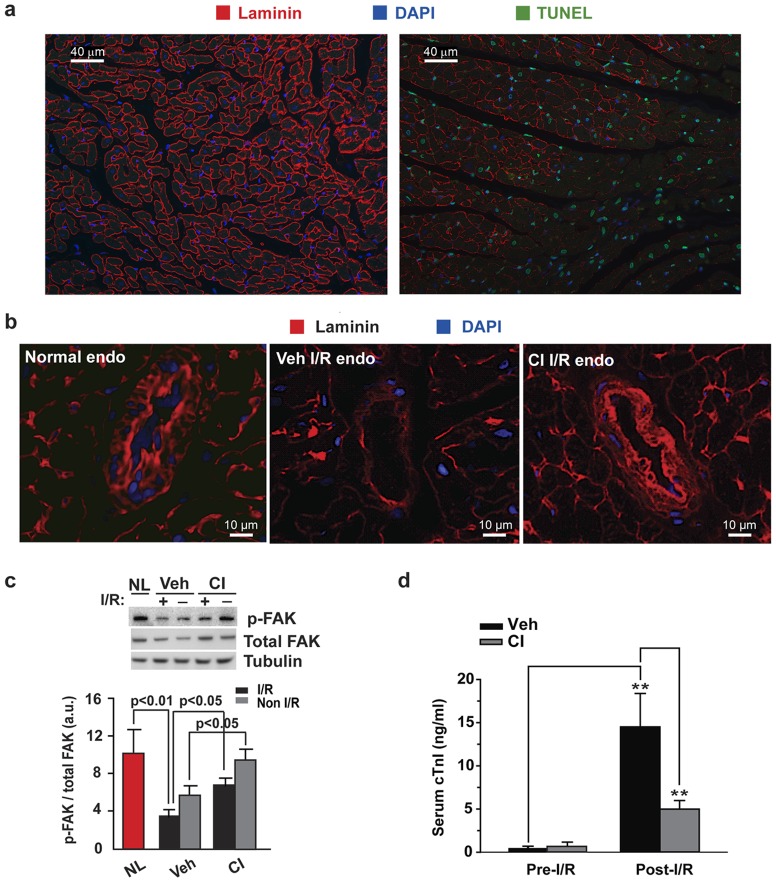
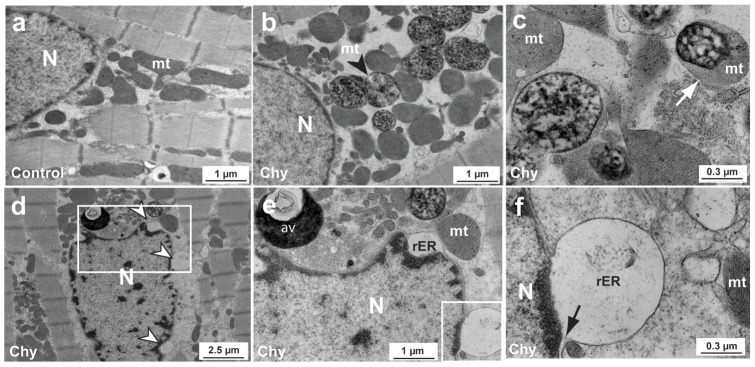
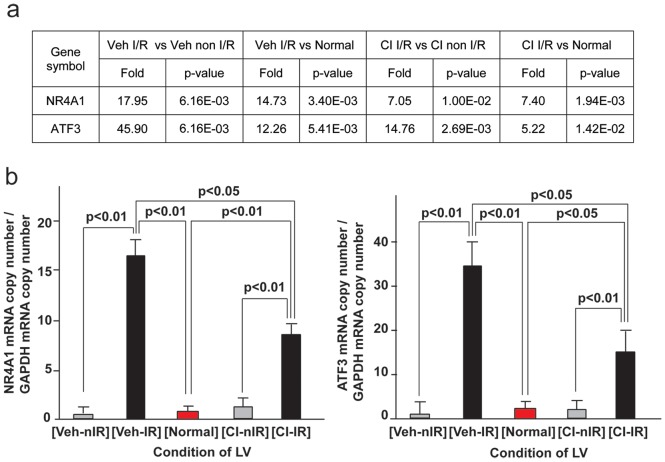
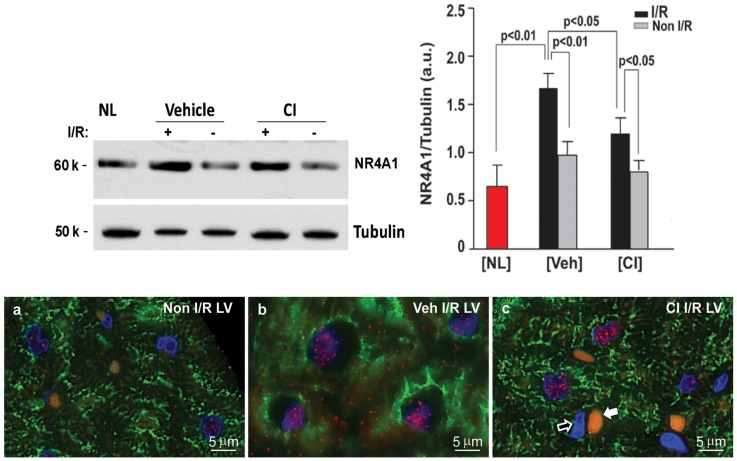
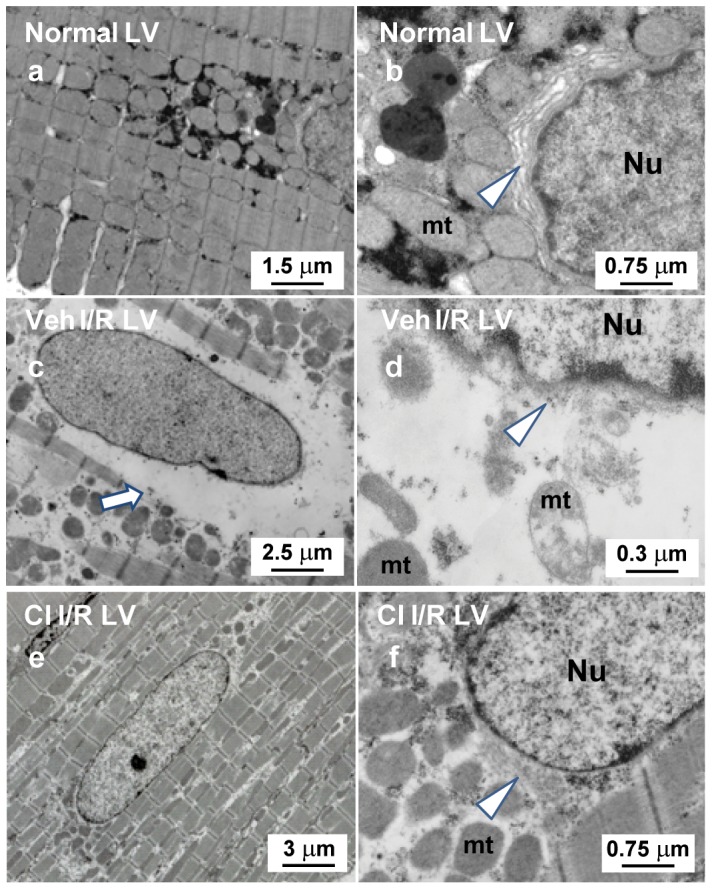
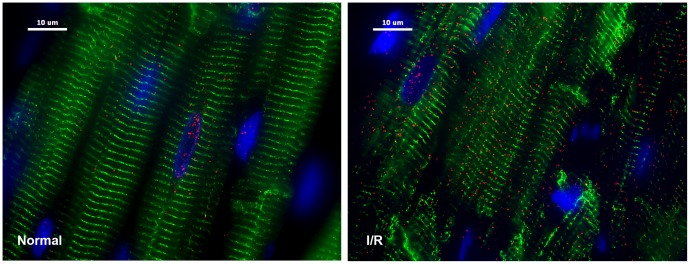
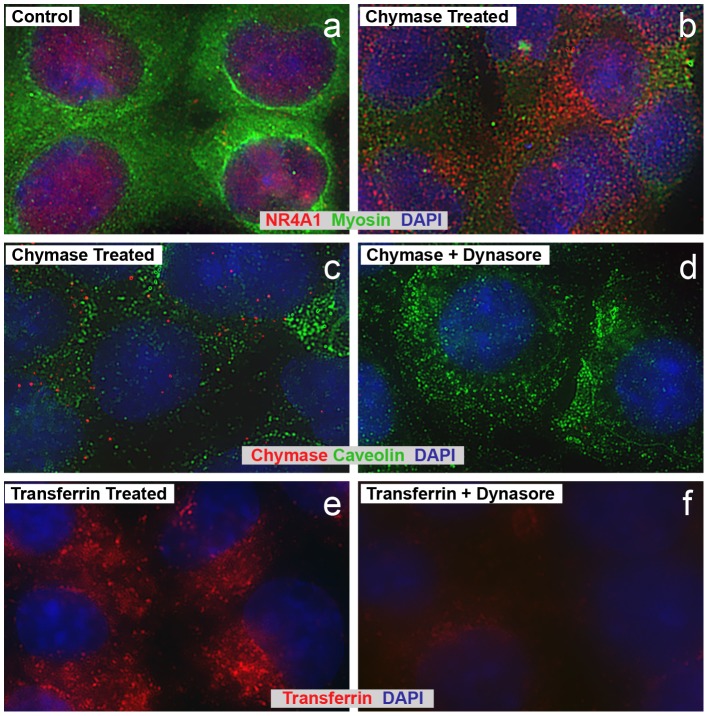
Cardiac ischemia and reperfusion (I/R) injury occurs because the acute increase in oxidative/inflammatory stress during reperfusion culminates in the death of cardiomyocytes. Currently, there is no drug utilized clinically that attenuates I/R injury in patients. Previous studies have demonstrated degranulation of mast cell contents into the interstitium after I/R. Using a dog model of I/R, we tested the role of chymase, a mast cell protease, in cardiomyocyte injury using a specific oral chymase inhibitor (CI). 15 adult mongrel dogs had left anterior descending artery occlusion for 60 min and reperfusion for 100 minutes. 9 dogs received vehicle and 6 were pretreated with a specific CI. In vivo cardiac microdialysis demonstrated a 3-fold increase in interstitial fluid chymase activity in I/R region that was significantly decreased by CI. CI pretreatment significantly attenuated loss of laminin, focal adhesion complex disruption, and release of troponin I into the circulation. Microarray analysis identified an I/R induced 17-fold increase in nuclear receptor subfamily 4A1 (NR4A1) and significantly decreased by CI. NR4A1 normally resides in the nucleus but can induce cell death on migration to the cytoplasm. I/R caused significant increase in NR4A1 protein expression and cytoplasmic translocation, and mitochondrial degradation, which were decreased by CI. Immunohistochemistry also revealed a high concentration of chymase within cardiomyocytes after I/R. In vitro, chymase added to culture HL-1 cardiomyocytes entered the cytoplasm and nucleus in a dynamin-dependent fashion, and promoted cytoplasmic translocation of NR4A1 protein. shRNA knockdown of NR4A1 on pre-treatment of HL-1 cells with CI significantly decreased chymase-induced cell death and mitochondrial damage. These results suggest that the beneficial effects of an orally active CI during I/R are mediated in the cardiac interstitium as well as within the cardiomyocyte due to a heretofore-unrecognized chymase entry into cardiomyocytes.
心脏缺血再灌注(I/R)损伤的发生是因为再灌注期间氧化/炎症应激的急性增加最终导致心肌细胞死亡。目前,临床上没有用于减轻患者I/R损伤的药物。先前的研究表明,I/R后肥大细胞内容物会脱颗粒进入间质。我们使用I/R犬模型,通过一种特异性口服糜酶抑制剂(CI)来测试肥大细胞蛋白酶糜酶在心肌细胞损伤中的作用。15只成年杂种犬左前降支动脉闭塞60分钟,再灌注100分钟。9只犬接受赋形剂,6只犬用特异性CI预处理。体内心脏微透析显示,I/R区域间质液糜酶活性增加了3倍,而CI可使其显著降低。CI预处理显著减轻了层粘连蛋白的丢失、粘着斑复合体的破坏以及肌钙蛋白I释放到循环中。微阵列分析显示,I/R诱导核受体亚家族4A1(NR4A1)增加了17倍,而CI可使其显著降低。NR4A1通常位于细胞核中,但迁移到细胞质中时可诱导细胞死亡。I/R导致NR4A1蛋白表达和细胞质易位显著增加,以及线粒体降解,而CI可使其降低。免疫组织化学还显示,I/R后心肌细胞内糜酶浓度很高。在体外,添加到培养的HL-1心肌细胞中的糜酶以一种依赖发动蛋白的方式进入细胞质和细胞核,并促进NR4A1蛋白的细胞质易位。在用CI预处理HL-1细胞时,通过短发夹RNA敲低NR4A1可显著降低糜酶诱导的细胞死亡和线粒体损伤。这些结果表明,口服活性CI在I/R期间的有益作用是由于此前未被认识到的糜酶进入心肌细胞,在心脏间质以及心肌细胞内介导的。