Laboratory of Translational Hypertension and Vascular Research, Department of Surgery, Wake Forest School of Medicine, Winston Salem, NC, USA.
Department of Pharmaceutical Sciences, Nova Southeastern University, Fort Lauderdale, Florida, USA.
Expert Opin Ther Targets. 2023 Jul-Dec;27(8):645-656. doi: 10.1080/14728222.2023.2247561. Epub 2023 Aug 21.
Non-angiotensin converting enzyme mechanisms of angiotensin II production remain underappreciated in part due to the success of current therapies to ameliorate the impact of primary hypertension and atherosclerotic diseases of the heart and the blood vessels. This review scrutinize the current literature to highlight chymase role as a critical participant in the pathogenesis of cardiovascular disease and heart failure.
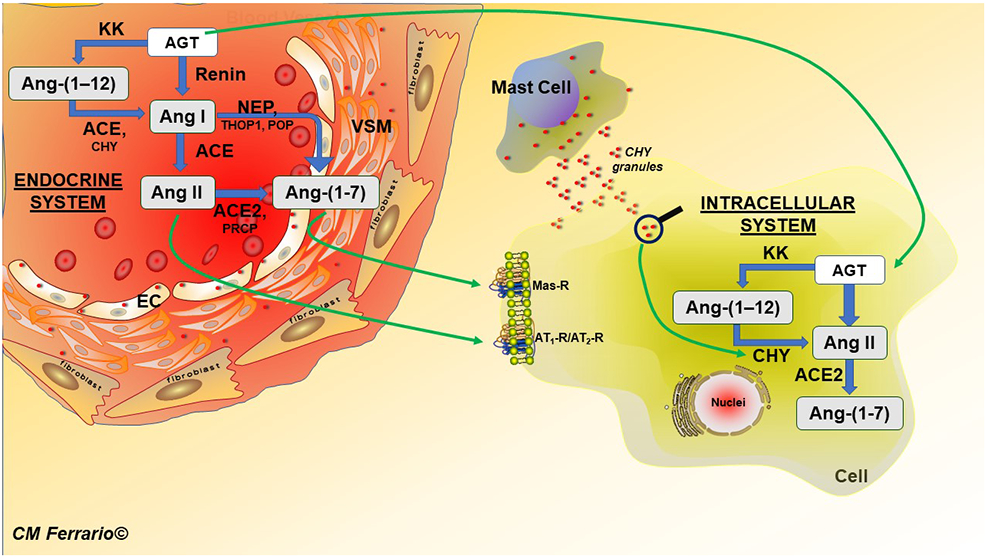
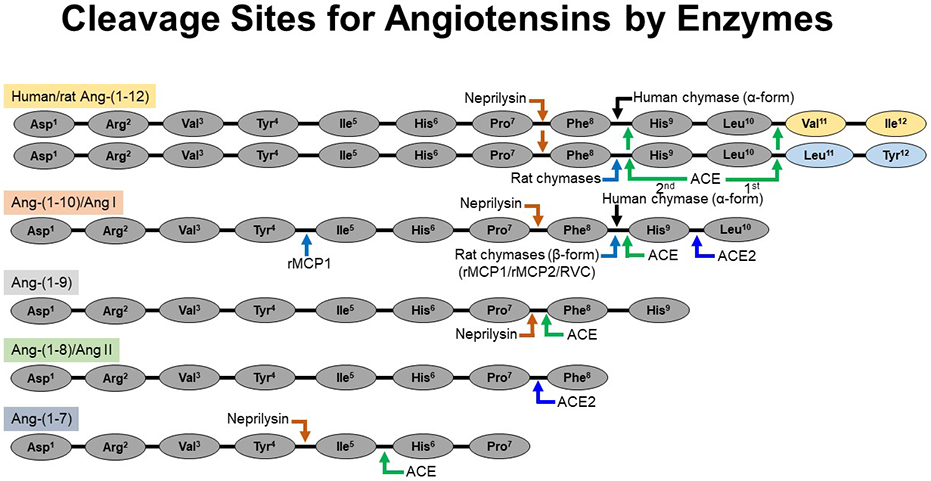
We review the contemporaneous understanding of circulating and tissue biotransformation mechanisms of the angiotensins focusing on the role of chymase as an alternate tissue generating pathway for angiotensin II pathological mechanisms of action.
While robust literature documents the singularity of chymase as an angiotensin II-forming enzyme, particularly when angiotensin converting enzyme is inhibited, this knowledge has not been fully recognized to clinical medicine. This review discusses the limitations of clinical trials' that explored the benefits of chymase inhibition in accounting for the failure to duplicate in humans what has been demonstrated in experimental animals.
由于目前的治疗方法成功地改善了原发性高血压和心脏及血管的动脉粥样硬化性疾病的影响,血管紧张素 II 产生的非血管紧张素转换酶机制在一定程度上仍未被充分认识。本综述仔细审查了当前的文献,以强调糜酶在心血管疾病和心力衰竭发病机制中的关键作用。
我们回顾了血管紧张素的循环和组织生物转化机制的当代理解,重点关注糜酶作为血管紧张素 II 病理作用的替代组织生成途径的作用。
虽然有大量文献证明糜酶是血管紧张素 II 形成酶的独特性,特别是在血管紧张素转换酶被抑制时,但这一知识尚未被充分认识到临床医学。本综述讨论了临床试验的局限性,这些试验探讨了抑制糜酶在复制在实验动物中已经证明的对人类的益处方面的失败。