Abdel-Dayem Marwa A, Elmarakby Ahmed A, Abdel-Aziz Azza A, Pye Chelsey, Said Shehta A, El-Mowafy Abdalla M
Department of Pharmacology, Faculty of Pharmacy (FOP), Mansoura University, 35512, Mansoura, Egypt.
Drugs R D. 2014 Jun;14(2):85-94. doi: 10.1007/s40268-014-0042-z.
The polyunsaturated, ω-3 fatty acid, docosahexaenoic acid (DHA), claims diverse cytoprotective potentials, although via largely undefined triggers. Thus, we currently first tested the ability of DHA to ameliorate valproate (VPA)-evoked hepatotoxicity, to modulate its anticonvulsant effects, then sought the cellular and molecular basis of such actions. Lastly, we also verified whether DHA may kinetically alter plasma levels/clearance rate of VPA.
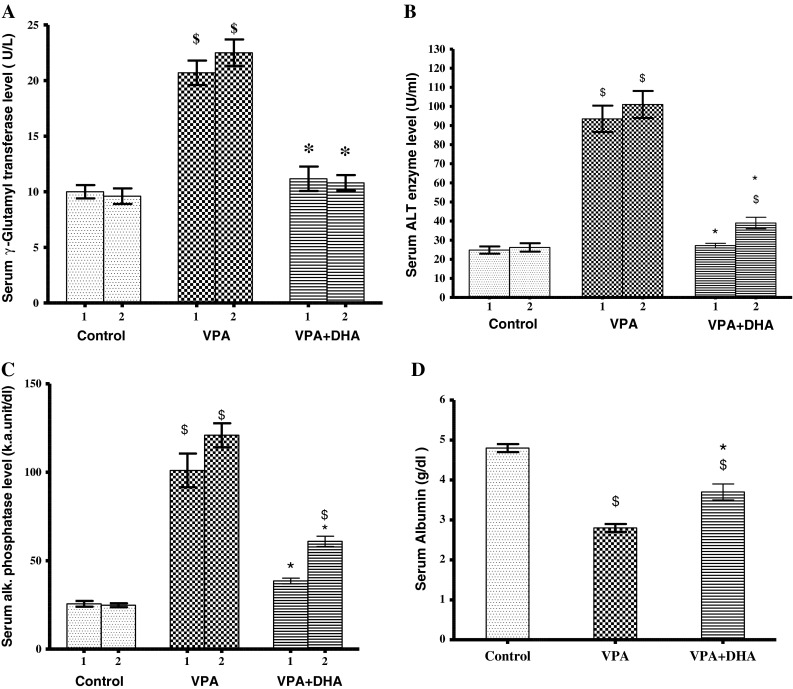
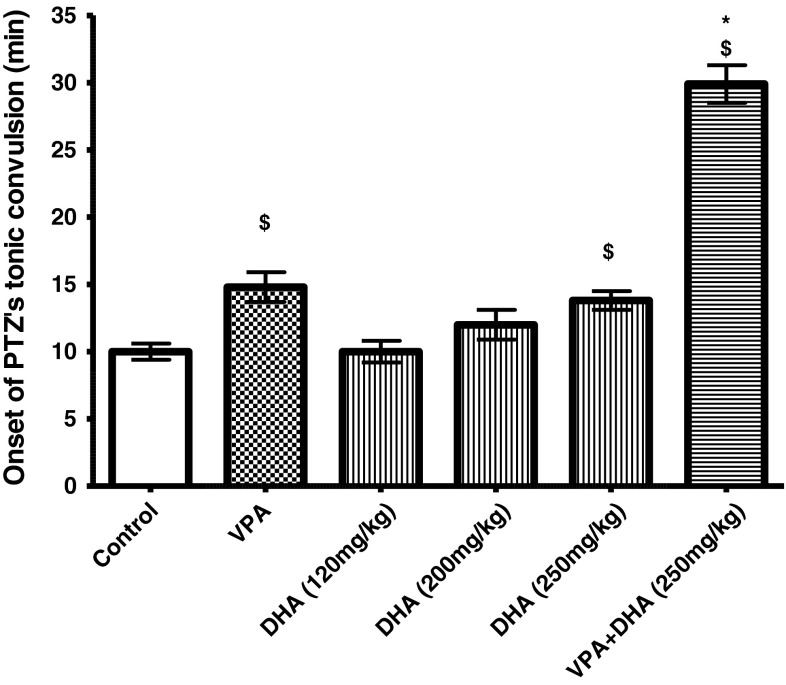
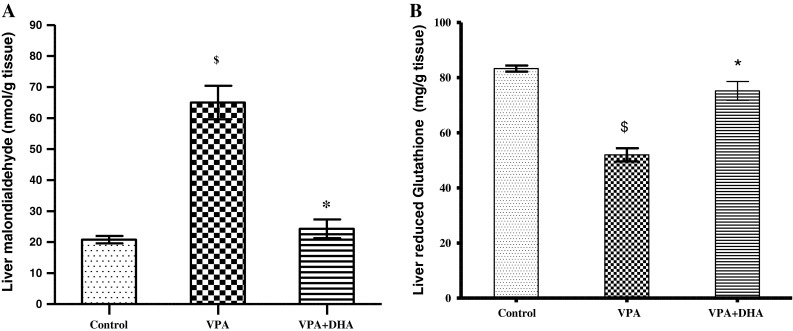
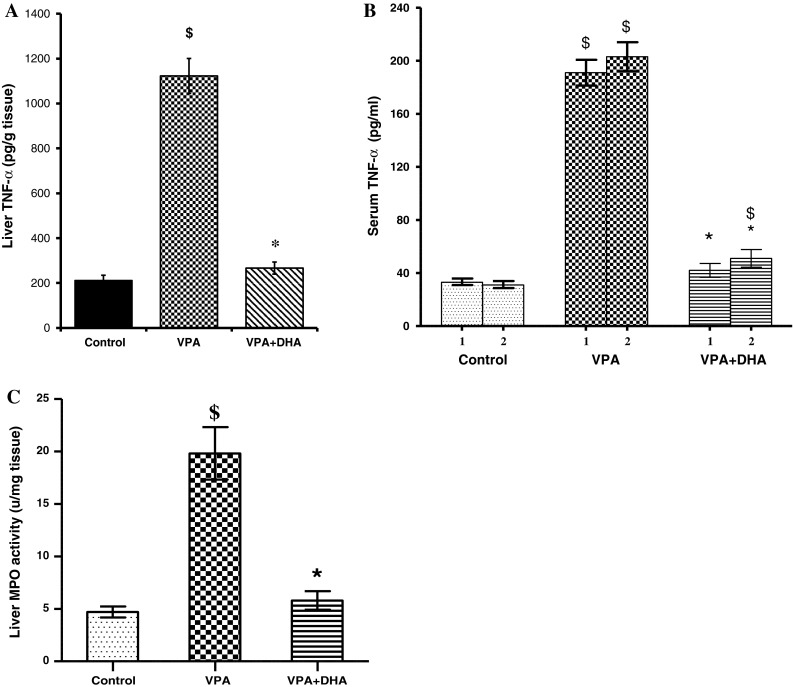
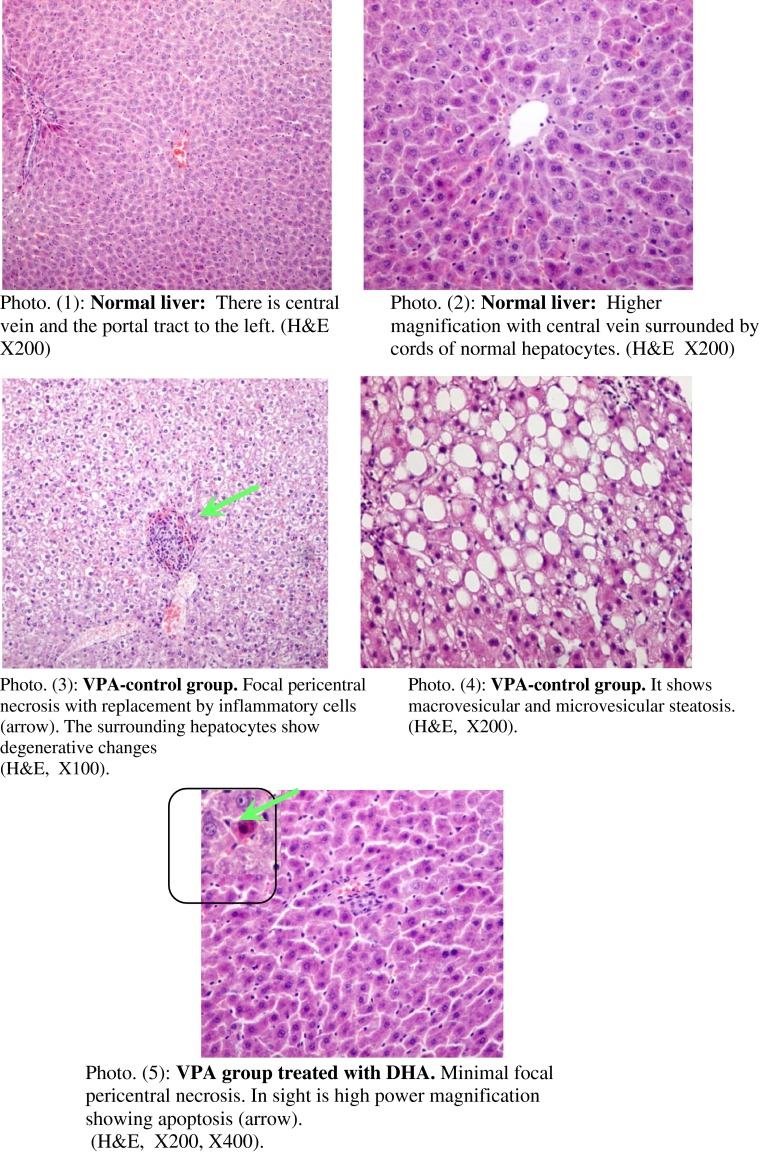
VPA (500 mg/kg orally for 14 days in rats) evoked prominent hepatotoxicity that appeared as a marked rise (2- to 4-fold) in serum hepatic enzymes (γ-glutamyl transferase [γ-GT], alanine aminotransferase [ALT], and alkaline phosphatase [ALP]), increased hepatic lipid peroxide (LPO) and tumor necrosis factor-alpha (TNFα) levels, as well as myeloperoxidase (MPO) activity (3- to 5-fold), lowering of serum albumin (40 %), and depletion of liver reduced-glutathione (GSH, 35 %). Likewise, histopathologic examination revealed hepatocellular degeneration, replacement by inflammatory cells, focal pericentral necrosis, and micro/macrovesicular steatosis. Concurrent treatment with DHA (250 mg/kg) markedly blunted the elevated levels of liver enzymes, lipid peroxides, TNFα, and MPO activity, while raising serum albumin and hepatic GSH levels. DHA also alleviated most of the cytologic insults linked to VPA. Besides, in a pentylenetetrazole (PTZ) mouse convulsion model, DHA (250 mg/kg) markedly increased the latency in convulsion evoked by VPA, beyond their individual responses. Lastly, pharmacokinetic studies revealed that joint DHA administration did not alter serum VPA concentrations.
DHA substantially ameliorated liver injury induced by VPA, while also markedly boosted its pharmacologic effects. DHA manipulated definite cellular machinery to curb liver oxidative stress and inflammation, without affecting VPA plasma levels. Collectively, these protective and synergy profiles for DHA propose a superior VPA-drug combination regimen.
多不饱和ω-3脂肪酸二十二碳六烯酸(DHA)具有多种细胞保护潜能,尽管其触发机制大多尚不明确。因此,我们首先测试了DHA改善丙戊酸(VPA)诱发的肝毒性、调节其抗惊厥作用的能力,然后探寻此类作用的细胞和分子基础。最后,我们还验证了DHA是否会在动力学上改变VPA的血浆水平/清除率。
VPA(大鼠口服500mg/kg,持续14天)诱发了显著的肝毒性,表现为血清肝酶(γ-谷氨酰转移酶[γ-GT]、丙氨酸转氨酶[ALT]和碱性磷酸酶[ALP])显著升高(2至4倍),肝脂质过氧化物(LPO)和肿瘤坏死因子-α(TNFα)水平升高,以及髓过氧化物酶(MPO)活性升高(3至5倍),血清白蛋白降低(40%),肝脏还原型谷胱甘肽(GSH)耗竭(35%)。同样,组织病理学检查显示肝细胞变性、被炎性细胞取代、局灶性中央周围坏死以及微/大泡性脂肪变性。同时给予DHA(250mg/kg)可显著抑制肝酶、脂质过氧化物、TNFα和MPO活性的升高,同时提高血清白蛋白和肝脏GSH水平。DHA还减轻了大多数与VPA相关的细胞学损伤。此外,在戊四氮(PTZ)小鼠惊厥模型中,DHA(250mg/kg)显著延长了VPA诱发惊厥的潜伏期,超过了它们各自的反应。最后,药代动力学研究表明,联合给予DHA不会改变血清VPA浓度。
DHA显著改善了VPA诱导的肝损伤,同时也显著增强了其药理作用。DHA通过调控特定的细胞机制来抑制肝脏氧化应激和炎症,而不影响VPA的血浆水平。总体而言,DHA的这些保护和协同作用表明其是一种更优的VPA联合用药方案。