Institut de Recherche en Sciences de la Santé, 01 BP545 Bobo Dioulasso, Burkina Faso.
Parasit Vectors. 2014 Apr 15;7:185. doi: 10.1186/1756-3305-7-185.
Targeting the stages of the malaria parasites responsible for transmission from the human host to the mosquito vector is a key pharmacological strategy for malaria control. Research efforts to identify compounds that are active against these stages have significantly increased in recent years. However, at present, only two drugs are available, namely primaquine and artesunate, which reportedly act on late stage gametocytes.
In this study, we assessed the antiplasmodial effects of 5 extracts obtained from the neem tree Azadirachta indica and Guiera senegalensis against the early vector stages of Plasmodium falciparum, using field isolates. In an ex vivo assay gametocytaemic blood was supplemented with the plant extracts and offered to Anopheles coluzzii females by membrane feeding. Transmission blocking activity was evaluated by assessing oocyst prevalence and density on the mosquito midguts.
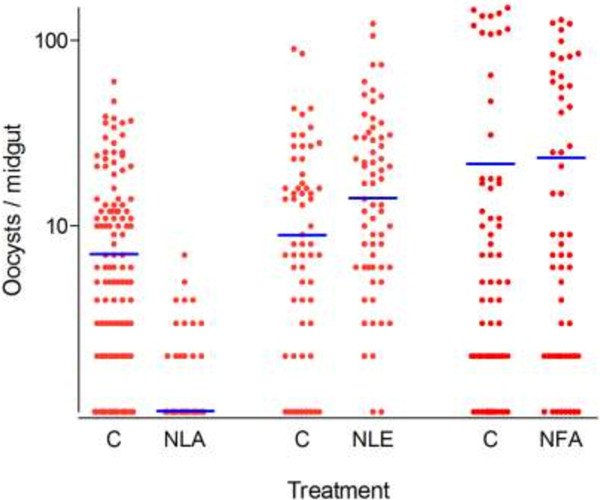
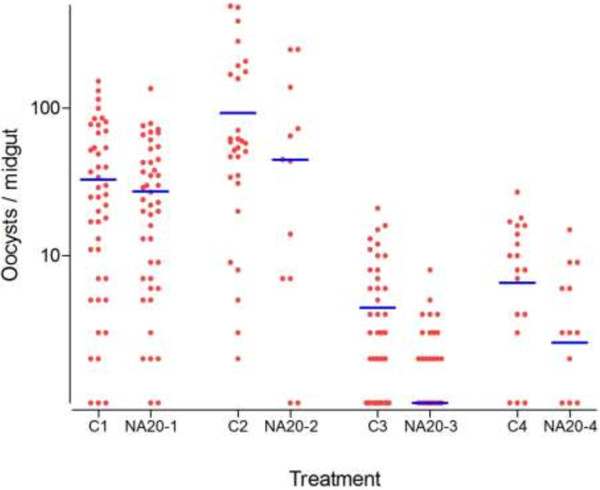
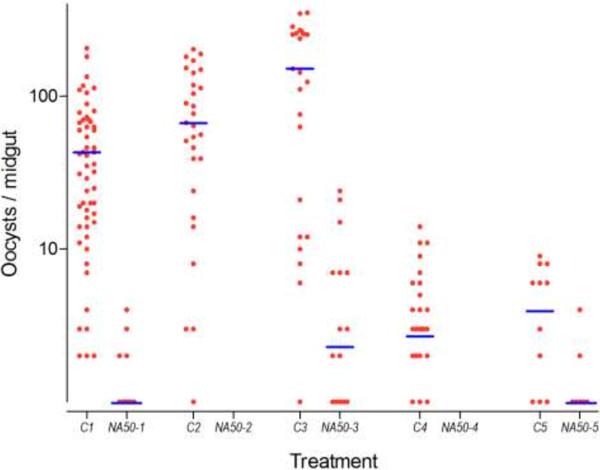
Initial screening of the 5 plant extracts at 250 ppm revealed transmission blocking activity in two neem preparations. Up to a concentration of 70 ppm the commercial extract NeemAzal completely blocked transmission and at 60 ppm mosquitoes of 4 out of 5 replicate groups remained uninfected. Mosquitoes fed on the ethyl acetate phase of neem leaves at 250 ppm showed a reduction in oocyst prevalence of 59.0% (CI₉₅ 12.0 - 79.0; p < 10-4) and in oocyst density of 90.5% (CI₉₅ 86.0 - 93.5; p < 10-4 ), while the ethanol extract from the same plant part did not exhibit any activity. No evidence of transmission blocking activity was found using G. senegalensis ethyl acetate extract from stem galls.
The results of this study highlight the potential of antimalarial plants for the discovery of novel transmission blocking molecules, and open up the potential of developing standardized transmission blocking herbal formulations as malaria control tools to complement currently used antimalarial drugs and combination treatments.
针对疟原虫从人类宿主传播到蚊子媒介的阶段进行靶向治疗是疟疾控制的关键药理学策略。近年来,识别对这些阶段具有活性的化合物的研究工作显著增加。然而,目前仅有两种药物可用,即伯氨喹和青蒿琥酯,据报道它们作用于晚期配子体。
在这项研究中,我们评估了从印楝树(Azadirachta indica)和非洲楝(Guiera senegalensis)获得的 5 种提取物对恶性疟原虫早期媒介阶段的抗疟原虫作用,使用现场分离株。在体外试验中,用植物提取物补充配子血症血液,并通过膜喂养提供给按蚊(Anopheles coluzzii)雌性。通过评估蚊子中肠的卵囊流行率和密度来评估传播阻断活性。
在 250ppm 时,对 5 种植物提取物进行初步筛选,发现两种印楝制剂具有传播阻断活性。商业提取物 NeemAzal 在高达 70ppm 的浓度下完全阻断了传播,在 5 个重复组中的 4 组中,蚊子均未被感染。在 250ppm 时,用印楝叶的乙酸乙酯相喂养的蚊子,卵囊流行率降低了 59.0%(95%置信区间 12.0-79.0;p<10-4),卵囊密度降低了 90.5%(95%置信区间 86.0-93.5;p<10-4),而同一植物部位的乙醇提取物则没有表现出任何活性。用来自茎瘿的非洲楝乙酸乙酯提取物未发现有传播阻断活性的证据。
本研究结果突出了抗疟植物在发现新型传播阻断分子方面的潜力,并为开发标准化的传播阻断草药制剂作为疟疾控制工具开辟了潜力,以补充目前使用的抗疟药物和联合治疗。