Department of Microbiology and Ecosystem Science, Terrestrial Ecosystem Research, University of Vienna, Althanstrasse 14, 1090 Vienna, Austria.
Department of Forest and Soil Sciences, Institute of Soil Research, University of Natural Resources and Life Sciences, Peter-Jordan-Strasse 82, 1190 Vienna, Austria.
Nat Commun. 2014 Apr 16;5:3694. doi: 10.1038/ncomms4694.
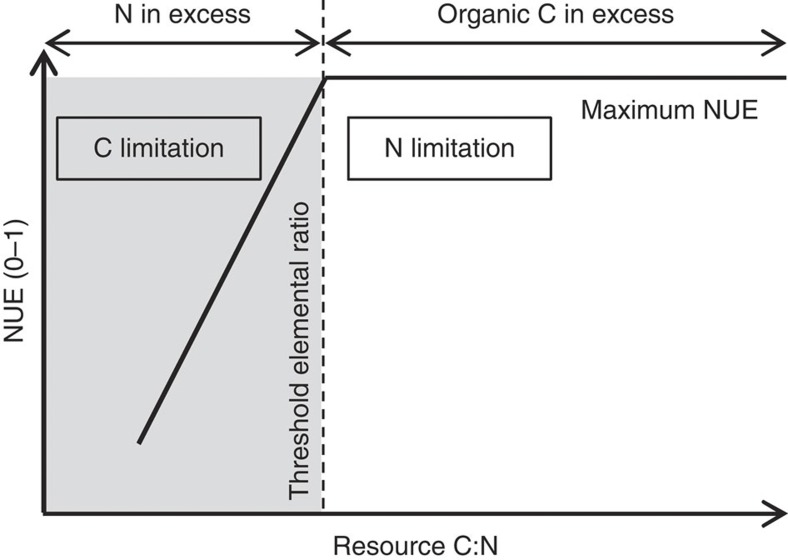
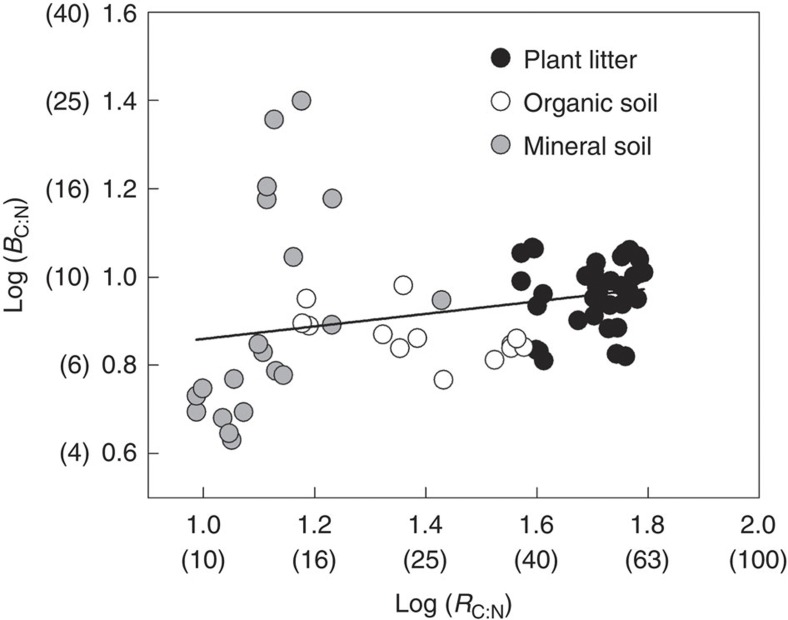
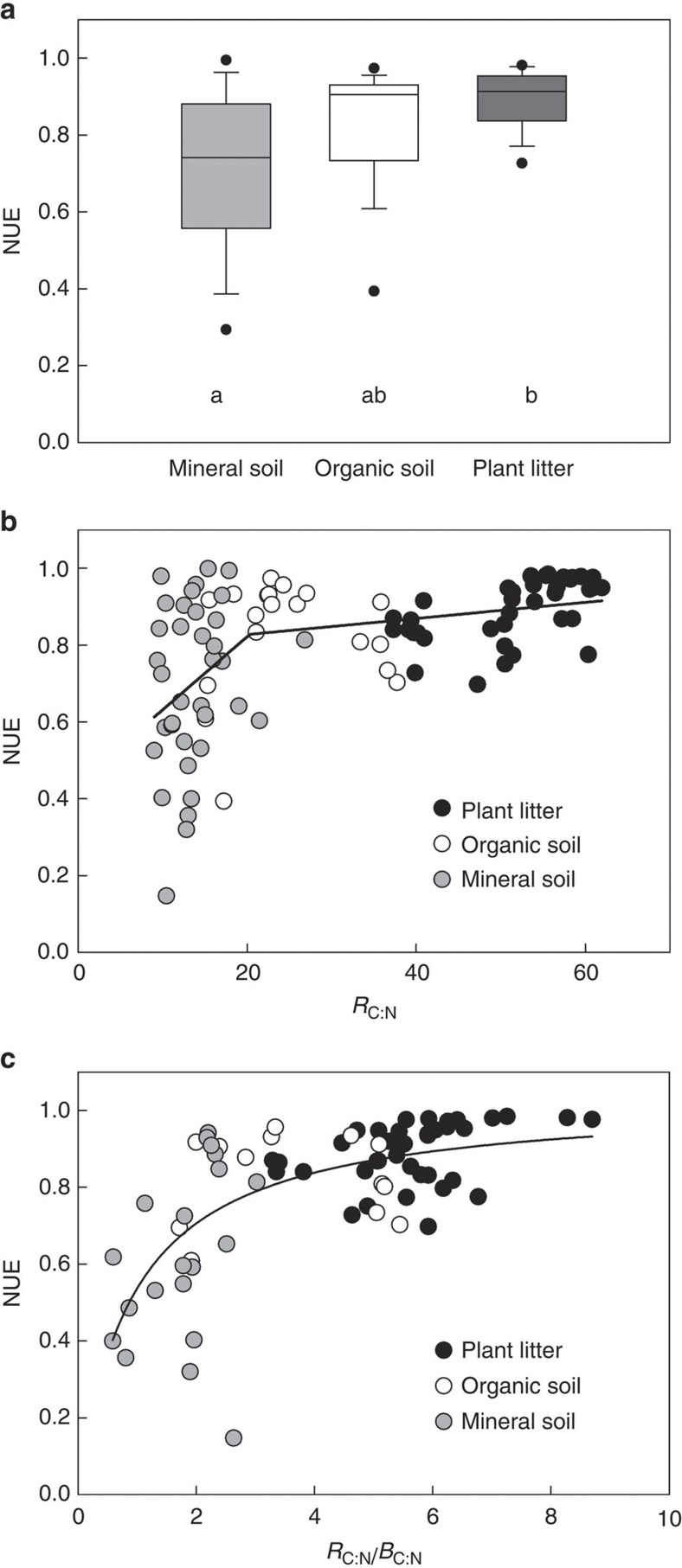
Microbial nitrogen use efficiency (NUE) describes the partitioning of organic N taken up between growth and the release of inorganic N to the environment (that is, N mineralization), and is thus central to our understanding of N cycling. Here we report empirical evidence that microbial decomposer communities in soil and plant litter regulate their NUE. We find that microbes retain most immobilized organic N (high NUE), when they are N limited, resulting in low N mineralization. However, when the metabolic control of microbial decomposers switches from N to C limitation, they release an increasing fraction of organic N as ammonium (low NUE). We conclude that the regulation of NUE is an essential strategy of microbial communities to cope with resource imbalances, independent of the regulation of microbial carbon use efficiency, with significant effects on terrestrial N cycling.
微生物氮利用效率(NUE)描述了有机氮在生长和向环境中释放无机氮(即氮矿化)之间的分配,因此是我们理解氮循环的核心。在这里,我们报告了实证证据,表明土壤和植物凋落物中的微生物分解者群落调节其 NUE。我们发现,当微生物受到氮限制时,它们会保留大部分固定的有机氮(高 NUE),从而导致低氮矿化。然而,当微生物分解者的代谢控制从氮限制转变为碳限制时,它们会将越来越多的有机氮以铵的形式释放(低 NUE)。我们的结论是,NUE 的调节是微生物群落应对资源失衡的一种重要策略,独立于微生物碳利用效率的调节,对陆地氮循环有重大影响。