Lung Injury Center, Section of Pulmonary and Critical Medicine, Department of Medicine, University of Chicago, Chicago, Illinois, United States of America.
PLoS One. 2014 Apr 16;9(4):e92670. doi: 10.1371/journal.pone.0092670. eCollection 2014.
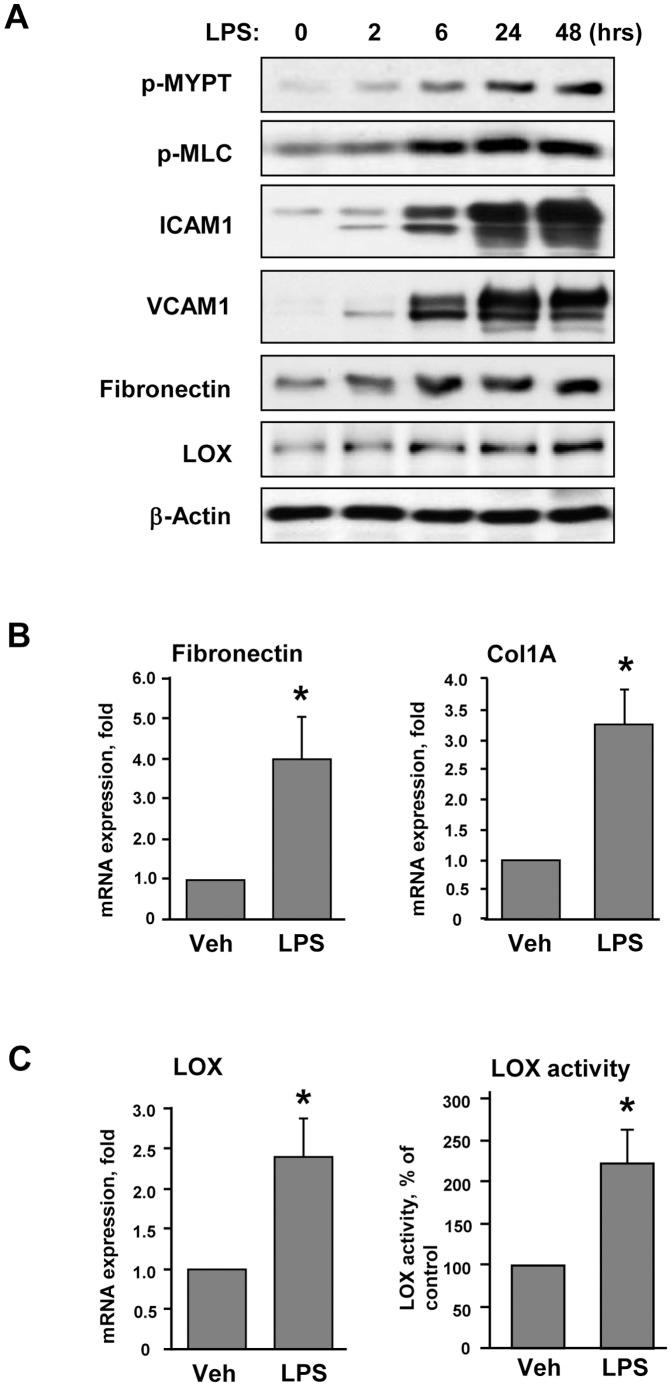
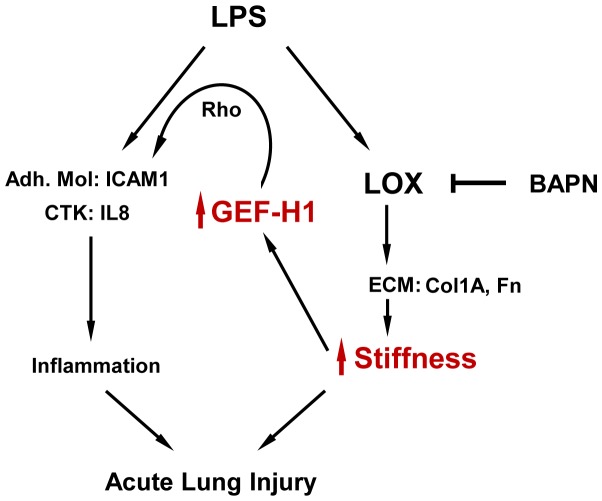
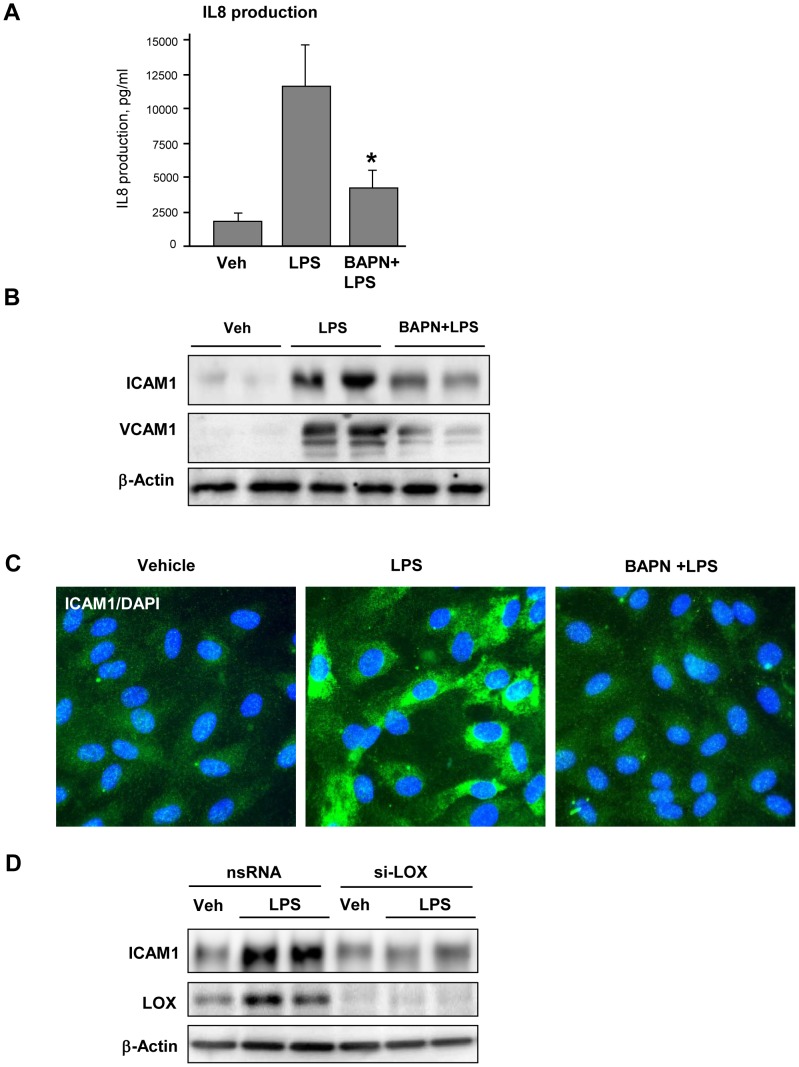
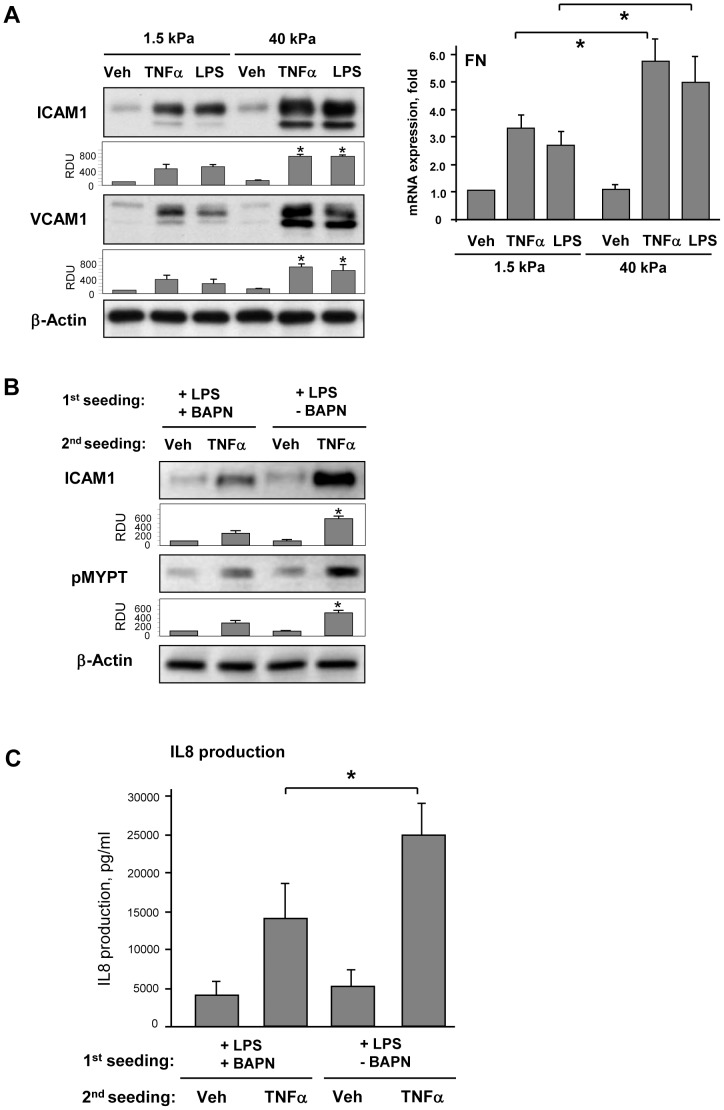
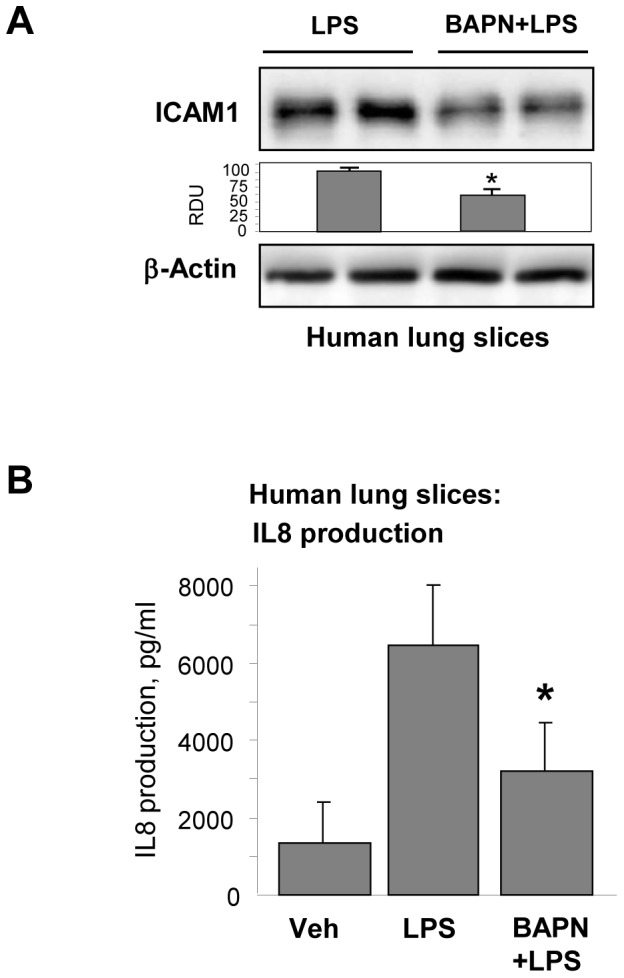
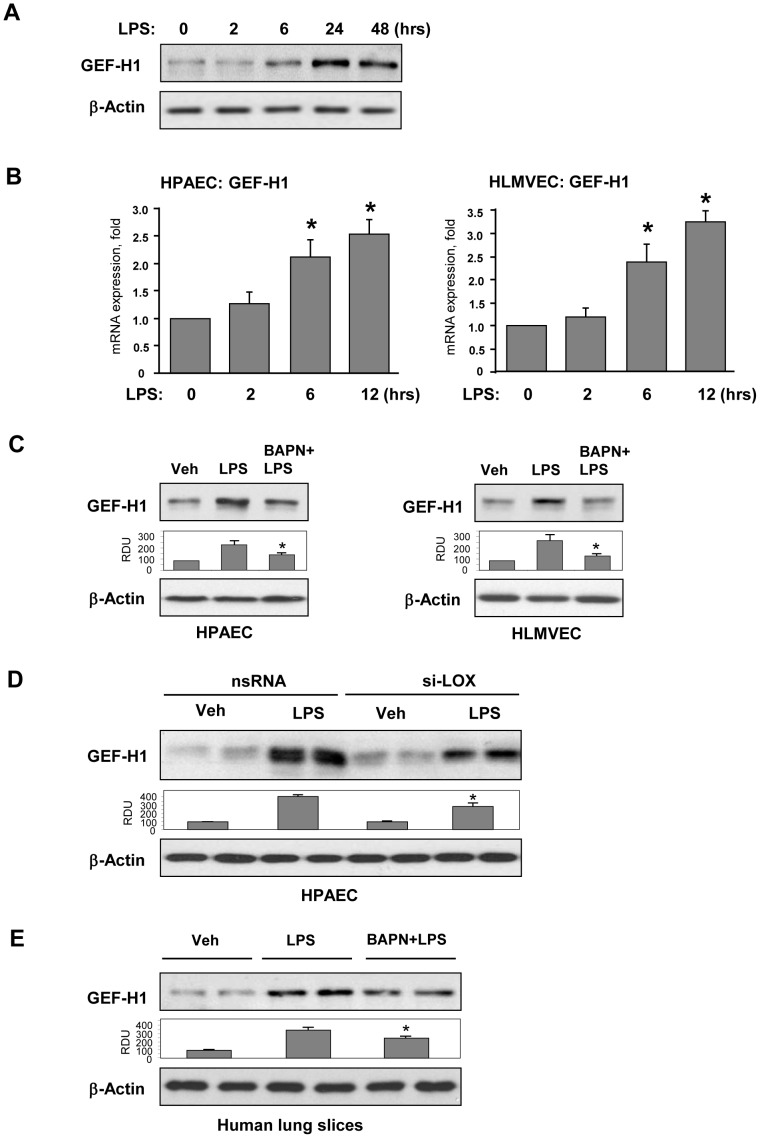
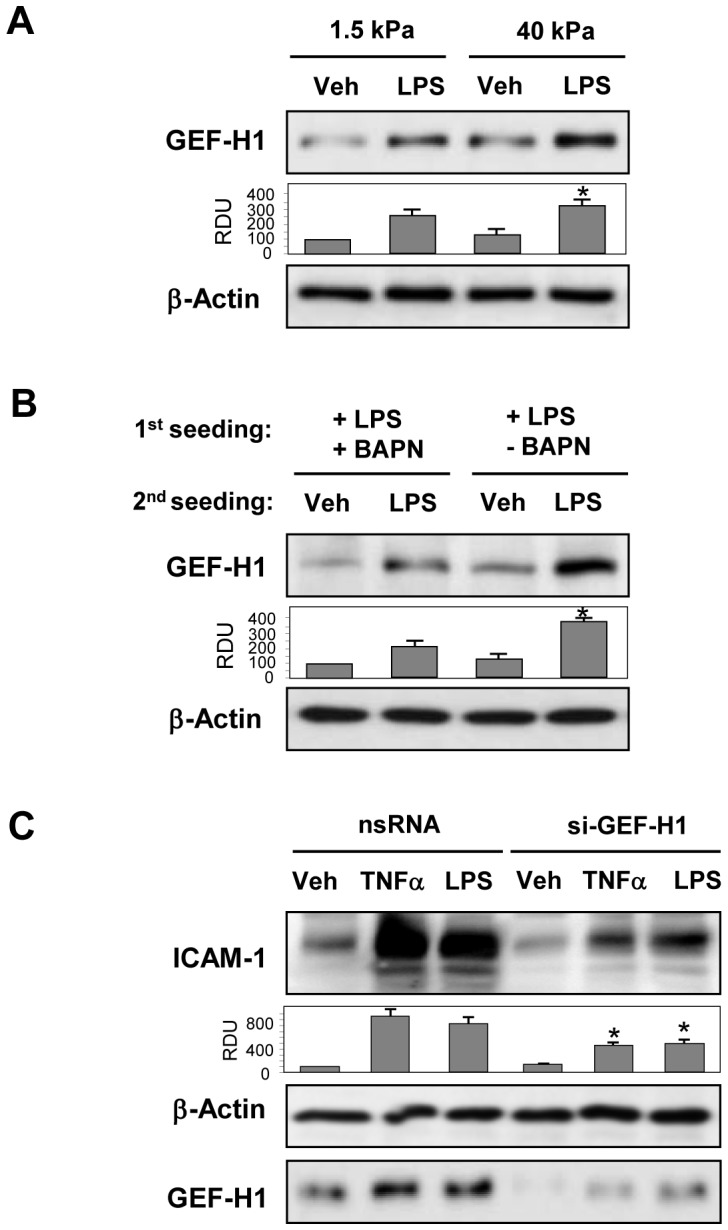
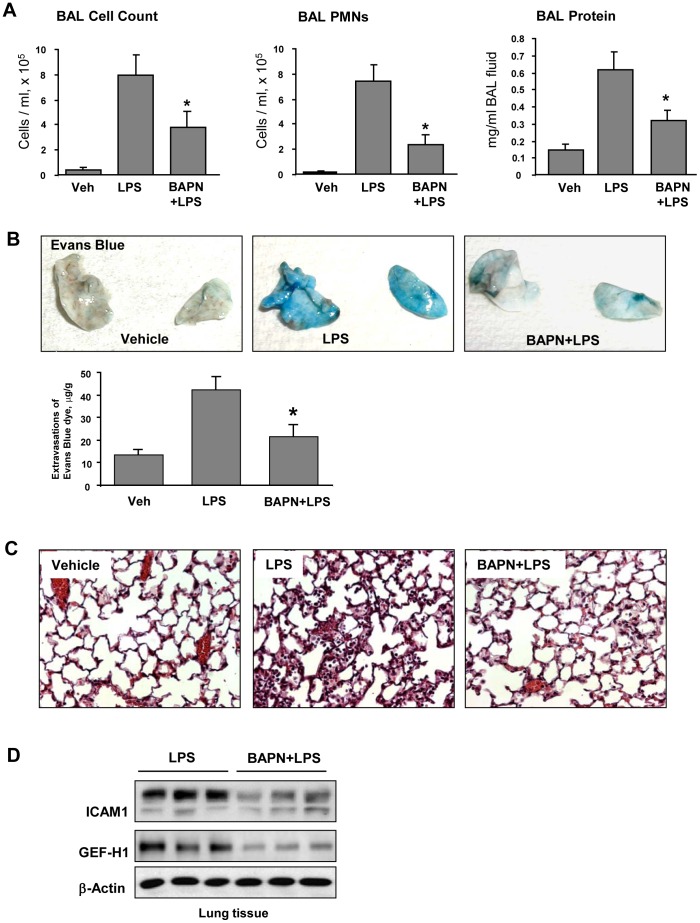
Acute lung injury (ALI) is accompanied by decreased lung compliance. However, a role of tissue mechanics in modulation of inflammation remains unclear. We hypothesized that bacterial lipopolysacharide (LPS) stimulates extracellular matrix (ECM) production and vascular stiffening leading to stiffness-dependent exacerbation of endothelial cell (EC) inflammatory activation and lung barrier dysfunction. Expression of GEF-H1, ICAM-1, VCAM-1, ECM proteins fibronectin and collagen, lysyl oxidase (LOX) activity, interleukin-8 and activation of Rho signaling were analyzed in lung samples and pulmonary EC grown on soft (1.5 or 2.8 kPa) and stiff (40 kPa) substrates. LPS induced EC inflammatory activation accompanied by expression of ECM proteins, increase in LOX activity, and activation of Rho signaling. These effects were augmented in EC grown on stiff substrate. Stiffness-dependent enhancement of inflammation was associated with increased expression of Rho activator, GEF-H1. Inhibition of ECM crosslinking and stiffening by LOX suppression reduced EC inflammatory activation and GEF-H1 expression in response to LPS. In vivo, LOX inhibition attenuated LPS-induced expression of GEF-H1 and lung dysfunction. These findings present a novel mechanism of stiffness-dependent exacerbation of vascular inflammation and escalation of ALI via stimulation of GEF-H1-Rho pathway. This pathway represents a fundamental mechanism of positive feedback regulation of inflammation.
急性肺损伤(ALI)伴随着肺顺应性降低。然而,组织力学在炎症调节中的作用尚不清楚。我们假设细菌脂多糖(LPS)刺激细胞外基质(ECM)的产生和血管变硬,导致依赖于僵硬的内皮细胞(EC)炎症激活和肺屏障功能障碍加重。在肺组织样本和在软(1.5 或 2.8 kPa)和硬(40 kPa)基质上生长的肺 EC 中分析了 GEF-H1、ICAM-1、VCAM-1、ECM 蛋白纤维连接蛋白和胶原蛋白、赖氨酰氧化酶(LOX)活性、白细胞介素-8 和 Rho 信号转导的激活。LPS 诱导 EC 炎症激活,同时伴有 ECM 蛋白的表达、LOX 活性的增加和 Rho 信号转导的激活。这些效应在在硬基质上生长的 EC 中增强。炎症的僵硬依赖性增强与 Rho 激活剂 GEF-H1 的表达增加有关。通过 LOX 抑制抑制 ECM 交联和变硬,可减少 LPS 诱导的 EC 炎症激活和 GEF-H1 表达。在体内,LOX 抑制减轻了 LPS 诱导的 GEF-H1 表达和肺功能障碍。这些发现提出了一种新的机制,即通过刺激 GEF-H1-Rho 途径导致血管炎症的僵硬依赖性加重和 ALI 的恶化。该途径代表了炎症的正反馈调节的基本机制。