Maheswari Eswaran, Saraswathy Ganesan Raja Lekshmi, Santhranii Thakur
Department of Pharmacology, M.S. Ramaiah College of Pharmacy, Rajiv Gandhi University of Health Sciences, Bangalore, Karnataka, India.
Department of Pharmacology, Institute of Pharmaceutical Technology, Sri Padmavathi Mahila Visvavidyalayam (Women's University), Tirupati, Andhra Pradesh, India.
Indian J Pharmacol. 2014 Mar-Apr;46(2):211-5. doi: 10.4103/0253-7613.129321.
The present study evaluates the hepatoprotective activity of N-acetyl cysteine (NAC) against carbamazepine (CBZ)-induced hepatotoxicity.
Rats were treated with CBZ (50 mg/kg p.o.) and CBZ supplemented with NAC 50, 100 and 200 mg/kg for 45 days, after which blood samples were collected and subjected to liver function tests. Animals were killed, liver was separated, weighed and the levels of antioxidants and liver enzymes were estimated. In addition, histopathological investigation was also performed.
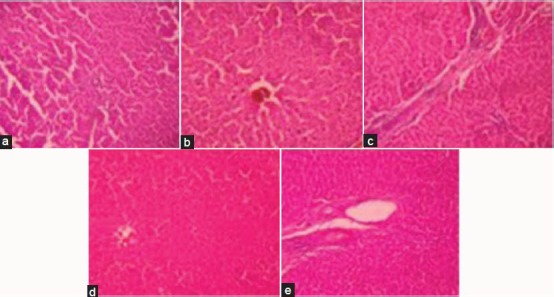
Serum glutamate pyruvate transaminase (SGPT), serum glutamate oxaloacetate (SGOT) transaminase, alkaline phosphatase (ALP), bilirubin, lipid peroxidation, absolute and relative liver weights were significantly (P < 0.05) elevated, whereas serum levels of albumin, total protein and body weight were decreased in the CBZ-treated animals. CBZ also produced vacuolar degeneration, centrilobular congestion and hepatic necrosis as evidenced from histopathological report. NAC significantly reduced the levels of serum transaminase, ALP, bilirubin and liver weight and increased the levels of total protein, albumin and body weight.
It was observed that NAC increased the glutathione (GSH) content, reduced lipid peroxidation and reversed the CBZ-induced histopathological abnormalities. CBZ-induced hepatotoxicity may be due its toxic epoxide metabolite-induced oxidative stress.
本研究评估N-乙酰半胱氨酸(NAC)对卡马西平(CBZ)诱导的肝毒性的肝保护活性。
大鼠经口给予CBZ(50mg/kg),并分别补充50、100和200mg/kg的NAC,持续45天,之后采集血样并进行肝功能测试。处死动物,分离肝脏,称重并测定抗氧化剂和肝酶水平。此外,还进行了组织病理学研究。
在接受CBZ治疗的动物中,血清谷丙转氨酶(SGPT)、血清谷草转氨酶(SGOT)、碱性磷酸酶(ALP)、胆红素、脂质过氧化、肝脏绝对重量和相对重量均显著升高(P<0.05),而血清白蛋白、总蛋白水平和体重则下降。组织病理学报告显示,CBZ还导致了空泡变性、小叶中心充血和肝坏死。NAC显著降低了血清转氨酶、ALP、胆红素水平和肝脏重量,并提高了总蛋白、白蛋白水平和体重。
观察到NAC增加了谷胱甘肽(GSH)含量,降低了脂质过氧化,并逆转了CBZ诱导的组织病理学异常。CBZ诱导的肝毒性可能是由于其有毒环氧化物代谢产物诱导的氧化应激所致。