Matsubara Kazumi, Sarre Stephen D, Georges Arthur, Matsuda Yoichi, Marshall Graves Jennifer A, Ezaz Tariq
Institute for Applied Ecology, University of Canberra, Canberra, ACT, Australia.
Department of Applied Molecular Biosciences, Graduate School of Bioagricultural Sciences, Nagoya University, Nagoya, Aichi, Japan.
PLoS One. 2014 Apr 17;9(4):e95226. doi: 10.1371/journal.pone.0095226. eCollection 2014.
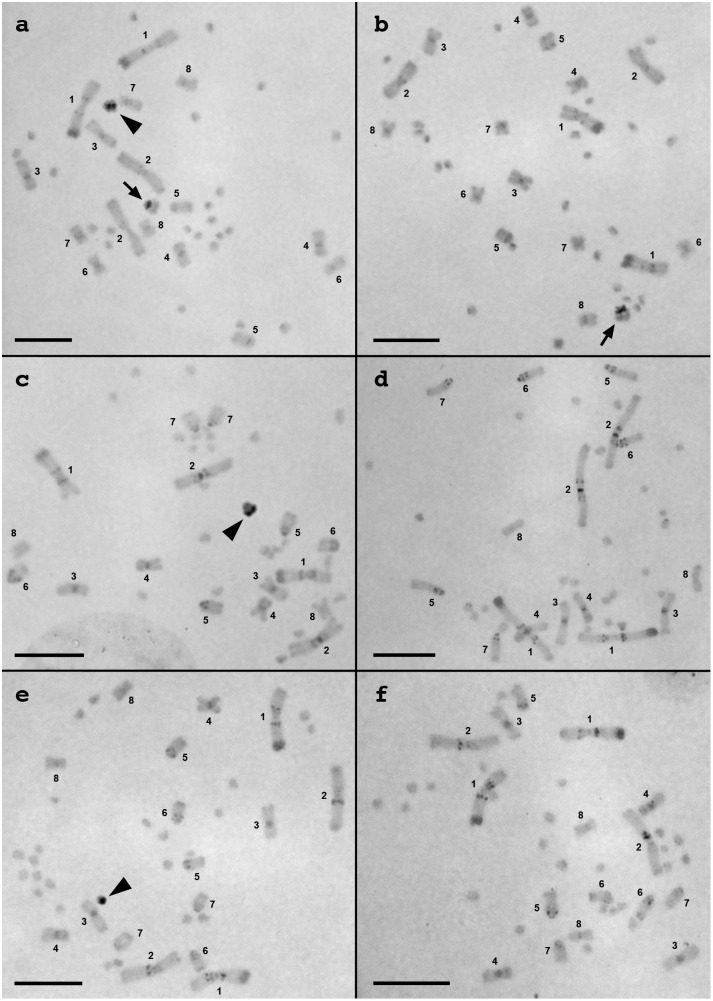
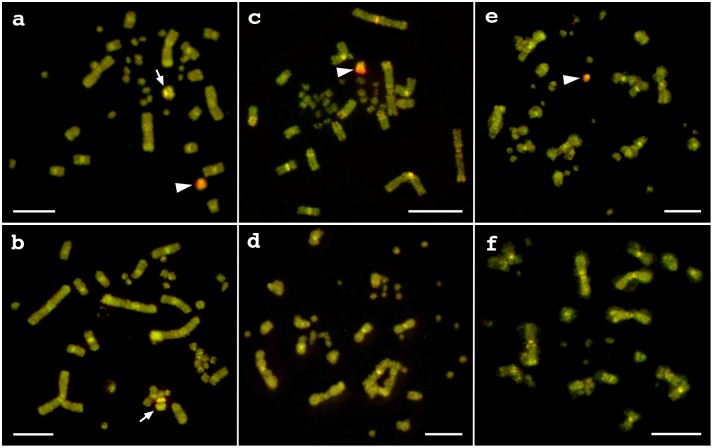
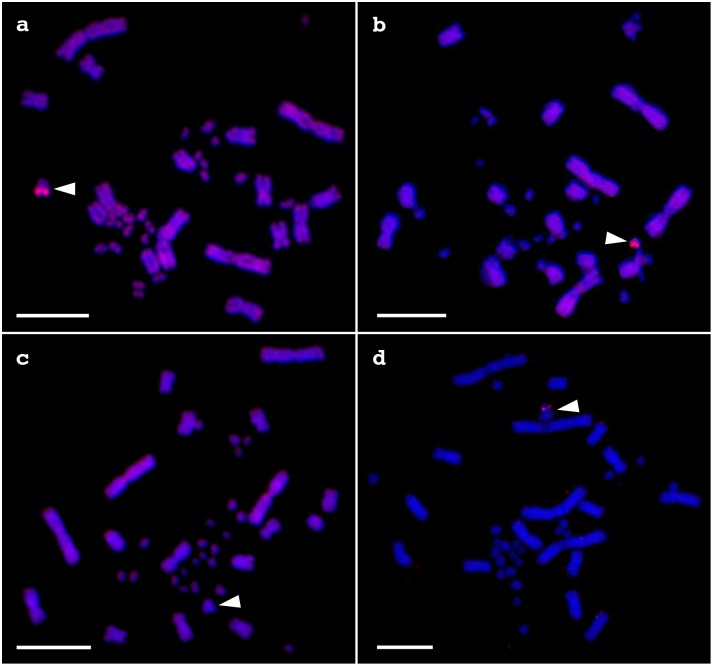
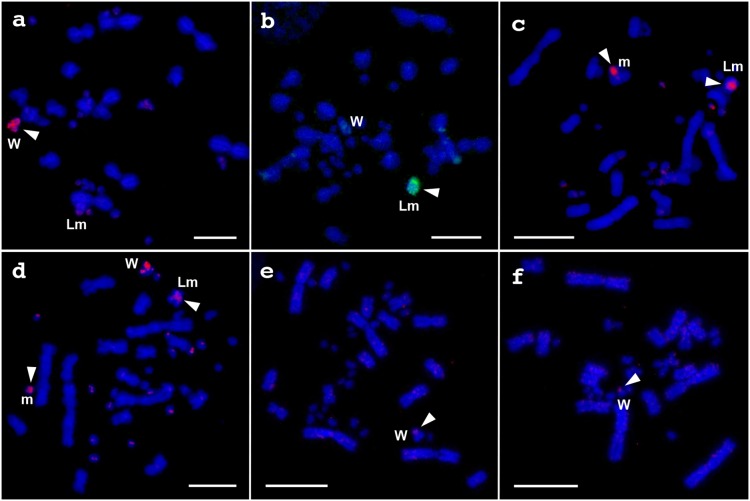
Transitions between sex determination systems have occurred in many lineages of squamates and it follows that novel sex chromosomes will also have arisen multiple times. The formation of sex chromosomes may be reinforced by inhibition of recombination and the accumulation of repetitive DNA sequences. The karyotypes of monitor lizards are known to be highly conserved yet the sex chromosomes in this family have not been fully investigated. Here, we compare male and female karyotypes of three Australian monitor lizards, Varanus acanthurus, V. gouldii and V. rosenbergi, from two different clades. V. acanthurus belongs to the acanthurus clade and the other two belong to the gouldii clade. We applied C-banding and comparative genomic hybridization to reveal that these species have ZZ/ZW sex micro-chromosomes in which the W chromosome is highly differentiated from the Z chromosome. In combination with previous reports, all six Varanus species in which sex chromosomes have been identified have ZZ/ZW sex chromosomes, spanning several clades on the varanid phylogeny, making it likely that the ZZ/ZW sex chromosome is ancestral for this family. However, repetitive sequences of these ZW chromosome pairs differed among species. In particular, an (AAT)n microsatellite repeat motif mapped by fluorescence in situ hybridization on part of W chromosome in V. acanthurus only, whereas a (CGG)n motif mapped onto the W chromosomes of V. gouldii and V. rosenbergi. Furthermore, the W chromosome probe for V. acanthurus produced hybridization signals only on the centromeric regions of W chromosomes of the other two species. These results suggest that the W chromosome sequences were not conserved between gouldii and acanthurus clades and that these repetitive sequences have been amplified rapidly and independently on the W chromosome of the two clades after their divergence.
在许多有鳞目谱系中都发生了性别决定系统的转变,因此新的性染色体也可能多次出现。重组抑制和重复DNA序列的积累可能会加强性染色体的形成。已知巨蜥的核型高度保守,但该科的性染色体尚未得到充分研究。在这里,我们比较了来自两个不同分支的三种澳大利亚巨蜥——棘刺巨蜥(Varanus acanthurus)、古氏巨蜥(V. gouldii)和罗氏巨蜥(V. rosenbergi)的雄性和雌性核型。棘刺巨蜥属于棘刺分支,另外两种属于古氏分支。我们应用C带和比较基因组杂交技术,发现这些物种具有ZZ/ZW性微染色体,其中W染色体与Z染色体高度分化。结合之前的报道,所有已鉴定出性染色体的六种巨蜥都具有ZZ/ZW性染色体,跨越了巨蜥系统发育树上的几个分支,这使得ZZ/ZW性染色体很可能是该科的祖先。然而,这些ZW染色体对的重复序列在不同物种之间存在差异。特别是,仅在棘刺巨蜥的部分W染色体上,通过荧光原位杂交定位到了一个(AAT)n微卫星重复基序,而(CGG)n基序则定位到了古氏巨蜥和罗氏巨蜥的W染色体上。此外,棘刺巨蜥的W染色体探针仅在其他两个物种W染色体的着丝粒区域产生杂交信号。这些结果表明,古氏分支和棘刺分支之间的W染色体序列不保守,并且这些重复序列在两个分支分化后在W染色体上迅速且独立地扩增。