Gheorghe Adrian, Roberts Tracy E, Pinkney Thomas D, Bartlett David C, Morton Dion, Calvert Melanie
Primary Care Clinical Sciences, University of Birmingham, Birmingham, United Kingdom.
Health Economics Unit, University of Birmingham, Birmingham, United Kingdom.
PLoS One. 2014 Apr 18;9(4):e95595. doi: 10.1371/journal.pone.0095595. eCollection 2014.
Wound-edge protection devices (WEPDs) have been used in surgery for more than 40 years to reduce surgical site infection (SSI). No economic evaluation of WEPDs against any comparator has ever been conducted. The aim of the paper was to assess whether WEPDs are cost-effective in reducing SSI compared to standard care alone in the United Kingdom.
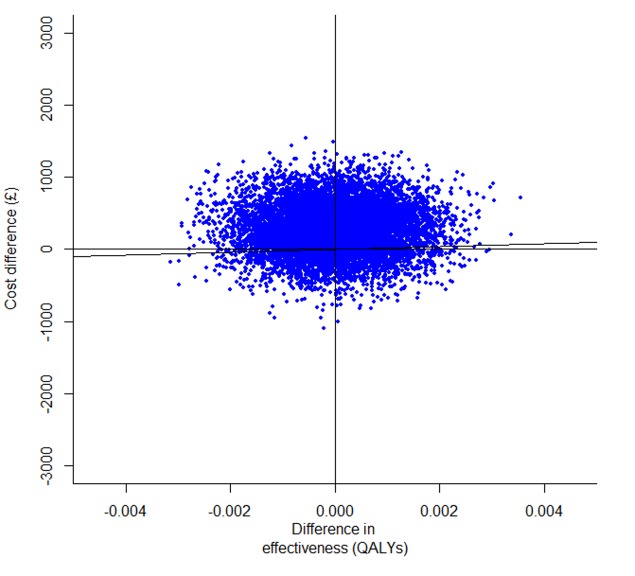
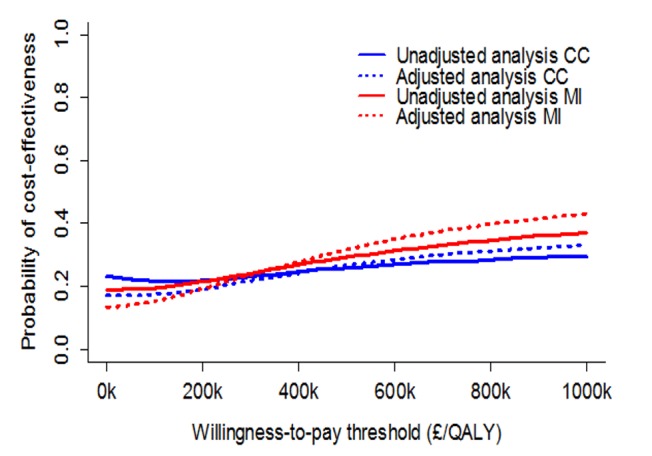
An economic evaluation was conducted alongside the ROSSINI trial. The study perspective was that of the UK National Health Service and the time horizon was 30 days post-operatively. The study was conducted in 21 UK hospitals. 760 patients undergoing laparotomy were randomised to either WEPD or standard care and 735 were included in the primary analysis. The main economic outcome was cost-effectiveness based on incremental cost (£) per quality adjusted life year (QALY) gained. Patients in the WEPD arm accessed health care worth £5,420 on average and gained 0.02131 QALYs, compared to £5,130 and 0.02133 QALYs gained in the standard care arm. The WEPD strategy was more costly and equally effective compared to standard care, but there was significant uncertainty around incremental costs and QALYs. The findings were robust to a range of sensitivity analyses.
There is no evidence to suggest that WEPDs can be considered a cost effective device to reduce SSI. Their continued use is a waste of limited health care resources.
伤口边缘保护装置(WEPDs)已在外科手术中使用超过40年,以减少手术部位感染(SSI)。从未对WEPDs与任何对照物进行过经济学评估。本文的目的是评估在英国,与单纯标准护理相比,WEPDs在降低SSI方面是否具有成本效益。
在ROSSINI试验的同时进行了一项经济学评估。研究视角为英国国家医疗服务体系,时间范围为术后30天。该研究在英国21家医院进行。760例行剖腹手术的患者被随机分为接受WEPD组或标准护理组,735例纳入主要分析。主要经济结果是基于每获得一个质量调整生命年(QALY)的增量成本(英镑)的成本效益。与标准护理组平均花费5130英镑并获得0.02133个QALY相比,接受WEPD组的患者平均获得价值5420英镑的医疗服务并获得0.02131个QALY。与标准护理相比,WEPD策略成本更高且效果相同,但增量成本和QALY存在显著不确定性。研究结果在一系列敏感性分析中具有稳健性。
没有证据表明WEPDs可被视为降低SSI的具有成本效益的装置。继续使用它们是对有限医疗资源的浪费。